Does NAD+ Help With Aging? Benefits & Safety


.webp)

Does NAD+ help with aging? Learn what NAD+ is, how it relates to the aging process, and what current research says about supplementation benefits and safety.
- Does NAD+ help with aging? NAD+ is a coenzyme involved in over 500 enzymatic reactions, including energy production and DNA repair. And research suggests NAD+ levels may decline with age in certain tissues.
- Animal studies suggest that restoring NAD+ levels may improve mitochondrial function, insulin sensitivity, and inflammatory markers; however, human clinical trials remain limited, with mixed results.
- NAD+ precursor supplements, including NR and NMN, have been shown to increase NAD+ levels, although researchers are still determining optimal dosing and long-term benefits.
- Lifestyle habits, such as high-intensity exercise, intermittent fasting, and cold exposure, may help support NAD+ levels naturally.
This content is for informational purposes only and is not intended as medical advice. Always consult with a licensed healthcare provider before starting any new supplement or treatment.
What Is NAD+?
NAD+ (nicotinamide adenine dinucleotide) is a coenzyme your body depends on for some of its most basic functions. It helps your cells produce energy, supports DNA repair, and plays a role in hundreds of enzymatic reactions that keep everything running smoothly.
With age, NAD+ levels may decline in certain tissues. So, can taking NAD+ help with aging? If so, how?
Why Do NAD+ Levels Decline With Age?
NAD+ decline is caused by a combination of factors that compound over time, including:
Increased Activity of NAD+-Consuming Enzymes
As you age, certain enzymes that use up NAD+ become more active. CD38 is one of the biggest culprits; research has shown that its expression and activity increase significantly across multiple tissues during aging, and that this increase may contribute to age-related NAD+ decline.
Further studies found that pro-inflammatory macrophages accumulating in fat and liver tissue during aging express high levels of CD38, which may further reduce NAD+. PARPs, which consume NAD+ to repair accumulating DNA damage, also ramp up with age.
Reduced NAD+ Production and Recycling
At the same time, your body’s ability to make and recycle NAD+ slows down. NAMPT, the rate-limiting enzyme in the NAD+ salvage pathway, has been shown to decline with age in tissues such as human skeletal muscle, adipose tissue, and certain brain regions. Its expression closely mirrors the age-dependent drop in NAD+ levels, suggesting it plays a key role in reduced NAD+ production.
In other words, this could mean you’re using more NAD+ while producing less of it.
Lifestyle and Environmental Factors
Your daily habits are likely to have an impact as well. Chronic stress, poor sleep, excessive alcohol consumption, and high-calorie diets may all accelerate NAD+ depletion. Alcohol, in particular, has been associated with reduced NAD+ levels, impairing sirtuin function and contributing to liver injury and systemic organ damage.
Additionally, obesity, which affects about 40% of the American population, triggers inflammation that activates CD38, creating a cycle that may drive NAD+ levels down even further.
{{primary-cta}}
What Does the Research Say About NAD+ and Aging?
Research is still emerging, but here’s what we know so far.
Animal Studies Look Promising
Mice given NMN over 12 months showed better energy metabolism, improved insulin sensitivity, and stronger mitochondrial function, with no obvious side effects. In another study, aging mice treated with NR had healthier muscles, slower stem cell decline, and longer survival. And in mouse models of Alzheimer's disease, NAD+ precursors appeared to support memory and brain cell health.
With that said, animal studies don’t always reflect how the human body will respond.
Human Studies Are Still Catching Up
Some clinical trials have shown that NR and NMN supplements can raise NAD+ levels in people. Some studies have also reported modest improvements in things like walking speed, grip strength, and arterial stiffness.
However, so far, there hasn’t been evidence of consistent improvements in areas such as insulin sensitivity or exercise performance, and studies or trials that did show this involved very small and specific groups. Thus, larger and longer studies are needed before we can draw firm conclusions about what NAD+ supplementation can reliably do for human health.
Ways to Support Your NAD+ Levels
Even as research is still developing, several approaches may help maintain your NAD+ levels.
NAD+ Precursor Supplements (NR, NMN)
These are the most studied options. Research suggests that NR (nicotinamide riboside) may support NAD+ levels within a couple of weeks at daily doses ranging from 100 to 1,000 mg. NMN (nicotinamide mononucleotide) has shown similar potential.
NAD+ Administration via Injection or IV
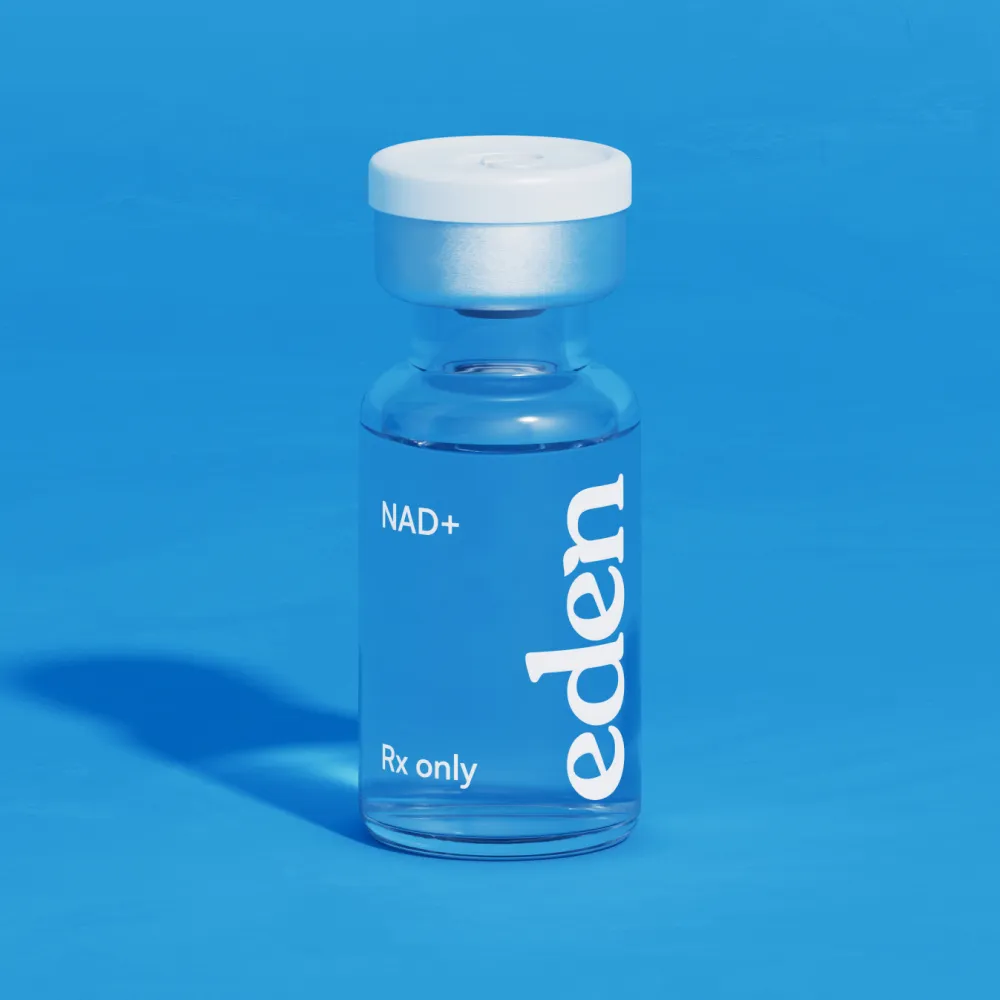
For those looking for a more direct delivery method, NAD+ may be administered through intramuscular injections or IV infusions under the guidance and care of a licensed healthcare professional. These approaches deliver NAD+ straight to the bloodstream. However, they tend to be more expensive, and data on the long-term benefits is still limited.
However, keep in mind that NAD+ is not FDA-approved for anti-aging purposes, and compounded NAD+ preparations are not reviewed by the FDA for safety, effectiveness, or quality.
Natural Methods
Lifestyle habits can also make a difference. For example, high-intensity interval training (HIIT) may help improve mitochondrial function and support NAD+ production. Intermittent fasting may also help by activating NAD+-dependent enzymes, such as SIRT1.
Even cold exposure has been shown to stimulate cellular stress responses that may encourage NAD+ synthesis.
Combined Approaches
Emerging research suggests that targeting multiple pathways simultaneously—for example, pairing a precursor supplement with exercise and dietary changes—may yield more meaningful results than any single intervention.
Wondering where to start? With Eden, you can start with a quick online intake to connect with a licensed healthcare provider who can review your health history and determine whether NAD+ therapy or asupplement is appropriate for you. Eden coordinates your care, but doesn’t manufacture or prescribe medications.
{{primary-cta}}
Is NAD+ Safe?
Based on the clinical trials conducted so far, NAD+ precursor supplements, including NR and NMN, appear to be well-tolerated by most people. Commonly reported side effects have been mild, often improving with time, and may involve nausea, headaches, or digestive discomfort.
At the same time, it’s always important to discuss your options with a qualified healthcare professional who can determine if NAD+ makes sense for you and your health goals.
Final Thoughts
When it comes to NAD+ and aging, animal studies show positive outcomes, but human research is still limited. And while there are several ways to support your NAD+ levels, we don’t yet have definitive proof that doing so will alter the aging process.
Either way, NAD+ supplementation is best used as part of a broader approach, including other lifestyle changes. When it comes to anti-aging, the best thing you can do is take care of your overall health.









The FDA does not approve compounded medications for safety, quality, or manufacturing. Prescriptions and a medical evaluation are required for certain products. The information provided on this blog is for general informational purposes only. It is not intended as a substitute for professional advice from a qualified healthcare professional and should not be relied upon as personal health advice. The information contained in this blog is not meant to diagnose, treat, cure, or prevent any disease. Readers are advised to consult with a qualified healthcare professional for any medical concerns, including side effects. Use of this blog's information is at your own risk. The blog owner is not responsible for any adverse effects or consequences resulting from the use of any suggestions or information provided in this blog.
Eden is not a medical provider. Eden connects individuals with independent licensed healthcare providers who independently evaluate each patient to determine whether a prescription treatment program is appropriate. All prescriptions are written at the sole discretion of the licensed provider. Medications are filled by state-licensed pharmacies. Please consult a licensed healthcare provider before making any medical decisions.
Frequently asked questions
Can NAD reverse aging?

There’s currently no supplement or treatment that can reverse aging. Some research suggests that restoring NAD+ levels may support certain aspects of cellular health that decline with age; however, these findings remain preliminary and are primarily based on animal studies.
Which is better for anti-aging, NAD or collagen?
These two compounds work in different ways, meaning neither is better than the other. NAD+ supports cellular energy production and DNA repair at a foundational level. Meanwhile, collagen is a structural protein that may benefit skin elasticity, joint health, and connective tissue.
What’s the difference between NR and NMN?
Both are NAD+ precursors, meaning your body converts them into NAD+. The main difference between these two is their size; NMN is one step closer to becoming NAD+ in your body, but NR needs an extra conversion step to get there.
Are NAD+ IV infusions worth the cost?
NAD+ IV infusions deliver the molecule directly into your bloodstream, which may offer faster absorption compared to oral supplements. However, they can be significantly more expensive, and the long-term advantages over oral supplementation haven’t been firmly established.
Related articles







Camacho-Pereira, J., Tarragó, M. G., Chini, C. C. S., Nin, V., Escande, C., Warner, G. M., Puranik, A. S., Schoon, R. A., Reid, J. M., Galina, A., & Chini, E. N. (2016). CD38 Dictates Age-Related NAD Decline and Mitochondrial Dysfunction through an SIRT3-Dependent Mechanism. Cell metabolism, 23(6), 1127–1139. https://doi.org/10.1016/j.cmet.2016.05.006
Chini, C. C. S., Cordeiro, H. S., Tran, N. L. K., & Chini, E. N. (2024). NAD metabolism: Role in senescence regulation and aging. Aging cell, 23(1), e13920. https://doi.org/10.1111/acel.13920
Covarrubias, A. J., Kale, A., Perrone, R., Lopez-Dominguez, J. A., Pisco, A. O., Kasler, H. G., Schmidt, M. S., Heckenbach, I., Kwok, R., Wiley, C. D., Wong, H. S., Gibbs, E., Iyer, S. S., Basisty, N., Wu, Q., Kim, I. J., Silva, E., Vitangcol, K., Shin, K. O., Lee, Y. M., … Verdin, E. (2020). Senescent cells promote tissue NAD+ decline during ageing via the activation of CD38+ macrophages. Nature metabolism, 2(11), 1265–1283. https://doi.org/10.1038/s42255-020-00305-3
French S. W. (2016). Chronic alcohol binging injures the liver and other organs by reducing NAD⁺ levels required for sirtuin's deacetylase activity. Experimental and molecular pathology, 100(2), 303–306. https://pubmed.ncbi.nlm.nih.gov/26896648/
Grazioso, T. P., Del Mar Rigual, M., Perna, C., Caleiras, E. J., & Djouder, N. (2024). Cold exposure reinstates NAD+ levels and attenuates hepatocellular carcinoma. Cell stress, 8, 125–139. https://pubmed.ncbi.nlm.nih.gov/39781363/
Hayashida, S., Arimoto, A., Kuramoto, Y., Kozako, T., Honda, S., Shimeno, H., & Soeda, S. (2010). Fasting promotes the expression of SIRT1, an NAD+ -dependent protein deacetylase, via activation of PPARalpha in mice. Molecular and cellular biochemistry, 339(1-2), 285–292. https://doi.org/10.1007/s11010-010-0391-z
Jadeja, R. N., Powell, F. L., Jones, M. A., Fuller, J., Joseph, E., Thounaojam, M. C., Bartoli, M., & Martin, P. M. (2018). Loss of NAMPT in aging retinal pigment epithelium reduces NAD+ availability and promotes cellular senescence. Aging, 10(6), 1306–1323. https://doi.org/10.18632/aging.101469
Mahatme, S., K, V., Kumar, N., Rao, V., Kovela, R. K., & Sinha, M. K. (2022). Impact of high-intensity interval training on cardio-metabolic health outcomes and mitochondrial function in older adults: a review. Medicine and pharmacy reports, 95(2), 115–130. https://doi.org/10.15386/mpr-2201
Martens, C. R., Denman, B. A., Mazzo, M. R., Armstrong, M. L., Reisdorph, N., McQueen, M. B., Chonchol, M., & Seals, D. R. (2018). Chronic nicotinamide riboside supplementation is well-tolerated and elevates NAD+ in healthy middle-aged and older adults. Nature communications, 9(1), 1286. https://doi.org/10.1038/s41467-018-03421-7
Mills, K. F., Yoshida, S., Stein, L. R., Grozio, A., Kubota, S., Sasaki, Y., Redpath, P., Migaud, M. E., Apte, R. S., Uchida, K., Yoshino, J., & Imai, S. I. (2016). Long-Term Administration of Nicotinamide Mononucleotide Mitigates Age-Associated Physiological Decline in Mice. Cell metabolism, 24(6), 795–806. https://doi.org/10.1016/j.cmet.2016.09.013
Okabe, K., Yaku, K., Uchida, Y., Fukamizu, Y., Sato, T., Sakurai, T., Tobe, K., & Nakagawa, T. (2022). Oral Administration of Nicotinamide Mononucleotide Is Safe and Efficiently Increases Blood Nicotinamide Adenine Dinucleotide Levels in Healthy Subjects. Frontiers in nutrition, 9, 868640. https://doi.org/10.3389/fnut.2022.868640
Recent research into nicotinamide mononucleotide and ageing. (n.d.). Nature. https://www.nature.com/articles/d42473-022-00002-7
Yi, L., Maier, A. B., Tao, R., Lin, Z., Vaidya, A., Pendse, S., Thasma, S., Andhalkar, N., Avhad, G., & Kumbhar, V. (2023). The efficacy and safety of β-nicotinamide mononucleotide (NMN) supplementation in healthy middle-aged adults: a randomized, multicenter, double-blind, placebo-controlled, parallel-group, dose-dependent clinical trial. GeroScience, 45(1), 29–43. https://doi.org/10.1007/s11357-022-00705-1
Zhang, H., Ryu, D., Wu, Y., Gariani, K., Wang, X., Luan, P., D'Amico, D., Ropelle, E. R., Lutolf, M. P., Aebersold, R., Schoonjans, K., Menzies, K. J., & Auwerx, J. (2016). NAD⁺ repletion improves mitochondrial and stem cell function and enhances life span in mice. Science (New York, N.Y.), 352(6292), 1436–1443. https://doi.org/10.1126/science.aaf2693
Thank you!
We'll be in touch.
Thank you!