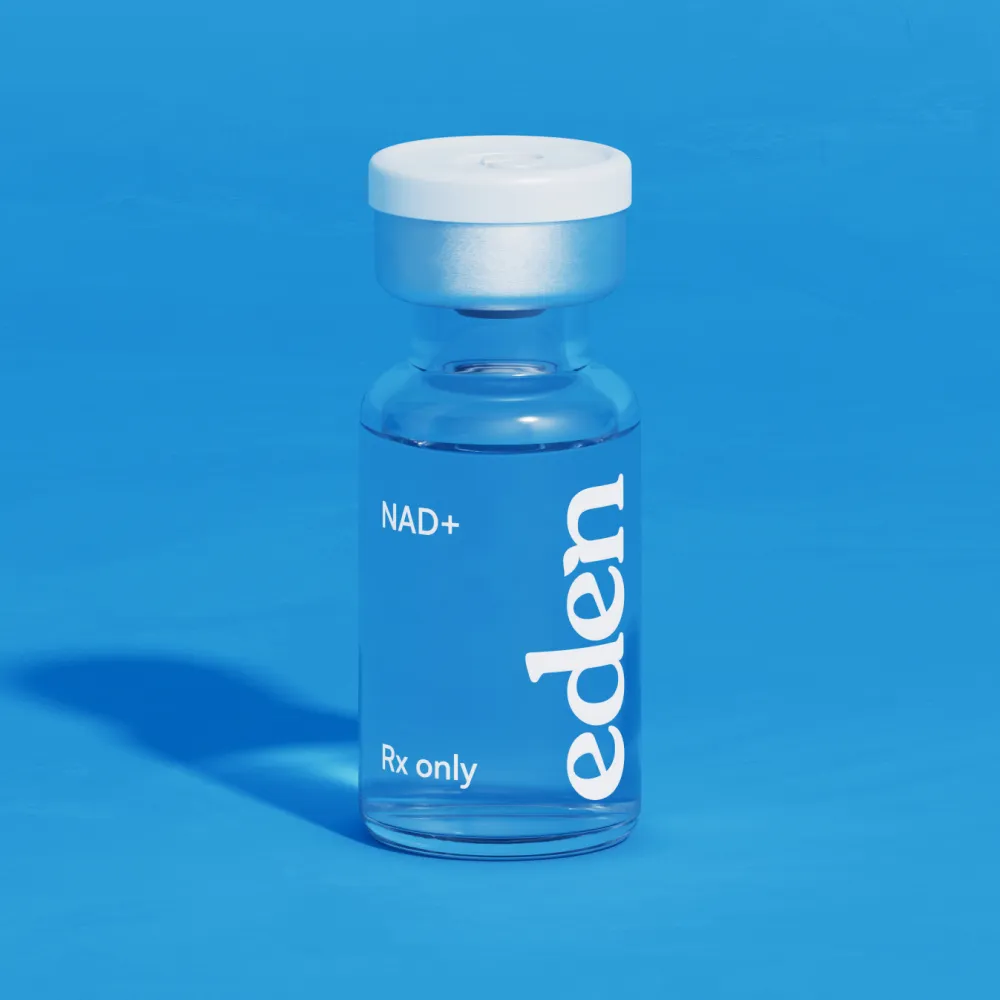
NAD Supplement: What It Is, Benefits & Risks




Learn what a NAD supplement is, how it might support cellular energy, potential benefits, side effects, and how to talk to your provider.
- An NAD supplement often contains precursors, such as NMN or NR, which are converted to NAD in the body.
- NAD is a coenzyme found in every cell; it supports energy production, DNA repair, and hundreds of metabolic processes—but levels naturally decline with age.
- Early research suggests potential benefits for insulin sensitivity, cardiovascular health, muscle function, and sleep quality, though results may vary.
- Most individuals tolerate NAD supplements well, with occasional reports of digestive discomfort or flushing.
- Always consult a licensed healthcare provider to determine whether NAD supplementation is appropriate for you before getting started.
This article is for informational purposes only and is not intended as medical advice, diagnosis, or treatment. NAD supplements are not FDA-approved to treat, cure, or prevent any disease. Always consult with a qualified healthcare provider before starting any new supplement, especially if you are pregnant, nursing, taking medications, or managing a health condition.
What are NAD Supplements?
NAD (nicotinamide adenine dinucleotide) is a coenzyme found in every cell of your body. It plays a role in hundreds of metabolic processes, including the conversion of food into energy and the support of DNA repair.
However, as we age, NAD levels naturally decline. Some research even indicates NAD levels can be 10-80% lower with increasing age. And this is where NAD supplements may provide support.
These supplements typically contain precursors like NMN (nicotinamide mononucleotide) or NR (nicotinamide riboside), which your body converts into NAD. But do these supplements actually deliver? What benefits can they offer? And are there any downsides?
{{primary-cta}}
NAD Supplement Benefits
Research on NAD supplementation is still evolving, but early evidence is promising. Here are some of the most talked-about benefits.
May Support Cellular Energy Production
NAD helps convert the food you eat into ATP—the fuel your mitochondria use to power nearly every function in your body. As NAD levels decline with age, so does mitochondrial function. In fact, mitochondrial dysfunction is associated with various chronic diseases, including neurodegenerative, cardiovascular, and neuromuscular conditions.
While NAD supplementation has not been shown to treat or prevent these diseases, increasing NAD may support cellular energy pathways; yet, the extent of this benefit can vary from person to person.
At the same time, research indicates that NAD supplementation may reduce perceived fatigue in some individuals, also suggesting improved energy production.
May Contribute to Better Metabolic Health
One study in prediabetic women found that NMN supplementation (a precursor of NAD) improved muscle insulin sensitivity, which is important for blood glucose regulation. While these early results are promising, these findings are limited. Larger, longer-term human trials are needed before NMN can be considered a proven metabolic therapy.
May Benefit Cardiovascular Health
Heart disease remains the leading cause of death worldwide.
But here’s some good news: Research suggests that NAD-related pathways may support cardiovascular function by improving energy production in heart cells, supporting endothelial function and healthy blood pressure, as well as contributing to a healthy inflammatory response.
May Support Muscle Function and Physical Performance
From mid-age onward, we lose about 1% of our muscle mass each decade. But NAD may play a role in maintaining strength and endurance. Additionally, evidence suggests that lower NAD levels may be detrimental to muscle health.
Research on older men has even shown improvements in gait speed and grip strength after NMN supplementation. While more research is also needed here, NAD and its precursors may play a role in maintaining muscle function and performance, especially with increasing age.
May Improve Brain Health
NAD may further play a role in maintaining healthy brain cells. Early research explores how NAD-related pathways may interact with cellular processes involved in cognitive aging.
Some studies also link NAD precursors to improved sleep quality, likely due to their effects on cellular energy balance and circadian rhythm regulation. In turn, this could also contribute to better brain health and cognition.
May Support Cellular Health as You Age
Beyond energy production, NAD is essential for enzymes involved in DNA repair. Your cells constantly face damage from environmental stressors, and the mechanisms that fix this damage depend on adequate NAD availability.
While human clinical trials haven't yet proven that supplementation directly improves DNA repair outcomes, the biological rationale is there. The research simply needs to catch up!
{{primary-cta}}
NAD Supplement Risks and Side Effects
NAD supplements are generally considered well-tolerated, with most individuals reporting no serious adverse events. However, as with any supplement, side effects may occur, such as:
- Mild gastrointestinal discomfort (nausea, bloating, diarrhea)
- Skin flushing or skin warmth
- Headaches or dizziness
- Fatigue or sleep issues
Additionally, most research studies on NAD have only lasted weeks or months, so the long-term effects of NAD supplementation remain unknown. And because these supplements are regulated differently than prescription drugs, and are not subject to the same premarket approval process, quality and potency can vary between brands.
If you’re taking any medications or have underlying health conditions, talk to your healthcare provider before starting NAD supplementation.
Final Thoughts
NAD supplements have generated a lot of interest and hype—and for a good reason. The scientific evidence supporting NAD’s role in energy production, cellular repair, and cellular health as you age is exciting. However, individual responses may vary, and it’s always important to discuss what’s right for you and your specific health situation with a licensed healthcare provider.









The FDA does not approve compounded medications for safety, quality, or manufacturing. Prescriptions and a medical evaluation are required for certain products. The information provided on this blog is for general informational purposes only. It is not intended as a substitute for professional advice from a qualified healthcare professional and should not be relied upon as personal health advice. The information contained in this blog is not meant to diagnose, treat, cure, or prevent any disease. Readers are advised to consult with a qualified healthcare professional for any medical concerns, including side effects. Use of this blog's information is at your own risk. The blog owner is not responsible for any adverse effects or consequences resulting from the use of any suggestions or information provided in this blog.
Eden is not a medical provider. Eden connects individuals with independent licensed healthcare providers who independently evaluate each patient to determine whether a prescription treatment program is appropriate. All prescriptions are written at the sole discretion of the licensed provider. Medications are filled by state-licensed pharmacies. Please consult a licensed healthcare provider before making any medical decisions.
Frequently asked questions
What happens if you take NAD every day?

Daily NAD supplementation has been shown to raise blood NAD levels over time, which may support energy, metabolism, and cellular health. Most studies use daily dosing without serious adverse effects, but the long-term data are limited.
Who should not take NAD?
Individuals who are pregnant, breastfeeding, or taking other medications should consult a healthcare provider before starting NAD supplements. Those with underlying health conditions—particularly related to metabolism or liver function—should also seek medical guidance first.
How long does it take NAD to start working?
Some studies show increases in blood NAD levels within days to weeks of supplementation. However, noticeable benefits, such as improved energy or sleep, may take several weeks to a few months to become apparent.
What are the benefits of NAD supplements?
Research suggests it may improve cellular energy production, insulin sensitivity, cardiovascular function, muscle function, and sleep quality. Yet, results may vary from person to person, and longer-term human studies are needed.
Related articles











Campbell J. M. (2022). Supplementation with NAD+ and Its Precursors to Prevent Cognitive Decline across Disease Contexts. Nutrients, 14(15), 3231. https://doi.org/10.3390/nu14153231
Castro-Marrero, J., Segundo, M. J., Lacasa, M., Martinez-Martinez, A., Sentañes, R. S., & Alegre-Martin, J. (2021). Effect of Dietary Coenzyme Q10 Plus NADH Supplementation on Fatigue Perception and Health-Related Quality of Life in Individuals with Myalgic Encephalomyelitis/Chronic Fatigue Syndrome: A Prospective, Randomized, Double-Blind, Placebo-Controlled Trial. Nutrients, 13(8), 2658. https://doi.org/10.3390/nu13082658
Croteau, D. L., Fang, E. F., Nilsen, H., & Bohr, V. A. (2017). NAD+ in DNA repair and mitochondrial maintenance. Cell cycle (Georgetown, Tex.), 16(6), 491–492. https://doi.org/10.1080/15384101.2017.1285631
Freeberg, K. A., Udovich, C. C., Martens, C. R., Seals, D. R., & Craighead, D. H. (2023). Dietary Supplementation With NAD+-Boosting Compounds in Humans: Current Knowledge and Future Directions. The journals of gerontology. Series A, Biological sciences and medical sciences, 78(12), 2435–2448. https://doi.org/10.1093/gerona/glad106
Goody, M. F., & Henry, C. A. (2018). A need for NAD+ in muscle development, homeostasis, and aging. Skeletal muscle, 8(1), 9. https://doi.org/10.1186/s13395-018-0154-1
Heart disease remains leading cause of death as key health risk factors continue to rise. (n.d.). American Heart Association. https://newsroom.heart.org/news/heart-disease-remains-leading-cause-of-death-as-key-health-risk-factors-continue-to-rise
Igarashi, M., Nakagawa-Nagahama, Y., Miura, M., Kashiwabara, K., Yaku, K., Sawada, M., Sekine, R., Fukamizu, Y., Sato, T., Sakurai, T., Sato, J., Ino, K., Kubota, N., Nakagawa, T., Kadowaki, T., & Yamauchi, T. (2022). Chronic nicotinamide mononucleotide supplementation elevates blood nicotinamide adenine dinucleotide levels and alters muscle function in healthy older men. npj aging, 8(1), 5. https://doi.org/10.1038/s41514-022-00084-z
Katayoshi, T., Uehata, S., Nakashima, N., Nakajo, T., Kitajima, N., Kageyama, M., & Tsuji-Naito, K. (2023). Nicotinamide adenine dinucleotide metabolism and arterial stiffness after long-term nicotinamide mononucleotide supplementation: a randomized, double-blind, placebo-controlled trial. Scientific reports, 13(1), 2786. https://doi.org/10.1038/s41598-023-29787-3
Kim, M., Seol, J., Sato, T., Fukamizu, Y., Sakurai, T., & Okura, T. (2022). Effect of 12-Week Intake of Nicotinamide Mononucleotide on Sleep Quality, Fatigue, and Physical Performance in Older Japanese Adults: A Randomized, Double-Blind Placebo-Controlled Study. Nutrients, 14(4), 755. https://doi.org/10.3390/nu14040755
Shi, C., Wen, Z., Yang, Y., Shi, L., & Liu, D. (2024). NAD+ metabolism and therapeutic strategies in cardiovascular diseases. Atherosclerosis plus, 57, 1–12. https://doi.org/10.1016/j.athplu.2024.06.001
Sorrentino, V., Menzies, K. J., & Auwerx, J. (2018). Repairing Mitochondrial Dysfunction in Disease. Annual review of pharmacology and toxicology, 58, 353–389. https://doi.org/10.1146/annurev-pharmtox-010716-104908
Wilkinson, D. J., Piasecki, M., & Atherton, P. J. (2018). The age-related loss of skeletal muscle mass and function: Measurement and physiology of muscle fibre atrophy and muscle fibre loss in humans. Ageing research reviews, 47, 123–132. https://doi.org/10.1016/j.arr.2018.07.005
Thank you!
We'll be in touch.
Thank you!