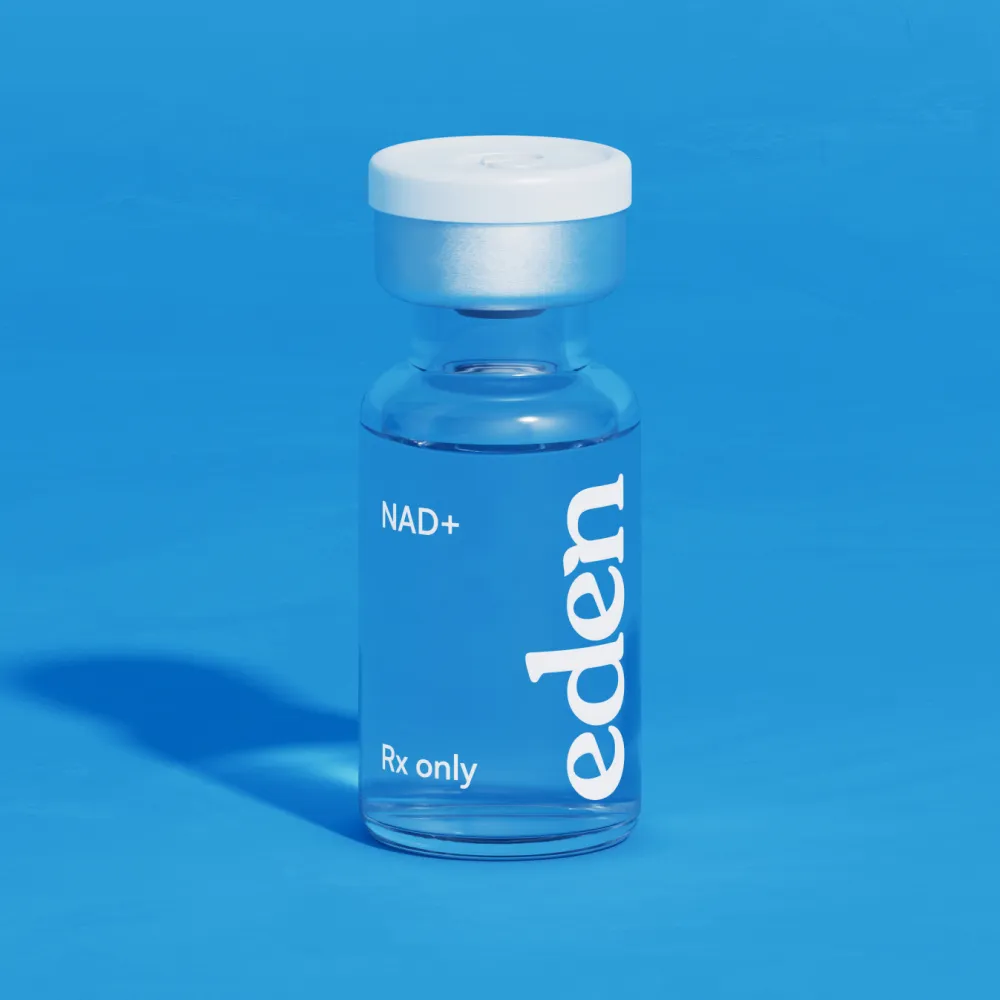
NAD Injections: Everything You Need to Know




Discover what NAD injections are, how NAD injections are used, potential benefits, side effects, and questions to ask a medical professional before trying them.
- NAD injections involve administering nicotinamide adenine dinucleotide (NAD+) via injection under the supervision of a licensed healthcare provider.
- NAD+ plays a role in cellular energy and metabolic processes, and is an area of ongoing scientific research. Individual experiences may vary.
- Most side effects are mild and temporary, such as redness at the injection site, nausea, or flushing.
- NAD therapy can be part of an overall wellness plan, but it isn’t right for everyone.
- Always consult a healthcare provider before starting NAD injections to ensure it makes sense for you and your needs.
This content is for informational purposes only and is not intended as medical advice, diagnosis, or treatment. Additionally, NAD injections are not FDA-approved treatments and are not intended to diagnose, treat, cure, or prevent any disease. Always consult with a qualified healthcare provider before starting any new therapy or supplement.
What is an NAD injection?
Appearing in IV lounges, longevity clinics, and various social media posts, NAD injections have been making the rounds. And while they may sound like just another buzzword, there are a few reasons why they’ve caught so much attention.
NAD+, short for nicotinamide adenine dinucleotide, is a coenzyme found in every cell of your body. It plays an important role in energy production, DNA repair, and overall cellular health.
But NAD+ levels naturally decline as you age. By the time you hit your 40s or 50s, your body may have less NAD+ than it did in your younger years.
NAD injections are a way to deliver NAD+ directly into your body—typically through a subcutaneous (under the skin) or intramuscular injection. Oral supplements have to go through your digestive system, where your body may not absorb all of it. Injections skip that step.
{{primary-cta}}
NAD Injections Benefits
Here are the potential benefits of NAD shots.
May Increase Energy Levels
NAD+ supports the cellular processes that produce ATP, the body’s primary energy source. Thus, lower NAD+ levels may affect this process and may be associated with reduced energy.
NAD injections are being explored in clinical and wellness settings as a way to administer NAD+ under medical supervision. As such, researchers continue to study how NAD+ availability relates to and may impact cellular energy processes.
May Improve Mental Clarity and Focus
As noted above, NAD+ supports brain energy metabolism and enzymes involved in neuronal function and cellular repair. Because the brain has high energy demands, reduced NAD+ availability may affect cognitive efficiency and contribute to symptoms often described as “brain fog.”
NAD+ has been and is being studied in relation to cellular processes involved in brain energy metabolism. In fact, some research explores NAD+ in relation to neuroinflammatory pathways. However, results vary from person to person, and research is still evolving.
May Contribute to Cellular Repair and Support Healthy Aging
NAD+ is associated with proteins called sirtuins, which are studied in relation to the cellular stress response. As such, researchers are exploring how NAD+ availability relates to cellular maintenance over time.
May Support Metabolism
NAD+ is involved in the metabolic processes that turn nutrients into usable energy. Thus, emerging research will help clarify NAD’s exact role in metabolic function and overall metabolic processes.
{{primary-cta}}
NAD+ Injection Risks & Side Effects
Like any therapy, getting an NAD shot may come with potential side effects. However, most are mild and tend to resolve quickly as your body adjusts.
The most common side effects include:
- Redness, soreness, or bruising at the injection site
- Mild nausea
- Flushing or a warm sensation
- Headache
- Lightheadedness or dizziness
- Fatigue shortly after the injection
- Cramping or discomfort
These reactions are typically short-lived and often depend on the dosage and how quickly the NAD+ is administered.
With that said, NAD injections aren’t right for everyone. If you have underlying health conditions or are taking other medications, it’s important to talk with a healthcare provider before starting any NAD therapy.
Final Thoughts
NAD injections have gained attention for their potential role in wellness and longevity. But it’s worth noting that research is still catching up to the hype.
If you’re considering NAD therapy, the best first step is talking with a healthcare provider who can evaluate your individual needs and help you decide if it’s right for you.









The FDA does not approve compounded medications for safety, quality, or manufacturing. Prescriptions and a medical evaluation are required for certain products. The information provided on this blog is for general informational purposes only. It is not intended as a substitute for professional advice from a qualified healthcare professional and should not be relied upon as personal health advice. The information contained in this blog is not meant to diagnose, treat, cure, or prevent any disease. Readers are advised to consult with a qualified healthcare professional for any medical concerns, including side effects. Use of this blog's information is at your own risk. The blog owner is not responsible for any adverse effects or consequences resulting from the use of any suggestions or information provided in this blog.
Eden is not a medical provider. Eden connects individuals with independent licensed healthcare providers who independently evaluate each patient to determine whether a prescription treatment program is appropriate. All prescriptions are written at the sole discretion of the licensed provider. Medications are filled by state-licensed pharmacies. Please consult a licensed healthcare provider before making any medical decisions.
Frequently asked questions
What are the benefits of taking NAD?

NAD supports how your cells make energy and carry out key metabolic and repair processes. NAD therapies are being studied for potential benefits like energy and cognitive support, but results vary, and research is still emerging.
Related articles










Covarrubias, A. J., Perrone, R., Grozio, A., & Verdin, E. (2021). NAD+ metabolism and its roles in cellular processes during ageing. Nature reviews. Molecular cell biology, 22(2), 119–141. https://doi.org/10.1038/s41580-020-00313-x
Imai, S., & Guarente, L. (2014). NAD+ and sirtuins in aging and disease. Trends in cell biology, 24(8), 464–471. https://doi.org/10.1016/j.tcb.2014.04.002
McReynolds, M. R., Chellappa, K., & Baur, J. A. (2020). Age-related NAD+ decline. Experimental gerontology, 134, 110888. https://doi.org/10.1016/j.exger.2020.110888
Pugel, A. D., Schoenfeld, A. M., Alsaifi, S. Z., Holmes, J. R., & Morrison, B. E. (2024). The Role of NAD+ and NAD+-Boosting Therapies in Inflammatory Response by IL-13. Pharmaceuticals (Basel, Switzerland), 17(2), 226. https://doi.org/10.3390/ph17020226
Zhao, Y., Zhang, J., Zheng, Y., Zhang, Y., Zhang, X. J., Wang, H., Du, Y., Guan, J., Wang, X., & Fu, J. (2021). NAD+ improves cognitive function and reduces neuroinflammation by ameliorating mitochondrial damage and decreasing ROS production in chronic cerebral hypoperfusion models through Sirt1/PGC-1α pathway. Journal of neuroinflammation, 18(1), 207. https://doi.org/10.1186/s12974-021-02250-8
Thank you!
We'll be in touch.
Thank you!