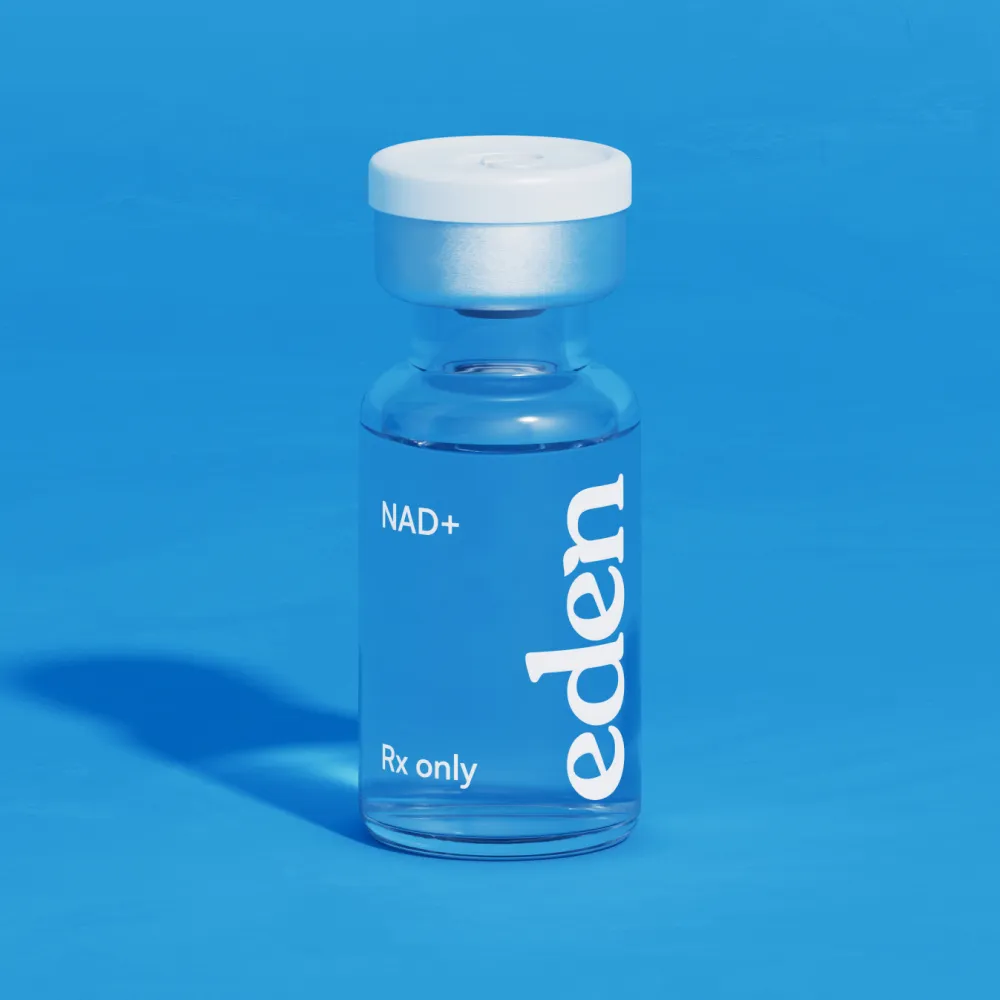
What Is NAD? A Simple Guide


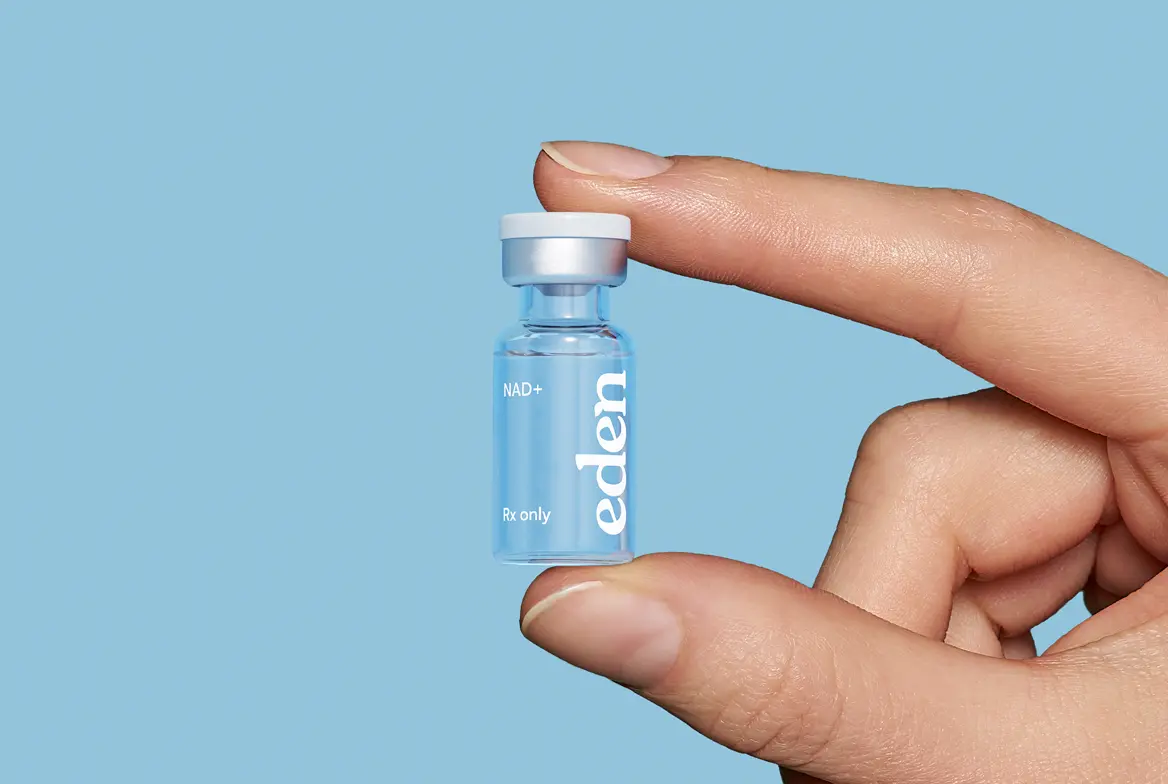

New to cellular health? We explain what NAD is, how it works in the body, what affects NAD levels, and how it’s being discussed in modern wellness.
- What is NAD? Put simply, NAD is a coenzyme found in every cell of your body. It plays a role in energy production, cellular maintenance, and hundreds of other biological processes.
- NAD exists in two forms—NAD+ and NADH—which pass electrons back and forth during metabolism, helping convert food into usable energy.
- NAD levels naturally decline with age.
- Lifestyle factors, such as alcohol intake, stress, and poor diet, may increase cellular demand for NAD.
- Supporting NAD levels starts with everyday habits. However, it’s always important to discuss your specific health situation with a licensed healthcare provider who can recommend what’s best for your needs and goals.
This article is for educational purposes only and is not intended as medical advice, diagnosis, or treatment. Always consult a qualified healthcare provider before starting any new supplement or making changes to your wellness routine. Dietary supplements are not approved by the FDA for safety or effectiveness before they are marketed.
What is NAD?
NAD stands for nicotinamide adenine dinucleotide. It’s a coenzyme—a helper molecule that works alongside enzymes to drive chemical reactions inside your cells.
Every cell in your body contains NAD. Without it, the basic processes that keep you alive—turning food into energy, supporting DNA repair pathways, and regulating your internal clock—wouldn’t function properly.
NAD exists in two forms: NAD+ (the oxidized form) and NADH (the reduced form). These two forms pass electrons back and forth during metabolic reactions, which is how your cells extract energy from the nutrients you eat.
And the buzz around NAD grew when scientists realized that NAD levels don’t remain stable forever. Research over the past two decades suggests that NAD levels naturally decline with age, and this drop appears to be associated with changes in how efficiently cells produce energy and maintain themselves over time.
{{primary-cta}}
What Does NAD Do?
NAD is involved in hundreds of biological processes, but its primary functions come down to two things—energy production and cellular maintenance.
On the energy side, NAD is essential for metabolism. When you eat, your body breaks down carbohydrates, fats, and proteins into usable fuel. And NAD shuttles electrons through a series of reactions that ultimately produce ATP, the molecule your cells use for energy. Without adequate NAD, this process becomes less efficient.
But NAD does more than power your cells.
It also supports the activity of enzymes called sirtuins, which are involved in DNA repair, inflammation regulation, and stress response. When NAD levels are sufficient, these protective pathways can stay active. When levels drop, their activity may decrease.
NAD also influences your circadian rhythm—the internal clock that governs sleep, hormone release, and metabolism. Research suggests that NAD levels fluctuate throughout the day and may play a role in keeping this clock running on schedule.
In short, NAD supports the infrastructure that keeps your cells functioning, repairing, and communicating properly. Lower NAD levels are associated with aging and changes in cellular efficiency over time.
{{primary-cta}}
Why NAD Levels Change Over Time
Your NAD levels fluctuate based on age, lifestyle, and what your body is dealing with on any given day. Some of these factors are within your control; inevitably, others aren’t. So, here are the main factors contributing to shifts in NAD levels.
Changes in Metabolism
The evidence suggests that NAD levels naturally decline as you get older. The reasons are still being studied, but it appears to involve both reduced production and increased demand.
As cells age, they require more NAD for repair and maintenance, but the body’s ability to synthesize it may slow down. This results in a widening gap between supply and need.
Alcohol Consumption
Your liver uses NAD to metabolize alcohol. When you drink, the process of breaking down ethanol uses NAD, leaving less available for other cellular functions in the moment.
Thus, chronic or heavy drinking may contribute to lower available NAD for other cellular processes and may also contribute to the fatigue, cognitive fog, and slower recovery that often accompany excessive alcohol use.
Stress, Illness, and UV Exposure
Many things that damage your cells can increase demand for NAD. This means that physical stress, chronic illness, and even sun exposure, which can rely on NAD-dependent enzymes for necessary repair processes, may lead to lower levels.
For example, UV exposure can cause DNA damage in skin cells, and fixing that damage can involve NAD-dependent repair processes.
Poor Diet
NAD is synthesized in the body from dietary precursors—primarily forms of vitamin B3, such as niacin and nicotinamide, with smaller contributions from the amino acid tryptophan. Because these compounds provide the raw materials for NAD production, a diet lacking adequate vitamin B3 may limit how much NAD the body can produce.
Additionally, processed foods, restrictive eating patterns, and nutrient-poor meals can all contribute to lower baseline levels over time.
Final Thoughts
Scientific research is still evolving. However, evidence indicates that NAD supports energy production, cellular repair, and a range of processes that keep your body functioning well. And while declining levels are a normal part of aging, lifestyle factors, such as diet, alcohol consumption, and chronic stress, can accelerate this drop.
At the same time, it’s important to always discuss your options with your doctor before introducing any new supplement into your routine. A licensed healthcare provider can help determine if it makes sense for you and your health.









The FDA does not approve compounded medications for safety, quality, or manufacturing. Prescriptions and a medical evaluation are required for certain products. The information provided on this blog is for general informational purposes only. It is not intended as a substitute for professional advice from a qualified healthcare professional and should not be relied upon as personal health advice. The information contained in this blog is not meant to diagnose, treat, cure, or prevent any disease. Readers are advised to consult with a qualified healthcare professional for any medical concerns, including side effects. Use of this blog's information is at your own risk. The blog owner is not responsible for any adverse effects or consequences resulting from the use of any suggestions or information provided in this blog.
Eden is not a medical provider. Eden connects individuals with independent licensed healthcare providers who independently evaluate each patient to determine whether a prescription treatment program is appropriate. All prescriptions are written at the sole discretion of the licensed provider. Medications are filled by state-licensed pharmacies. Please consult a licensed healthcare provider before making any medical decisions.
Frequently asked questions
What does NAD stand for?

NAD stands for nicotinamide adenine dinucleotide and is a coenzyme found in every cell of your body, playing a role in energy production and cellular repair.
What is NAD+?
NAD+ is the oxidized form of NAD—the version that accepts electrons during metabolic reactions. It works alongside its reduced form, NADH, to transfer energy within your cells.
What is an NAD supplement?
NAD supplements typically contain precursors like NMN (nicotinamide mononucleotide) or NR (nicotinamide riboside), which your body can convert into NAD.
Can you boost NAD levels naturally?
Certain lifestyle habits may support NAD production, including regular exercise, adequate sleep, and eating foods rich in vitamin B3 like fish, poultry, and legumes. Limiting alcohol and managing stress can also help reduce unnecessary NAD depletion.
Is NAD the same as vitamin B3?
Not exactly, but they’re related. Vitamin B3 (in forms such as niacin and nicotinamide) serves as a precursor that your body uses to produce NAD.
Related articles









Biţă, A., Scorei, I. R., Ciocîlteu, M. V., Nicolaescu, O. E., Pîrvu, A. S., Bejenaru, L. E., Rău, G., Bejenaru, C., Radu, A., Neamţu, J., Mogoşanu, G. D., & Benner, S. A. (2023). Nicotinamide Riboside, a Promising Vitamin B3 Derivative for Healthy Aging and Longevity: Current Research and Perspectives. Molecules (Basel, Switzerland), 28(16), 6078. https://doi.org/10.3390/molecules28166078
Covarrubias, A. J., Perrone, R., Grozio, A., & Verdin, E. (2021). NAD+ metabolism and its roles in cellular processes during ageing. Nature reviews. Molecular cell biology, 22(2), 119–141. https://doi.org/10.1038/s41580-020-00313-x
Kirschning A. (2021). Coenzymes and Their Role in the Evolution of Life. Angewandte Chemie (International ed. in English), 60(12), 6242–6269. https://doi.org/10.1002/anie.201914786
Liu, Y., Cheng, C., Gao, H., Zhu, X. J., He, X., Zhou, M. X., Gao, Y., Lu, Y. W., Song, X. H., Xiao, X. H., Wang, J. B., Xu, C. J., & Ma, Z. T. (2024). Restoring energy metabolism by NAD+ supplement prevents alcohol-induced liver injury and boosts liver regeneration. Food science & nutrition, 12(7), 5100–5110. https://doi.org/10.1002/fsn3.4159
McReynolds, M. R., Chellappa, K., & Baur, J. A. (2020). Age-related NAD+ decline. Experimental gerontology, 134, 110888. https://doi.org/10.1016/j.exger.2020.110888
Peek, C. B., Affinati, A. H., Ramsey, K. M., Kuo, H. Y., Yu, W., Sena, L. A., Ilkayeva, O., Marcheva, B., Kobayashi, Y., Omura, C., Levine, D. C., Bacsik, D. J., Gius, D., Newgard, C. B., Goetzman, E., Chandel, N. S., Denu, J. M., Mrksich, M., & Bass, J. (2013). Circadian clock NAD+ cycle drives mitochondrial oxidative metabolism in mice. Science (New York, N.Y.), 342(6158), 1243417. https://doi.org/10.1126/science.1243417
Vazquez, B. N., Thackray, J. K., & Serrano, L. (2017). Sirtuins and DNA damage repair: SIRT7 comes to play. Nucleus (Austin, Tex.), 8(2), 107–115. https://doi.org/10.1080/19491034.2016.1264552
Thank you!
We'll be in touch.
Thank you!