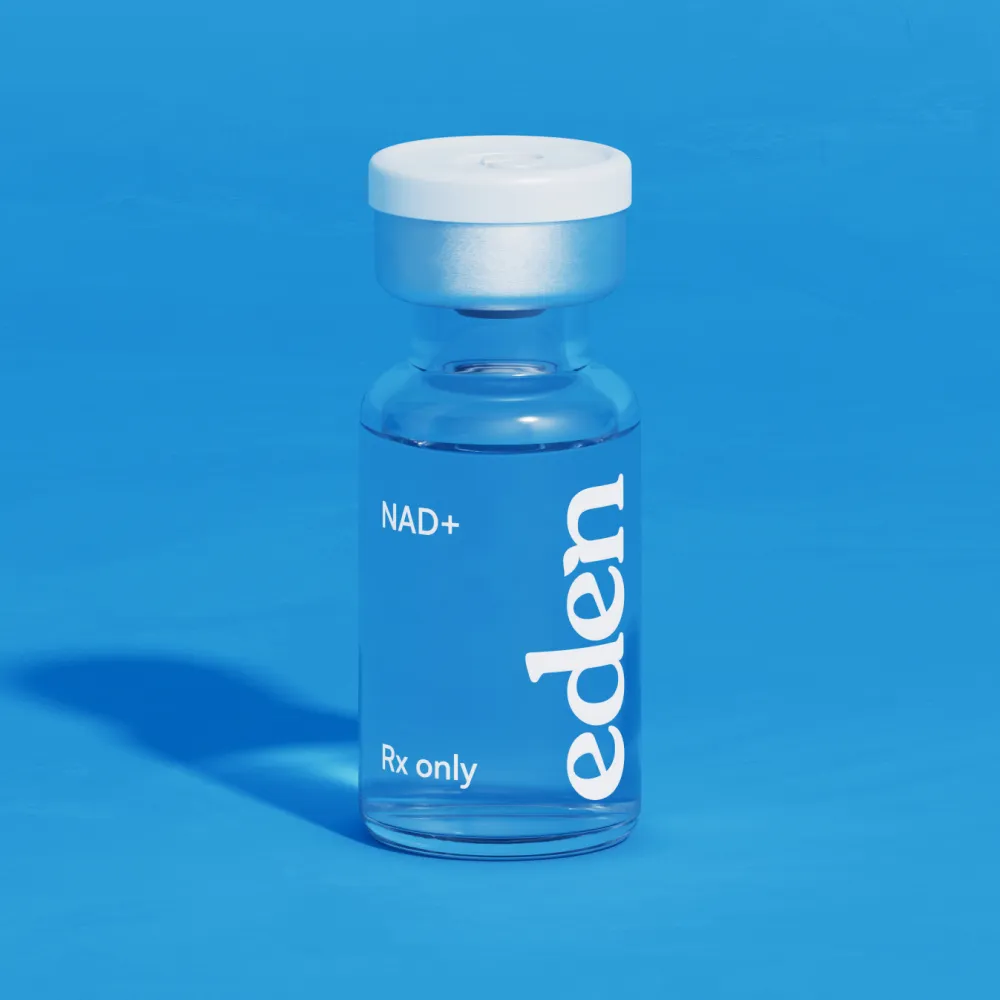
What Are NAD Injections (And Are They Worth It)?




What are NAD injections, and what can they actually do? Learn about the benefits of NAD injections, how they work, and whether they're right for you.
- What are NAD injections? NAD+ is a coenzyme found in every cell in your body, but levels drop significantly as you age, and injections are one way to help support them.
- NAD injections deliver this coenzyme directly into your system, bypassing the digestive limitations that make oral supplements potentially less effective.
- NAD injections are being studied for their potential role in cellular energy metabolism, DNA repair processes, and overall metabolic function.
- Research is still evolving, and more large-scale clinical trials are needed to understand NAD and its role in the body further.
- NAD injections aren’t appropriate for everyone; if you have a pre-existing health condition or take medications, discussing your options with a licensed healthcare provider can determine if it makes sense for you.
This article is for informational purposes only and is not intended as medical advice or to diagnose or treat any condition. Always consult a licensed healthcare provider before starting any new treatment or supplement.
What Are NAD Injections?
Let’s start with the basics: NAD+ (or Nicotinamide Adenine Dinucleotide) is a coenzyme that’s involved in hundreds of enzymatic reactions in the human body—including converting food into energy, supporting DNA repair, and regulating stress responses.
But your NAD+ levels don’t stay consistent. They decline as you age. In fact, researchers are studying whether age-related declines in NAD+ levels may be associated with changes in cellular function over time.
So, what’s the deal with NAD injections?
NAD injections deliver NAD+ through intramuscular or subcutaneous injection, either into muscle tissue or just beneath the skin. Unlike oral supplementation, this bypasses the digestive system. Plus, administration typically takes only a few minutes. At the same time, research on injectable NAD+ is ongoing, and clinical outcomes are still being evaluated.
{{primary-cta}}
Benefits of NAD Injections
The benefits of NAD injections are still under investigation. Below is a summary of how NAD+ functions in the body and what current research is exploring.
Energy and Mental Clarity
One of the most common reasons people explore NAD injections is fatigue. NAD+ plays a role in cellular energy metabolism by facilitating the conversion of nutrients into ATP, your body’s primary fuel source.
In fact, a double-blind, placebo-controlled trial found that supplementation with CoQ10 and NADH improved cellular bioenergetics and reduced fatigue in patients with chronic fatigue syndrome after eight weeks. However, this trial only explored the oral form of NAD.
With that said, research specifically evaluating injectable NAD+ for fatigue is limited, and more clinical trials are needed.
Cellular Repair and Aging
NAD+ helps regulate sirtuins, a group of enzymes involved in DNA repair, inflammation regulation, and cellular longevity. As NAD+ levels decline, sirtuin activity may also decrease, which researchers are studying in relation to cellular aging processes.
Research has found that NMN supplementation reversed age-related arterial dysfunction in mice, improving blood vessel dilation and reducing oxidative stress. Additionally, a 12-month study of NMN administration in mice also found it suppressed age-associated weight gain, enhanced energy metabolism, improved insulin sensitivity and lipid profiles, and boosted mitochondrial function.
However, these findings are still primarily preclinical, and human studies are needed to explore this association further.
Metabolic Support
NAD+ is involved in metabolic pathways that regulate energy production and cellular function.
Here’s what the research has demonstrated: A systematic review and meta-analysis of 22 treatment arms involving over 5,000 participants found that NAD+ precursor supplementation (specifically nicotinic acid and nicotinamide) lowered BMI and increased adiponectin, a protein involved in regulating glucose levels and fatty acid breakdown.
In a human clinical trial, overweight women with prediabetes were administered 250 mg/day of NMN for 10 weeks and experienced improved muscle insulin sensitivity. At the same time, again, research is limited, and this is an evolving field.
Neurological and Cognitive Support
NAD+ is essential for mitochondrial function in neurons, and thus, the theory is that this could potentially impact cognitive performance.
In animal studies, NAD+ helped reverse cognitive decline in mice with reduced blood flow to the brain; it did so by protecting cells from damage and reducing harmful cellular stress. NMN has also shown promise in Alzheimer’s disease mouse models, where it reduced brain cell loss and improved the connections between neurons that are critical for memory.
While human clinical trials in this area are still limited, the preclinical evidence is compelling enough that researchers continue to investigate NAD+’s neuroprotective potential.
Who Are NAD Injections For (and Who Should Be Cautious)?
Some individuals explore NAD injections as part of broader wellness goals. In other words, NAD injections should be part of a holistic plan, which also includes various lifestyle approaches.
With that said, NAD injections aren’t suitable for everyone. Pregnant or breastfeeding women should avoid them due to limited safety data. Individuals with cardiovascular conditions, such as unstable angina, severe liver or kidney impairment, or active cancer (especially hormone-sensitive cancers) should also consult their specialist before considering treatment.
NAD+ injections are also contraindicated for those taking monoamine oxidase inhibitors (MAOIs) and individuals with known benzyl alcohol allergies.
{{primary-cta}}
What to Expect When Getting NAD Injections
NAD injections require a prescription from a licensed healthcare provider. If you’re looking to improve your health and wellness, this process all starts with a brief online intake. Eden then coordinates your care by connecting you with a licensed healthcare provider who can evaluate whether treatment is clinically appropriate for you.
Dosing protocols often vary with NAD, but many start at a lower dose and adjust based on your response. If you have any concerns, it’s always important to discuss them with your provider.
For most healthy people, common side effects are typically mild and temporary, including nausea, headaches, injection-site soreness, and temporary flushing.
Final Thoughts
In short, NAD injections involve delivering a coenzyme your body already relies on. But research is still ongoing to better understand how NAD+ levels influence energy metabolism, cellular repair processes, and overall health.
Yet, like any wellness approach, results vary, and they work best as part of a broader plan that includes good nutrition, movement, and working with a qualified provider who understands your goals.









The FDA does not approve compounded medications for safety, quality, or manufacturing. Prescriptions and a medical evaluation are required for certain products. The information provided on this blog is for general informational purposes only. It is not intended as a substitute for professional advice from a qualified healthcare professional and should not be relied upon as personal health advice. The information contained in this blog is not meant to diagnose, treat, cure, or prevent any disease. Readers are advised to consult with a qualified healthcare professional for any medical concerns, including side effects. Use of this blog's information is at your own risk. The blog owner is not responsible for any adverse effects or consequences resulting from the use of any suggestions or information provided in this blog.
Eden is not a medical provider. Eden connects individuals with independent licensed healthcare providers who independently evaluate each patient to determine whether a prescription treatment program is appropriate. All prescriptions are written at the sole discretion of the licensed provider. Medications are filled by state-licensed pharmacies. Please consult a licensed healthcare provider before making any medical decisions.
Frequently asked questions
What does the NAD injection do?

NAD injections deliver the coenzyme NAD+ into the body. NAD+ plays a role in cellular energy production and metabolic processes. Yet again, clinical outcomes from injections are still being studied.
Who should avoid NAD?
Pregnant or breastfeeding women, individuals with severe liver or kidney impairment, those with unstable cardiovascular conditions, active cancer patients, and anyone taking MAOIs should avoid NAD+ injections without direct medical guidance.
How long does a NAD injection last?
Effects vary from person to person; some notice benefits for several days after a single injection. Others may not notice effects until after several sessions (or at all). At the end of the day, results aren’t guaranteed.
Related articles










Baichuan, Y., Gomes Reis, M., Tavakoli, S., Khodadadi, N., Sohouli, M. H., & Sernizon Guimarães, N. (2023). The effects of NAD+ precursor (nicotinic acid and nicotinamide) supplementation on weight loss and related hormones: a systematic review and meta-regression analysis of randomized controlled trials. Frontiers in nutrition, 10, 1208734. https://pmc.ncbi.nlm.nih.gov/articles/PMC10579603/
Castro-Marrero, J., Cordero, M. D., Segundo, M. J., Sáez-Francàs, N., Calvo, N., Román-Malo, L., Aliste, L., Fernández de Sevilla, T., & Alegre, J. (2015). Does oral coenzyme Q10 plus NADH supplementation improve fatigue and biochemical parameters in chronic fatigue syndrome?. Antioxidants & redox signaling, 22(8), 679–685. https://pmc.ncbi.nlm.nih.gov/articles/PMC4346380/
Imai, S., & Guarente, L. (2014). NAD+ and sirtuins in aging and disease. Trends in cell biology, 24(8), 464–471. https://pmc.ncbi.nlm.nih.gov/articles/PMC4112140/
Mills, K. F., Yoshida, S., Stein, L. R., Grozio, A., Kubota, S., Sasaki, Y., Redpath, P., Migaud, M. E., Apte, R. S., Uchida, K., Yoshino, J., & Imai, S. I. (2016). Long-Term Administration of Nicotinamide Mononucleotide Mitigates Age-Associated Physiological Decline in Mice. Cell metabolism, 24(6), 795–806. https://pubmed.ncbi.nlm.nih.gov/28068222/
Rajman, L., Chwalek, K., & Sinclair, D. A. (2018). Therapeutic Potential of NAD-Boosting Molecules: The In Vivo Evidence. Cell metabolism, 27(3), 529–547. https://pmc.ncbi.nlm.nih.gov/articles/PMC6342515/
Yoshino, M., Yoshino, J., Kayser, B. D., Patti, G. J., Franczyk, M. P., Mills, K. F., Sindelar, M., Pietka, T., Patterson, B. W., Imai, S. I., & Klein, S. (2021). Nicotinamide mononucleotide increases muscle insulin sensitivity in prediabetic women. Science (New York, N.Y.), 372(6547), 1224–1229. https://doi.org/10.1126/science.abe9985
Zhao, Y., Zhang, J., Zheng, Y., Zhang, Y., Zhang, X. J., Wang, H., Du, Y., Guan, J., Wang, X., & Fu, J. (2021). NAD+ improves cognitive function and reduces neuroinflammation by ameliorating mitochondrial damage and decreasing ROS production in chronic cerebral hypoperfusion models through Sirt1/PGC-1α pathway. Journal of neuroinflammation, 18(1), 207. https://pubmed.ncbi.nlm.nih.gov/34530866/
Thank you!
We'll be in touch.
Thank you!