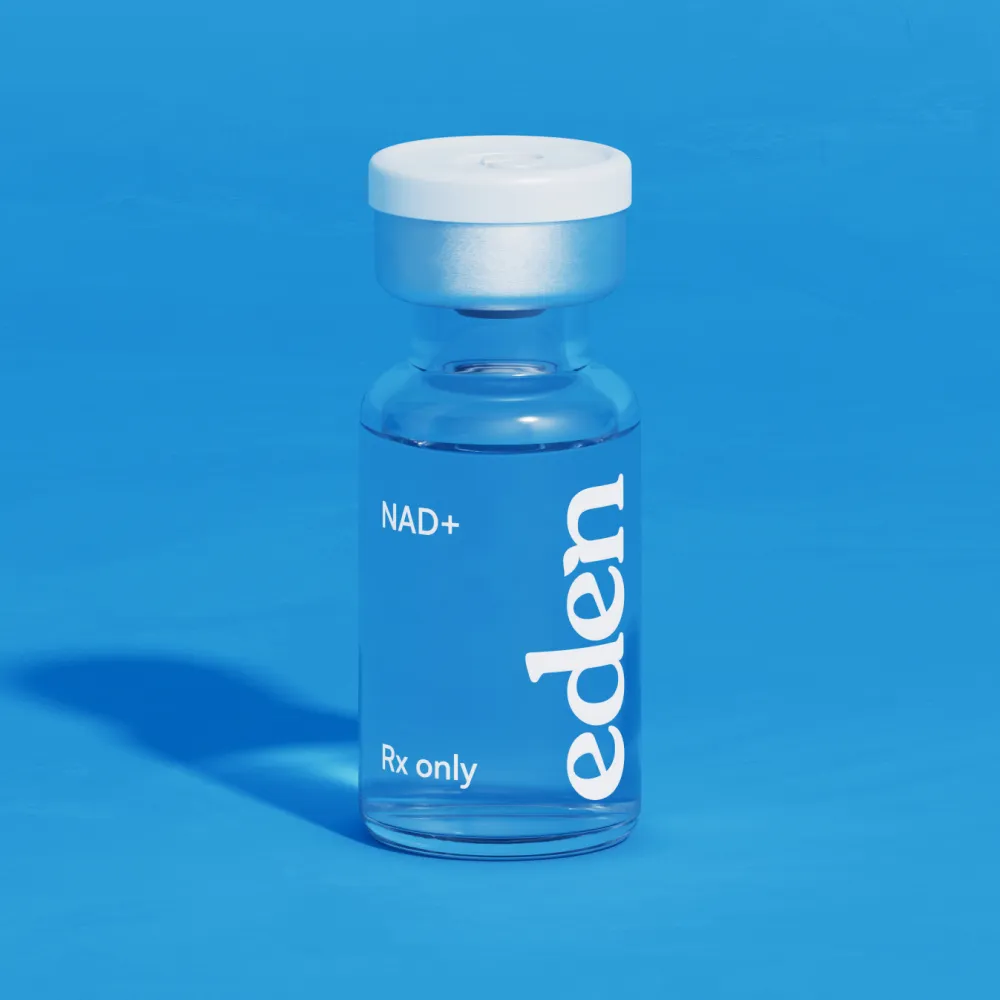
8 NAD Benefits for Women




What are the real NAD benefits for women? Learn how NAD+ may support energy and hormonal health, as well as how to choose the right form for you.
- The NAD benefits for women are being studied across multiple areas of health; however, human research remains limited.
- NAD+ levels can decline by roughly half during midlife, overlapping with hormonal transitions, such as perimenopause and menopause.
- Research suggests that NAD+ plays a role in mitochondrial energy production and DNA repair, which are areas of interest in age-related research.
- NAD+ precursors, such as nicotinamide mononucleotide (NMN) and nicotinamide riboside (NR), are the most studied supplementation options, with delivery methods ranging from oral capsules to injections, depending on individual health goals.
This content is for informational purposes only and is not intended as medical advice. Always consult a licensed healthcare provider before starting any new supplement or treatment. Individual results may vary.
How NAD+ Works in the Body
NAD+ (nicotinamide adenine dinucleotide) is a coenzyme in every cell in your body; it works by shuttling electrons between molecules during metabolism, which is how your cells produce ATP (your cells’ primary energy source). It also activates a family of enzymes called sirtuins, which are involved in cellular defense, inflammation control, and aging.
Yet, as time goes on, NAD naturally declines in the body. Research suggests levels may drop by roughly half during midlife.
For women, this decline often overlaps with hormonal transitions, such as perimenopause and menopause, which means the effects may occur at the same time. So, can taking an NAD supplement help during this time in a woman’s life? And is it useful in other areas of women’s health?
{{primary-cta}}
8 NAD Benefits for Women
Here are the potential benefits of NAD for women:
1. Supports Cellular Energy
NAD+ is essential to ATP production, the process your mitochondria use to generate energy. NAD+ is one factor involved in this reaction and contributes to mitochondrial function. When NAD+ levels dip, mitochondrial efficiency can suffer, and some women may notice unexplained fatigue, especially during midlife.
2. May Help Balance Hormones
NAD+ plays a role in cellular processes that are involved in hormone production and regulation. When NAD+ levels decline, these processes may function differently; however, clinical evidence directly linking NAD+ supplementation to improvements in hormonal conditions remains limited.
3. Supports Healthy Aging and Skin Health
NAD+ activates sirtuins, proteins involved in cellular stress responses and aging-related pathways. It also supports DNA repair enzymes that respond to UV and environmental damage in your skin.
Additionally, topical nicotinamide has been shown in some studies to support skin barrier function and reduce visible signs of aging. In fact, in one clinical trial, 50 women who used a 5% nicotinamide moisturizer for 12 weeks saw improvements in fine lines, wrinkles, texture, and dark spots.
4. May Support Cognitive Function and Mental Clarity
Animal studies have shown improvements in learning, memory retention, and recognition following NAD+ precursor supplementation. However, human studies are limited here; more research would help clarify these associations.
5. Supports Metabolism and Weight Management
NAD+ is involved in the metabolic pathways that break down carbohydrates, proteins, and fats. When levels are adequate, these processes run more efficiently.
A meta-analysis of NAD+ precursor studies found that supplementation was associated with reductions in BMI and increases in adiponectin (a hormone linked to metabolic health), particularly at higher doses and longer intervention periods. However, results varied across studies, and more research is needed to determine clinical relevance.
6. May Promote Better Sleep
NAD+ levels naturally oscillate throughout the day and play a role in regulating your circadian rhythm. Sirtuins that depend on NAD+ help coordinate sleep-wake signaling, and disruptions to these pathways can affect sleep quality.
In one clinical trial, 250 mg per day of NMN for 12 weeks improved sleep quality in older adults compared to placebo, with lower scores for daytime dysfunction and overall sleep disturbance. A separate trial found that NMN taken in the afternoon was particularly effective at reducing drowsiness in adults over 65. Yet, these findings are preliminary and may not apply to all populations.
7. Supports Fertility and Reproductive Health
Egg cells are the most energy-demanding cells in your body; they contain more mitochondria than any other cell type. In animal studies, NMN supplementation was associated with improved egg quality and quantity, supported healthy cell division during fertilization, and even prevented age-related ovarian decline in aging mice.
However, most research is still in animal models, and more human studies are needed.
8. May Help Manage Inflammation and Stress Response
When your body is under chronic stress or dealing with ongoing inflammation, it ramps up production of an enzyme called CD38, which burns through your NAD+ reserves. This creates a vicious cycle in which more inflammation leads to less NAD+, making it harder for your cells to repair and recover, which in turn drives more inflammation.
Maintaining normal NAD+ levels is an area of interest in research related to inflammation and cellular stress response; however, clinical evidence for supplementation outcomes remains limited.
{{primary-cta}}
Where to Get NAD+ and How to Use It
NAD+ can be supplemented in several forms. The most researched include NMN (nicotinamide mononucleotide) and NR (nicotinamide riboside), which are precursors the body converts into NAD+. These are available as oral supplements, and NAD+ can also be delivered via injection for more direct absorption.
At the end of the day, the right approach depends on your goals, health history, and your provider's recommendations. With Eden, you can start with a quick online intake and get matched with a licensed healthcare provider who will review your health history and help determine what’s best for you and your situation.
Final Thoughts
NAD+ research indicates that it plays an important role in cellular function and is being studied across multiple areas of women’s health. However, research is limited; more evidence would help confirm any benefits.
If you’re curious about whether NAD+ supplementation is right for you, discuss your options with a qualified healthcare provider; they can help you make the best choice.









The FDA does not approve compounded medications for safety, quality, or manufacturing. Prescriptions and a medical evaluation are required for certain products. The information provided on this blog is for general informational purposes only. It is not intended as a substitute for professional advice from a qualified healthcare professional and should not be relied upon as personal health advice. The information contained in this blog is not meant to diagnose, treat, cure, or prevent any disease. Readers are advised to consult with a qualified healthcare professional for any medical concerns, including side effects. Use of this blog's information is at your own risk. The blog owner is not responsible for any adverse effects or consequences resulting from the use of any suggestions or information provided in this blog.
Eden is not a medical provider. Eden connects individuals with independent licensed healthcare providers who independently evaluate each patient to determine whether a prescription treatment program is appropriate. All prescriptions are written at the sole discretion of the licensed provider. Medications are filled by state-licensed pharmacies. Please consult a licensed healthcare provider before making any medical decisions.
Frequently asked questions
What are the benefits of NAD for women?

NAD+ may support a wide range of functions relevant to women’s health, such as energy production, hormone health, cognitive function, skin health, sleep quality, and more.
At what age should women consider NAD+ supplementation?
NAD+ levels begin declining in early adulthood and may drop significantly by midlife. Some women explore supplementation in their 30s or 40s; however, decisions should be made in consultation with a licensed healthcare provider.
Are there side effects of NAD+ for women?
NAD+ precursors, such as NMN and NR, are generally well-tolerated in clinical studies. Some people report mild digestive discomfort, flushing, or headaches, particularly at higher doses. As with any supplement, it’s important to discuss potential side effects with a healthcare provider before starting.
What’s the best way to take NAD+?
NAD+ precursors are most commonly taken orally as capsules or powders. The best delivery method depends on your goals and health profile, which is where a licensed healthcare provider can help.
Related articles









Baichuan, Y., Gomes Reis, M., Tavakoli, S., Khodadadi, N., Sohouli, M. H., & Sernizon Guimarães, N. (2023). The effects of NAD+ precursor (nicotinic acid and nicotinamide) supplementation on weight loss and related hormones: a systematic review and meta-regression analysis of randomized controlled trials. Frontiers in nutrition, 10, 1208734. https://pmc.ncbi.nlm.nih.gov/articles/PMC10579603/
Bertoldo, M. J., Listijono, D. R., Ho, W. J., Riepsamen, A. H., Goss, D. M., Richani, D., Jin, X. L., Mahbub, S., Campbell, J. M., Habibalahi, A., Loh, W. N., Youngson, N. A., Maniam, J., Wong, A. S. A., Selesniemi, K., Bustamante, S., Li, C., Zhao, Y., Marinova, M. B., Kim, L. J., … Wu, L. E. (2020). NAD+ Repletion Rescues Female Fertility during Reproductive Aging. Cell reports, 30(6), 1670–1681.e7. https://pmc.ncbi.nlm.nih.gov/articles/PMC7063679/
Bissett, D. L., Miyamoto, K., Sun, P., Li, J., & Berge, C. A. (2004). Topical niacinamide reduces yellowing, wrinkling, red blotchiness, and hyperpigmented spots in aging facial skin. International journal of cosmetic science, 26(5), 231–238. https://pubmed.ncbi.nlm.nih.gov/18492135/
Conlon N. J. (2022). The Role of NAD+ in Regenerative Medicine. Plastic and reconstructive surgery, 150(4 Suppl ), 41S–48S. https://pmc.ncbi.nlm.nih.gov/articles/PMC9512238/
Kane, A. E., & Sinclair, D. A. (2018). Sirtuins and NAD+ in the Development and Treatment of Metabolic and Cardiovascular Diseases. Circulation research, 123(7), 868–885. https://pmc.ncbi.nlm.nih.gov/articles/PMC6206880/
Kim, M., Seol, J., Sato, T., Fukamizu, Y., Sakurai, T., & Okura, T. (2022). Effect of 12-Week Intake of Nicotinamide Mononucleotide on Sleep Quality, Fatigue, and Physical Performance in Older Japanese Adults: A Randomized, Double-Blind Placebo-Controlled Study. Nutrients, 14(4), 755. https://pmc.ncbi.nlm.nih.gov/articles/PMC8877443/
McReynolds, M. R., Chellappa, K., & Baur, J. A. (2020). Age-related NAD+ decline. Experimental gerontology, 134, 110888. https://pmc.ncbi.nlm.nih.gov/articles/PMC7442590/
Morifuji, M., Higashi, S., Ebihara, S., & Nagata, M. (2024). Ingestion of β-nicotinamide mononucleotide increased blood NAD levels, maintained walking speed, and improved sleep quality in older adults in a double-blind randomized, placebo-controlled study. GeroScience, 46(5), 4671–4688. https://pmc.ncbi.nlm.nih.gov/articles/PMC11336149/
Qader, M. A., Hosseini, L., Abolhasanpour, N., Oghbaei, F., Maghsoumi-Norouzabad, L., Salehi-Pourmehr, H., Fattahi, F., & Sadeh, R. N. (2025). A systematic review of the therapeutic potential of nicotinamide adenine dinucleotide precursors for cognitive diseases in preclinical rodent models. BMC neuroscience, 26(1), 17. https://pubmed.ncbi.nlm.nih.gov/40033213/
Yusri, K., Jose, S., Vermeulen, K. S., Tan, T. C. M., & Sorrentino, V. (2025). The role of NAD+ metabolism and its modulation of mitochondria in aging and disease. npj metabolic health and disease, 3(1), 26. https://pubmed.ncbi.nlm.nih.gov/40604314/
Thank you!
We'll be in touch.
Thank you!