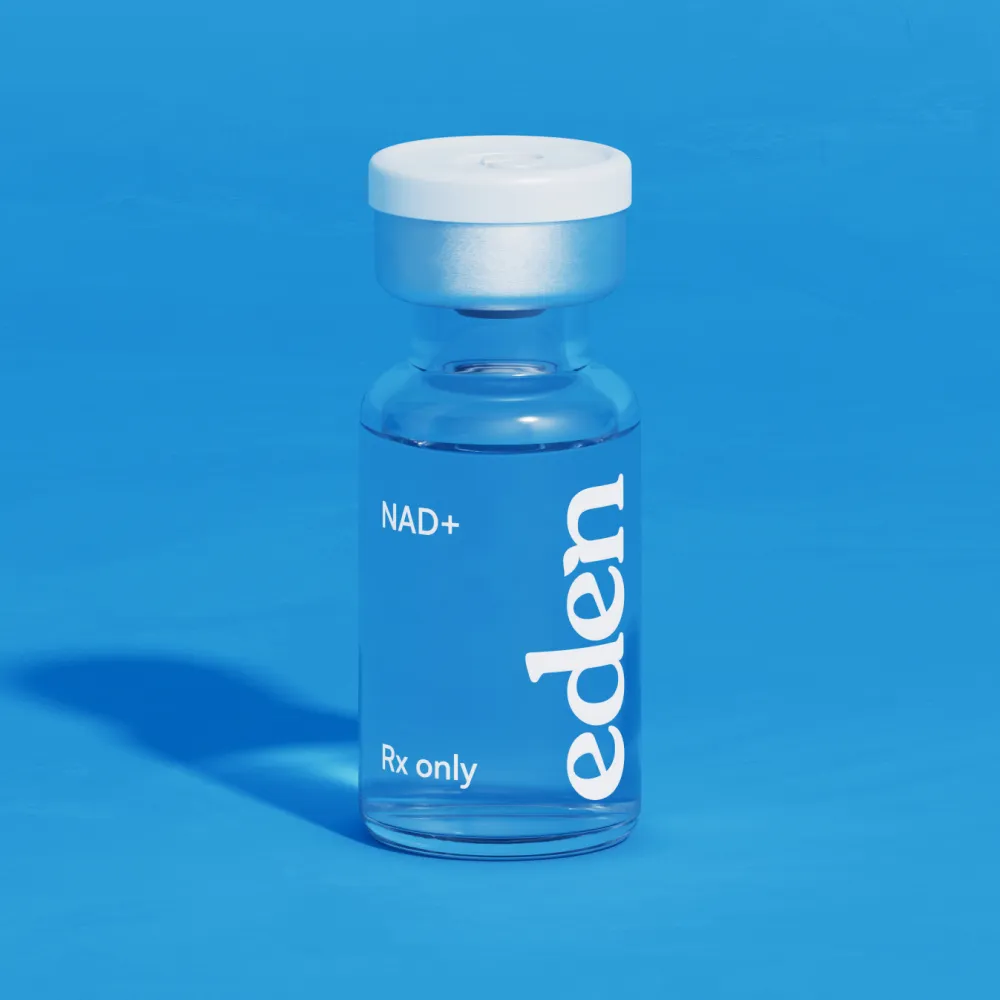
6 Benefits of NAD+ for Cellular Repair


.webp)

Is NAD+ for cellular repair worth trying? Here’s what to know about how it works, its benefits and side effects, and available therapy options.
- NAD+ for cellular repair has been explored in research related to DNA repair, mitochondrial function, and energy production.
- NAD+ may support six major areas of cellular health, including DNA repair, mitochondrial function, energy production, inflammation management, brain health, and skin health.
- Side effects of NAD+ therapy are often temporary and may include nausea, flushing, or discomfort at the injection site.
- Working with a licensed provider helps ensure you take the right approach for you and your health. It’s especially important to consult with a qualified healthcare provider if you have any pre-existing health conditions or take any medications.
This article is intended for educational purposes and is not a substitute for professional medical advice, diagnosis, or treatment. Always consult a licensed healthcare provider before starting any new supplement or therapy. NAD+ products are not FDA-approved for the treatment or prevention of any disease.
Should You Use NAD+ for Cellular Repair?
Interestingly, your body is already using NAD+ for processes involved in cellular energy production and DNA maintenance. NAD+ (nicotinamide adenine dinucleotide) is a coenzyme that influences how your cells produce energy, DNA repair, and mitochondrial function. It’s involved in hundreds of metabolic reactions happening inside your body at any given moment.
Yet, NAD+ levels don’t stay consistent over time. Research suggests they can decline by as much as 50% by middle age, which may affect how well your cells carry out essential repair processes. So, what can NAD+ actually do when it comes to cellular repair?
{{primary-cta}}
6 Benefits of NAD+ for Cellular Repair
Here’s how NAD+ may play a part in cellular repair processes.
May Support DNA Repair
Your cells face thousands of DNA-damaging events every single day, including UV exposure and even normal metabolic activity. However, NAD+ serves as a co-substrate for key repair enzymes such as PARP1 and sirtuins (SIRT1 and SIRT6), which detect and repair that damage before it accumulates. When NAD+ levels drop, your body’s ability to carry out these repairs may decrease.
Supports Mitochondrial Function
Mitochondria are your cells’ energy generators, and they rely heavily on NAD+ to do their job. NAD+ activates enzymes, such as SIRT1 and SIRT3, which play a role in maintaining mitochondrial quality and supporting a process called mitophagy (your body’s way of recycling damaged mitochondria and replacing them with healthy ones).
In fact, as NAD+ levels decline with age, mitochondrial function may follow.
May Boost Cellular Energy Production
NAD+ is directly involved in your cells’ energy pathways, including glycolysis, the Krebs cycle, and oxidative phosphorylation. During these processes, NAD+ accepts electrons and converts to NADH, which the mitochondria then use to produce ATP, your body’s main source of energy.
As such, a healthy NAD+/NADH ratio helps ensure your cells can keep up with energy demands, whether you’re powering through a workout or just getting through your afternoon.
May Help Manage Inflammation
Chronic, low-grade inflammation is increasingly linked to aging and age-related health concerns. So, where does NAD+ come into the picture?
NAD+ activates sirtuins, which may help suppress pro-inflammatory pathways like NF-κB. Early research indicates that sirtuins play a multifaceted role in modulating inflammation, though further studies are needed.
Supports Brain Health and Cognitive Function
Your brain is one of the most energy-demanding organs in your body. Research suggests that NAD+ may help reduce neuroinflammation and support neuron protection.
At the same time, human research is still evolving, but supporting your NAD+ levels could be one piece of the puzzle when it comes to maintaining cognitive sharpness as you age.
May Support Skin Health
Research has shown that NAD+ concentration in human skin declines with age, which may affect how well skin cells perform repair and maintenance.
While more targeted skin research is needed, maintaining healthy NAD+ levels may help maintain overall skin health.
Side Effects of NAD+
Like most therapies, NAD+ can come with some side effects. The most common ones tend to be mild and temporary, and include:
- Nausea
- Flushing
- Mild fatigue
- Discomfort at the injection site (for those using IV or subcutaneous methods).
However, everyone responds differently. Some people may experience headaches or lightheadedness, particularly with higher doses or faster IV infusion rates. This is why working with a licensed healthcare provider is important; they can help determine the right approach, dosage, and delivery method based on your individual health needs.
{{primary-cta}}
Final Thoughts
If you’re looking to support your NAD+ levels, options include IV therapy, subcutaneous injections, and oral precursors such as NR and NMN. However, any approach should be combined with lifestyle habits such as regular exercise, quality sleep, and a nutrient-dense diet.
Interested in learning more and exploring if NAD is right for you? Start with a quick online intake with Eden. We’ll connect you with a licensed provider who will review your health history and goals. Ultimately, it’s essential to work with a qualified healthcare provider who can ensure your next step is the right one.









The FDA does not approve compounded medications for safety, quality, or manufacturing. Prescriptions and a medical evaluation are required for certain products. The information provided on this blog is for general informational purposes only. It is not intended as a substitute for professional advice from a qualified healthcare professional and should not be relied upon as personal health advice. The information contained in this blog is not meant to diagnose, treat, cure, or prevent any disease. Readers are advised to consult with a qualified healthcare professional for any medical concerns, including side effects. Use of this blog's information is at your own risk. The blog owner is not responsible for any adverse effects or consequences resulting from the use of any suggestions or information provided in this blog.
Eden is not a medical provider. Eden connects individuals with independent licensed healthcare providers who independently evaluate each patient to determine whether a prescription treatment program is appropriate. All prescriptions are written at the sole discretion of the licensed provider. Medications are filled by state-licensed pharmacies. Please consult a licensed healthcare provider before making any medical decisions.
Frequently asked questions
Does NAD repair cells?

NAD+ plays a role in cellular processes involved in DNA repair and mitochondrial maintenance. It serves as a co-substrate for enzymes such as PARPs and sirtuins, which are directly involved in maintaining your cells’ health and function.
Does NAD+ repair mitochondria?
NAD+ is involved in pathways that influence mitochondrial quality control, including mitophagy, a process that helps clear out damaged mitochondria. These mechanisms support normal cellular energy production.
What are the benefits and side effects of NAD+?
NAD+ benefits may include support for DNA repair, mitochondrial function, energy production, inflammation management, brain health, and skin health. Side effects may be mild and may include nausea, flushing, or discomfort at the injection site.
Related articles








Cantó, C., Sauve, A. A., & Bai, P. (2013). Crosstalk between poly(ADP-ribose) polymerase and sirtuin enzymes. Molecular aspects of medicine, 34(6), 1168–1201. https://doi.org/10.1016/j.mam.2013.01.004
Conlon N. J. (2022). The Role of NAD+ in Regenerative Medicine. Plastic and reconstructive surgery, 150(4 Suppl ), 41S–48S. https://doi.org/10.1097/PRS.0000000000009673
Hou, Y., Lautrup, S., Cordonnier, S., Wang, Y., Croteau, D. L., Zavala, E., Zhang, Y., Moritoh, K., O'Connell, J. F., Baptiste, B. A., Stevnsner, T. V., Mattson, M. P., & Bohr, V. A. (2018). NAD+ supplementation normalizes key Alzheimer's features and DNA damage responses in a new AD mouse model with introduced DNA repair deficiency. Proceedings of the National Academy of Sciences of the United States of America, 115(8), E1876–E1885. https://doi.org/10.1073/pnas.1718819115
McReynolds, M. R., Chellappa, K., & Baur, J. A. (2020). Age-related NAD+ decline. Experimental gerontology, 134, 110888. https://doi.org/10.1016/j.exger.2020.110888
Meng, H., Yan, W. Y., Lei, Y. H., Wan, Z., Hou, Y. Y., Sun, L. K., & Zhou, J. P. (2019). SIRT3 Regulation of Mitochondrial Quality Control in Neurodegenerative Diseases. Frontiers in aging neuroscience, 11, 313. https://doi.org/10.3389/fnagi.2019.00313
Ruszkiewicz, J. A., Bürkle, A., & Mangerich, A. (2022). Fueling genome maintenance: On the versatile roles of NAD+ in preserving DNA integrity. The Journal of biological chemistry, 298(6), 102037. https://doi.org/10.1016/j.jbc.2022.102037
Tang B. L. (2016). Sirt1 and the Mitochondria. Molecules and cells, 39(2), 87–95. https://doi.org/10.14348/molcells.2016.2318
Yang, H., Zhang, W., Pan, H., Feldser, H. G., Lainez, E., Miller, C., Leung, S., Zhong, Z., Zhao, H., Sweitzer, S., Considine, T., Riera, T., Suri, V., White, B., Ellis, J. L., Vlasuk, G. P., & Loh, C. (2012). SIRT1 activators suppress inflammatory responses through promotion of p65 deacetylation and inhibition of NF-κB activity. PloS one, 7(9), e46364. https://doi.org/10.1371/journal.pone.0046364
Zhang, J., Xiang, H., Liu, J., Chen, Y., He, R. R., & Liu, B. (2020). Mitochondrial Sirtuin 3: New emerging biological function and therapeutic target. Theranostics, 10(18), 8315–8342. https://doi.org/10.7150/thno.45922
Zhao, Y., Zhang, J., Zheng, Y., Zhang, Y., Zhang, X. J., Wang, H., Du, Y., Guan, J., Wang, X., & Fu, J. (2021). NAD+ improves cognitive function and reduces neuroinflammation by ameliorating mitochondrial damage and decreasing ROS production in chronic cerebral hypoperfusion models through Sirt1/PGC-1α pathway. Journal of neuroinflammation, 18(1), 207. https://doi.org/10.1186/s12974-021-02250-8
Thank you!
We'll be in touch.
Thank you!