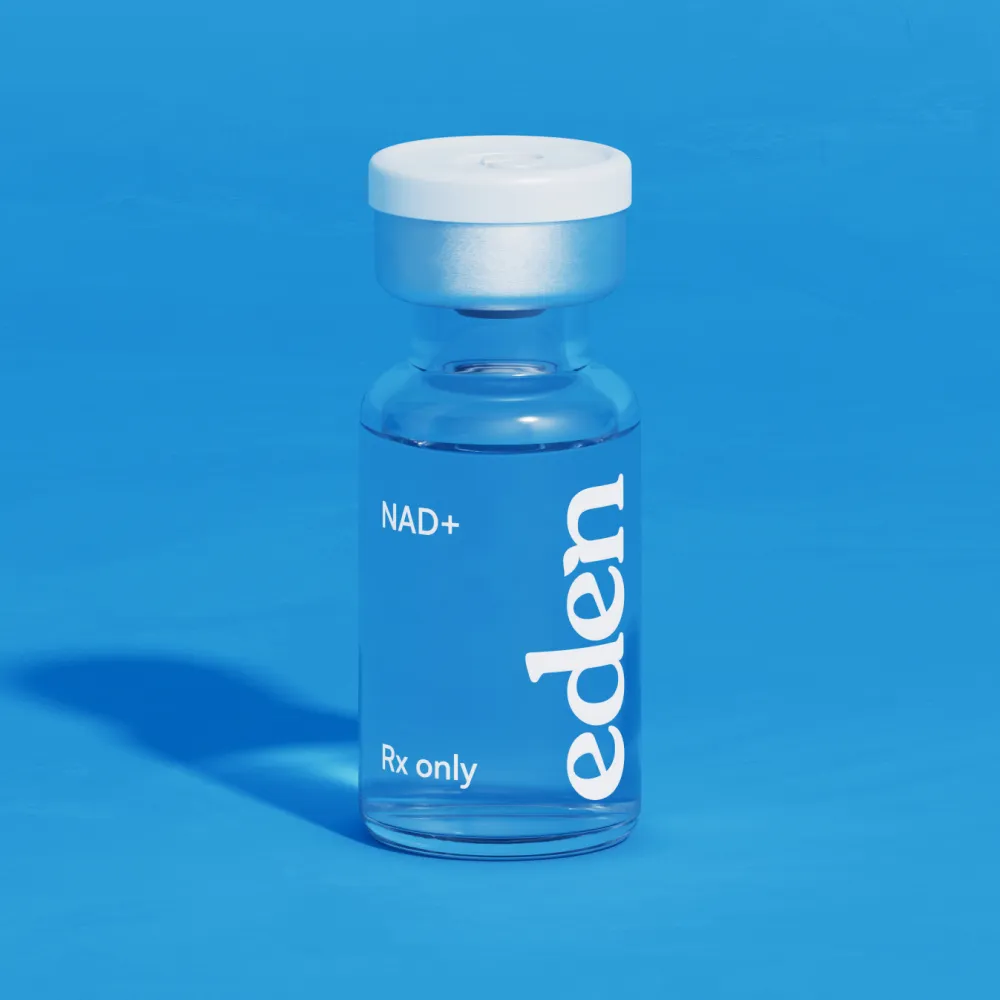
NAD+ for Energy: Benefits, How It Works, and Who It’s For




Is NAD+ for energy worth the hype? Learn how it powers your cells, who benefits most, and the best ways to boost your levels.
- NAD+ for energy isn’t just a wellness trend. This molecule is directly involved in how your cells produce and use fuel every single day.
- As you age, your body’s NAD+ levels naturally decline.
- Supplementing with NAD+ precursors, such as NMN or NR, is being studied for its role in supporting normal cellular energy processes.
- NAD+ does more than support energy. It also may support DNA repair and metabolism.
- A licensed healthcare provider can help you determine the right form and approach to NAD+ supplementation based on your individual needs.
This article is intended for informational purposes only and should not be used as a substitute for professional medical advice, diagnosis, or treatment. NAD+ supplements are not intended to diagnose, treat, cure, or prevent any disease. Always consult a qualified healthcare provider before starting any new supplement or treatment plan.
What Is NAD+? And Why Does It Matter for Energy?
Feeling tired all the time can create a vicious cycle: you’re tired from being tired. And sometimes, the answer isn’t more sleep or another cup of coffee. Sometimes, it starts at the cellular level.
NAD+ (nicotinamide adenine dinucleotide) is a coenzyme found in every cell of your body. It’s involved in hundreds of biological processes, but one of its most important jobs is helping your cells turn food into usable energy.
Without enough of it, your cells can’t produce energy efficiently. And when energy production slows down at the cellular level, you feel it.
Interestingly, NAD+ has been studied for decades, but it’s gained renewed attention in recent years as researchers explore its connection to energy, vitality, and age-related changes in cellular function.
{{primary-cta}}
How NAD+ Fuels Your Cells
Your body converts the food you eat into energy through a series of chemical reactions inside your cells. And NAD+ plays a part in this.
NAD+ works within your mitochondria, often called the powerhouses of your cells, to help produce ATP, the energy source every cell in your body relies on. Every time you move, think, breathe, or recover from a workout, your body is essentially spending ATP.
NAD+ also supports the activity of sirtuins, a group of proteins involved in mitochondrial health and cellular maintenance. When NAD+ levels are where they should be, your mitochondria may be able to function more efficiently. When levels drop, so does your body’s ability to produce energy.
And this is why researchers are exploring NAD+ levels in relation to overall cellular energy balance.
Why Do NAD+ Levels Decline?
Your body’s NAD+ levels don’t stay constant throughout your life. Instead, they naturally decrease as you get older. By middle age, most people have noticeably lower NAD+ levels than they did in their twenties or thirties.
Age isn’t the only factor, though. Chronic stress, poor sleep, inflammation, and lifestyle habits like excessive alcohol consumption or prolonged sun exposure can all accelerate NAD+ depletion. When your body is under constant strain, it uses up NAD+ faster than it can replenish it.
Researchers continue to explore how NAD+ levels vary among adults experiencing age-related changes, individuals with high physical or cognitive demands, those under sustained stress, and people with low activity levels.
Does NAD Give You Energy?
To be clear: NAD+ is not a stimulant. It won’t give you a jolt of energy the way caffeine or sugar does. Instead, it plays a role in the biochemical processes involved in cellular energy production.
Some people who supplement with NAD+ report feeling more consistent energy throughout the day, improved mental clarity, and better recovery after physical activity. But these benefits typically develop over weeks of regular use, not overnight. They can also vary from person to person, and results aren’t guaranteed.
Additionally, NAD+ supplementation may affect individuals differently depending on overall health, lifestyle, age, and baseline nutrient status.
Ways to Boost NAD+ for Energy
Here are the main supplement routes and lifestyle habits that may support NAD+ levels.
NAD+ Oral Supplements (NMN and NR)
Oral supplements are the most accessible option for people looking to support their NAD+ levels. Most experts recommend precursors such as NMN (nicotinamide mononucleotide) or NR (nicotinamide riboside). These compounds convert into NAD+ inside your cells.
Overall, oral supplements are convenient, don’t require a prescription, and fit easily into a daily routine. As such, they’re a popular starting point for people exploring NAD+ for the first time.
NAD+ Injections
For those looking for a more targeted approach, NAD+ injections are administered as a shot, typically given subcutaneously or intramuscularly by a licensed healthcare provider.
Injections do require a prescription and should be administered under medical supervision. They tend to cost more than oral options but may be a good fit for some people who want more direct delivery.
NAD+ IV Therapy
With IV therapy, NAD+ is administered intravenously under medical supervision. It’s typically offered at specialized clinics, though some providers also offer at-home sessions.
At the same time, IV therapy is the most expensive option.
Lifestyle Habits That Support NAD+ Levels
Supplementation isn’t the only way to support NAD+ production. Certain lifestyle habits may help your body maintain healthier levels naturally. These may include:
- Participating in regular exercise
- Prioritizing quality sleep
- Eating a balanced diet
- Reducing alcohol intake
- Managing chronic stress
{{primary-cta}}
How Eden Can Help
Are you considering NAD+ but not sure where to start? Eden can help you sort through the options. You’ll connect with a licensed healthcare provider who can take a look at your health history and goals and talk through what’s appropriate for you. From there, if a prescription route is recommended, Eden helps coordinate the process and fulfillment through a licensed pharmacy.
Final Thoughts
Fatigue doesn’t have to be something you just accept as a normal part of getting older. Whether you start with an oral NAD supplement, explore injections, or focus on lifestyle changes, the goal should be to support your overall metabolic health.
If you’re curious about whether NAD+ supplementation is right for you, a licensed healthcare provider can help you figure out the best starting point based on your goals and health circumstances.









The FDA does not approve compounded medications for safety, quality, or manufacturing. Prescriptions and a medical evaluation are required for certain products. The information provided on this blog is for general informational purposes only. It is not intended as a substitute for professional advice from a qualified healthcare professional and should not be relied upon as personal health advice. The information contained in this blog is not meant to diagnose, treat, cure, or prevent any disease. Readers are advised to consult with a qualified healthcare professional for any medical concerns, including side effects. Use of this blog's information is at your own risk. The blog owner is not responsible for any adverse effects or consequences resulting from the use of any suggestions or information provided in this blog.
Eden is not a medical provider. Eden connects individuals with independent licensed healthcare providers who independently evaluate each patient to determine whether a prescription treatment program is appropriate. All prescriptions are written at the sole discretion of the licensed provider. Medications are filled by state-licensed pharmacies. Please consult a licensed healthcare provider before making any medical decisions.
Frequently asked questions
Does NAD give you energy right away?

NAD+ is not a stimulant, so it won’t provide an instant energy boost like caffeine. Individual experiences may vary, and research is ongoing regarding timing and effects.
What’s the best NAD supplement for energy?
NAD+ precursors, including NMN and NR, are commonly used because they serve as precursors that the body can convert into NAD+. A qualified healthcare professional can determine what’s best for you.
Can NAD+ help with chronic fatigue?
Some individuals exploring NAD+ supplementation are interested in its role in cellular energy processes. However, chronic fatigue can have many underlying causes, so it’s important to work with a licensed healthcare provider to determine appropriate evaluation and care.
How does aging affect NAD+ levels?
NAD+ levels naturally decline as you age, with a noticeable drop typically beginning around middle age. Researchers continue to examine how these changes may influence cellular function over time.
Related articles









Cantó, C., Menzies, K. J., & Auwerx, J. (2015). NAD(+) Metabolism and the Control of Energy Homeostasis: A Balancing Act between Mitochondria and the Nucleus. Cell metabolism, 22(1), 31–53. https://doi.org/10.1016/j.cmet.2015.05.023
Covarrubias, A. J., Perrone, R., Grozio, A., & Verdin, E. (2021). NAD+ metabolism and its roles in cellular processes during ageing. Nature reviews. Molecular cell biology, 22(2), 119–141. https://doi.org/10.1038/s41580-020-00313-x
Poljsak, B., & Milisav, I. (2016). NAD+ as the Link Between Oxidative Stress, Inflammation, Caloric Restriction, Exercise, DNA Repair, Longevity, and Health Span. Rejuvenation research, 19(5), 406–415. https://doi.org/10.1089/rej.2015.1767
Schultz, M. B., & Sinclair, D. A. (2016). Why NAD(+) Declines during Aging: It's Destroyed. Cell metabolism, 23(6), 965–966. https://doi.org/10.1016/j.cmet.2016.05.022
Thank you!
We'll be in touch.
Thank you!