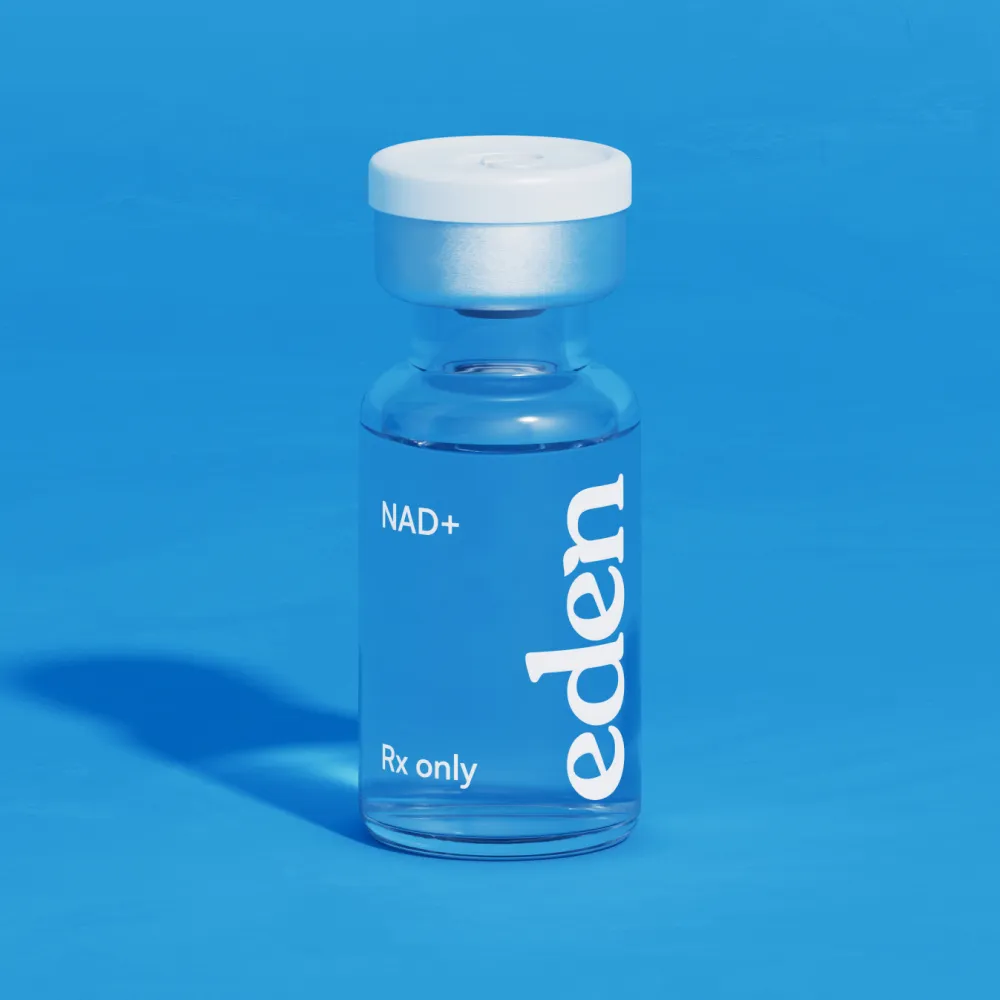
How Are NAD+ Injections Used in Regenerative Medicine?


.webp)

What role do NAD+ injections play in regenerative medicine? Learn how they work, their potential uses, and potential benefits.
- NAD+ injections deliver this coenzyme directly into the body, which may result in different absorption characteristics than oral NAD supplement precursors, though comparative bioavailability data are limited.
- NAD+ is a coenzyme found in every cell that supports energy production, DNA repair, and hundreds of metabolic processes. Its levels naturally decline with age.
- In regenerative medicine, researchers are exploring NAD+ therapy for its potential role in cellular repair, mitochondrial function, and healthy aging.
- Potential NAD injection benefits that have been explored in early research and anecdotal reports include support for cellular energy production and metabolic processes, though individual results vary.
- NAD+ injection therapy is not FDA-approved to treat, cure, or prevent any disease. Always consult a healthcare provider before starting treatment.
This article is for informational purposes only and is not intended as medical advice, diagnosis, or treatment. NAD+ injection therapy is not FDA-approved to treat, cure, or prevent any disease. Always consult with a qualified healthcare provider before starting any new treatment. Individual results may vary.
What Is an NAD+ Injection?
Between the supplements, routines, and lifestyle changes, we’re always looking for ways to turn back the clock. This search is pushing more people toward regenerative medicine, an approach focused on supporting the body at the cellular level. And NAD+ injections sit right at the center of this conversation.
NAD+, or nicotinamide adenine dinucleotide, is a coenzyme, and it’s found in every cell in the human body. Your body relies on it for many enzymatic reactions, making it one of the most essential molecules for basic cellular function.
However, NAD+ levels naturally decrease over time. Research suggests that by middle age, many adults have lost a significant portion of their NAD+ stores, and this decline has been studied in connection with age-related cellular changes.
An NAD+ injection delivers this coenzyme directly into your body through either an intramuscular or subcutaneous route. Unlike an oral NAD supplement, which has to pass through your digestive system and liver before reaching your bloodstream, an NAD injection bypasses that process entirely. This means it does not undergo first-pass digestion in the same way as oral supplements (though clinical comparisons on absorption and outcomes remain limited).
{{primary-cta}}
NAD+ Injections in Regenerative Medicine
Regenerative medicine focuses on restoring or supporting the body’s natural repair mechanisms, and NAD+ has become a molecule of particular interest in this field. This is largely because NAD+ sits at the intersection of several biological processes that are fundamental to how cells maintain themselves, produce energy, and respond to damage.
At the cellular level, NAD+ is required for sirtuin function, a family of proteins involved in DNA repair and mitochondrial health. It’s also important in processes involved in managing oxidative stress and inflammation.
Preclinical studies have shown that restoring NAD+ levels may support improved mitochondrial function, healthier cellular aging, and better tissue recovery. While much of this research is still in its early stages, these findings have made NAD+ injections an area of growing interest among providers specializing in regenerative and integrative medicine. The goal of NAD+ injection therapy in this context isn’t to treat a specific disease but rather to support the body’s underlying repair and maintenance systems at the cellular level.
With that said, it’s important to note that NAD+ injection therapy is still an emerging area of research. Long-term clinical data in humans are limited, and more research is needed to fully understand its applications in regenerative medicine.
Potential NAD Injection Benefits
While research is ongoing, several potential NAD injection benefits have been reported in preclinical research, limited human studies, and anecdotal reports. Here’s what the current evidence suggests.
Energy and Mitochondrial Support
NAD+ is essential for converting the energy from the food you eat into usable energy at the cellular level. It’s a critical part of the metabolic pathways within your mitochondria, often referred to as the cell’s power plants.
When NAD+ levels are low, mitochondrial efficiency may drop. In fact, some individuals report subjective improvements in energy after treatment, though responses vary and controlled data are limited.
Cognitive Function and Mental Clarity
Preclinical research has explored whether NAD+ plays a role in supporting brain health, such as its potential role in neuroinflammation and healthy neurotransmitter activity.
Some individuals report less brain fog and sharper thinking after beginning NAD+ injection therapy, though these experiences are subjective, and more clinical studies are needed to determine efficacy and safety.
Recovery and Inflammation
Because NAD+ is involved in cellular repair processes, researchers are exploring its potential role in recovery and tissue maintenance. Early research also suggests that adequate NAD+ levels may help modulate the body’s inflammatory response.
Metabolic Health
NAD+ is closely tied to how your body processes and utilizes nutrients. One clinical trial found that an NAD+ precursor improved muscle insulin sensitivity in postmenopausal women with prediabetes, though other studies using different precursors and populations have shown mixed results.
NAD+ Injection vs. NAD Supplement: Which Is Right for You?
The answer to this question largely depends on your goals, lifestyle, and budget.
An oral NAD supplement, which typically uses precursors such as NMN or NR that your body converts into NAD+, is convenient and accessible. You can take it daily at home without any clinical visit. However, oral supplements must survive digestion and first-pass liver metabolism, which may affect how much NAD becomes systemically available.
NAD+ injections, on the other hand, deliver the coenzyme directly into your tissue. The trade-off is that injections require a licensed provider’s prescription, cost more per session, and involve either clinic visits or self-administration at home.
{{primary-cta}}
What to Know Before Starting NAD+ Injection Therapy
NAD+ injections may not be appropriate for everyone. Individuals with active cancer, severe liver conditions, cardiovascular disease, or those who are pregnant or breastfeeding should avoid this treatment unless cleared by a physician.
Side effects are generally mild and may include:
- Temporary nausea
- Flushing
- Discomfort or irritation at the injection site
- Or lightheadedness during or after administration.
The most important step is to first consult with a qualified healthcare provider who can evaluate your health history and determine whether NAD+ injection therapy is a good fit for your goals. Working with a reputable provider also ensures proper dosing, safe administration, and appropriate follow-up.
If you’re curious about NAD+, start with our brief online intake. From there, Eden can connect you with a licensed healthcare provider to review your goals and health history and determine what’s best for you.
Final Thoughts
NAD+ injections are an emerging area of interest within regenerative medicine research, being explored for their potential role in supporting cellular processes related to energy and repair. While the science is still evolving and more clinical research is needed, the early findings are encouraging for those interested in supporting their body from the inside out.
Yet, NAD+ injection therapy isn’t a one-size-fits-all solution. Consulting a qualified healthcare provider is the best way to understand whether it’s a good fit for you.









The FDA does not approve compounded medications for safety, quality, or manufacturing. Prescriptions and a medical evaluation are required for certain products. The information provided on this blog is for general informational purposes only. It is not intended as a substitute for professional advice from a qualified healthcare professional and should not be relied upon as personal health advice. The information contained in this blog is not meant to diagnose, treat, cure, or prevent any disease. Readers are advised to consult with a qualified healthcare professional for any medical concerns, including side effects. Use of this blog's information is at your own risk. The blog owner is not responsible for any adverse effects or consequences resulting from the use of any suggestions or information provided in this blog.
Eden is not a medical provider. Eden connects individuals with independent licensed healthcare providers who independently evaluate each patient to determine whether a prescription treatment program is appropriate. All prescriptions are written at the sole discretion of the licensed provider. Medications are filled by state-licensed pharmacies. Please consult a licensed healthcare provider before making any medical decisions.
Frequently asked questions
How long do NAD+ injection results last?

Experiences following an NAD+ injection vary. Some providers may recommend ongoing sessions depending on individual goals and clinical judgment.
Are NAD+ injections painful?
Most people report mild discomfort at the injection site, similar to that with other intramuscular or subcutaneous injections.
Can I take an NAD supplement alongside injections?
Some people do use both, but it’s important to discuss this with your healthcare provider to ensure proper dosing and avoid unnecessary overlap.
What NAD injection benefits should I expect first?
While individual experiences vary, some people report subjective changes in energy levels. However, studies are limited, and benefits may depend on multiple personal health factors.
Related articles










Covarrubias, A. J., Perrone, R., Grozio, A., & Verdin, E. (2021). NAD+ metabolism and its roles in cellular processes during ageing. Nature reviews. Molecular cell biology, 22(2), 119–141. https://doi.org/10.1038/s41580-020-00313-x
Imai, S., & Guarente, L. (2014). NAD+ and sirtuins in aging and disease. Trends in cell biology, 24(8), 464–471. https://doi.org/10.1016/j.tcb.2014.04.002
Massudi, H., Grant, R., Braidy, N., Guest, J., Farnsworth, B., & Guillemin, G. J. (2012). Age-associated changes in oxidative stress and NAD+ metabolism in human tissue. PloS one, 7(7), e42357. https://doi.org/10.1371/journal.pone.0042357
McReynolds, M. R., Chellappa, K., & Baur, J. A. (2020). Age-related NAD+ decline. Experimental gerontology, 134, 110888. https://doi.org/10.1016/j.exger.2020.110888
Petrosyan, A., Martins, P. N., Solez, K., Uygun, B. E., Gorantla, V. S., & Orlando, G. (2022). Regenerative medicine applications: An overview of clinical trials. Frontiers in bioengineering and biotechnology, 10, 942750. https://doi.org/10.3389/fbioe.2022.942750
Poljsak, B., & Milisav, I. (2016). NAD+ as the Link Between Oxidative Stress, Inflammation, Caloric Restriction, Exercise, DNA Repair, Longevity, and Health Span. Rejuvenation research, 19(5), 406–415. https://doi.org/10.1089/rej.2015.1767
Yoshino, M., Yoshino, J., Kayser, B. D., Patti, G. J., Franczyk, M. P., Mills, K. F., Sindelar, M., Pietka, T., Patterson, B. W., Imai, S. I., & Klein, S. (2021). Nicotinamide mononucleotide increases muscle insulin sensitivity in prediabetic women. Science (New York, N.Y.), 372(6547), 1224–1229. https://doi.org/10.1126/science.abe9985
Zhao, Y., Zhang, J., Zheng, Y., Zhang, Y., Zhang, X. J., Wang, H., Du, Y., Guan, J., Wang, X., & Fu, J. (2021). NAD+ improves cognitive function and reduces neuroinflammation by ameliorating mitochondrial damage and decreasing ROS production in chronic cerebral hypoperfusion models through Sirt1/PGC-1α pathway. Journal of neuroinflammation, 18(1), 207. https://doi.org/10.1186/s12974-021-02250-8
Thank you!
We'll be in touch.
Thank you!