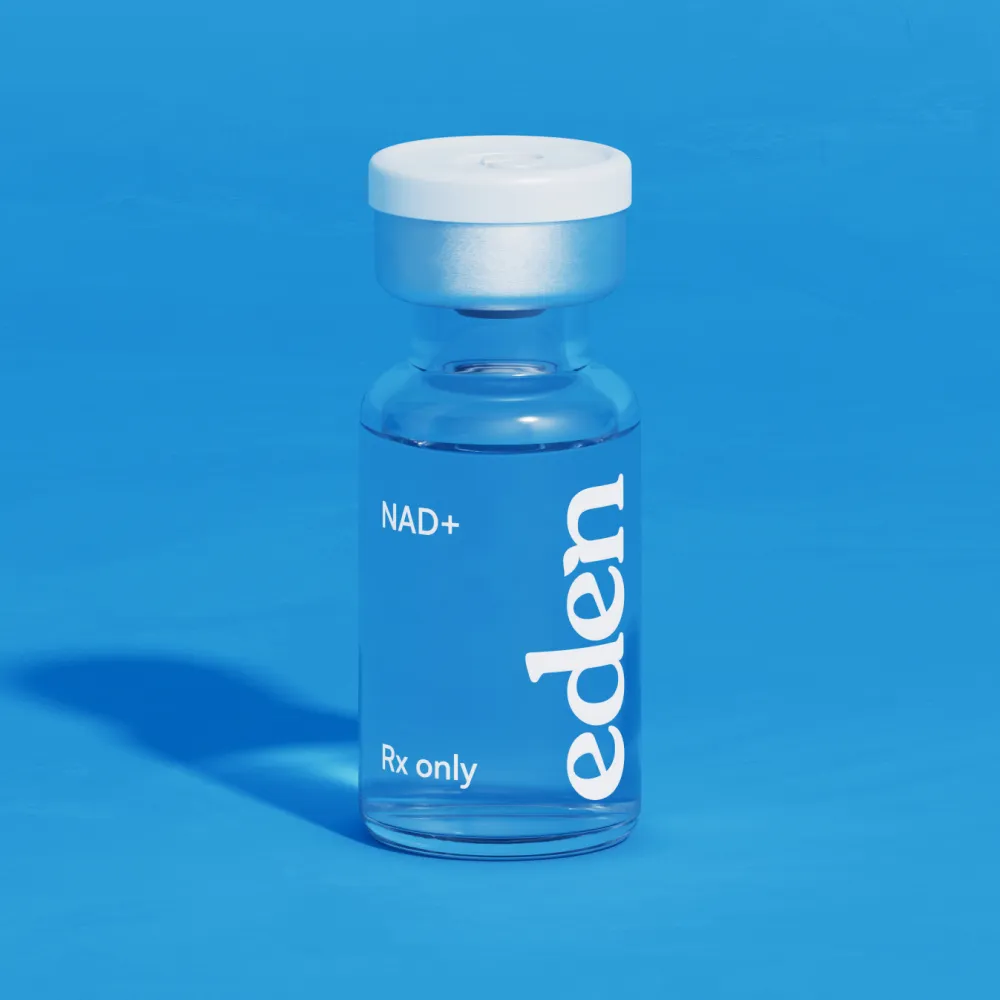
What Happens When Your NAD Level Drops?




Your NAD level naturally drops with age. Find out what happens when your NAD level declines and how to recognize the signs.
- Your NAD level naturally declines with age.
- By age 50, NAD levels may decline significantly, with some studies suggesting reductions of up to 40-50% in certain tissues, with brain tissue often showing signs of decline first.
- Common signs of low NAD include persistent fatigue, brain fog, slower recovery from physical activity, and changes in skin, sleep, and mood.
- Lifestyle habits, such as regular exercise, quality sleep, and intermittent fasting, may help support healthy NAD levels.
- NAD supplements, such as NMN and NR, are being studied for their potential to support NAD levels, but evidence in humans remains limited
This article is intended for educational purposes only and should not be used to diagnose or treat any health condition. Consult a licensed healthcare provider before starting any new supplement or treatment.
What Is NAD?
Every cell in your body depends on NAD (nicotinamide adenine dinucleotide) to do its job. It powers the reactions that convert food into energy, supports DNA repair, and helps regulate proteins involved in inflammation and aging. In fact, this coenzyme plays a role in more than 500 enzymatic reactions.
When your NAD level is adequate, these processes are better equipped to function as they should. When it drops, some people may begin to notice changes in how they feel day to day.
Signs Your NAD Level May Be Low
But how do you know your NAD level may be low? Here are a few of the commonly reported signs.
Persistent Fatigue and Low Energy
Since NAD is important for mitochondrial energy production, lower levels mean your cells are less efficient at converting nutrients into fuel. For some individuals, this may manifest as increased fatigue, low motivation, and low stamina.
Brain Fog and Difficulty Focusing
NAD supports the neurochemical processes behind memory, concentration, and mental clarity. When levels drop, some people report brain fog, forgetfulness, or trouble staying focused on tasks.
Slower Recovery from Exercise or Illness
NAD plays a role in cellular repair, and declining levels have been associated in some research with changes in muscle function and tissue recovery. Over time, this may also lead to age-related muscle changes, such as sarcopenia (the gradual loss of skeletal muscle mass and strength).
Changes in Skin, Sleep, and Mood
NAD is involved in your body’s internal clock and cellular turnover. Lower levels may disrupt sleep quality, be associated with changes in skin appearance, and influence mood regulation. Some people notice they’re sleeping lighter, waking more often, or feeling more irritable without a clear cause.
{{primary-cta}}
NAD Level By Age
So, what should your NAD level be at your age? Here’s a quick breakdown:
Your 20s and 30s
NAD levels tend to peak in early adulthood, typically in your early 20s. From there, a gradual decline begins.
Interestingly, brain tissue is one of the first areas affected. Using non-invasive magnetic resonance imaging, researchers have confirmed an age-dependent reduction in NAD+ levels in the healthy human brain. Given that your brain accounts for roughly 20% of your body’s oxygen consumption despite making up only about 2% of your body weight, even small dips in NAD availability may influence how you think and feel.
Your 40s and 50s
Multiple studies suggest that by age 50, your NAD level may be 40-50% lower than in your 20s, with increased activity of NAD-consuming enzymes, such as CD38, playing a key role in this decline.
Additionally, NAD+ levels are a limiting factor in mitochondrial energy production, and when they drop significantly, ATP generation efficiency may be compromised. And this may affect how efficiently your cells generate usable energy.
Your 60s and Beyond
Brain scans suggest that NAD levels in the brain may decrease noticeably between your 20s and 60s. The good news is that physical activity may help maintain healthy levels. A study published in Nature Aging found that older adults who exercised regularly had NAD+ levels closer to what researchers typically observed in younger participants. Those who took more steps per day also tended to have higher NAD+ levels, while sedentary older adults consistently had the lowest levels.
What Causes Your NAD Level to Drop?
NAD level changes may happen alongside aging, lifestyle or habitual changes, and DNA damage or metabolic stress.
Aging
The most significant driver of NAD decline is simply getting older. This is a natural, species-wide process that begins in your 30s and accelerates through middle age. And it’s not unique to humans either.
NAD decline has been observed across species, and it’s associated with many aging-related conditions.
Lifestyle Factors
Certain habits can speed up the rate of decline. For instance, poor sleep, chronic stress, excess alcohol consumption, and a sedentary lifestyle may impact NAD metabolism.
Research has also linked higher body weight with lower NAD levels and increased inflammation, creating a cycle that’s harder to break over time.
DNA Damage and Metabolic Stress
Your body uses NAD to repair damaged DNA through enzymes called PARPs. When DNA damage is high, these enzymes can consume a large portion of your cellular NAD supply.
{{primary-cta}}
How to Support Healthy NAD Levels
Here are the main ways you can support your NAD levels at any age:
Lifestyle Changes
There are several daily habits that may help support healthy NAD levels, such as:
- Staying physically active.
- Prioritizing quality sleep.
- Eating foods rich in vitamin B3 and tryptophan (such as fish, poultry, whole grains, eggs, and cheese).
Fasting Strategies
Fasting has been shown to increase SIRT1 enzyme expression and activity, which is linked to higher NAD+ levels and activation of the NAD+ salvage pathway.
In fact, intermittent fasting approaches, such as time-restricted eating with a 12-16 hour overnight fasting window, are commonly recommended as a practical way to tap into these benefits. However, it’s worth noting that much of the research to date has used longer fasting protocols in animal models.
NAD Supplements and Precursors
NAD supplement options, such as NMN (nicotinamide mononucleotide) and NR (nicotinamide riboside), have gained attention in clinical research. The theory is that these precursors can help maintain NAD levels, but human studies are limited.
NAD+ Therapy Options
For those looking for more direct support, some providers offer NAD+ injections or IV infusions. However, these approaches are not FDA-approved for anti-aging or wellness purposes, and clinical evidence is still evolving.
To get started, take a quick online intake, then Eden can connect you with a licensed healthcare provider who can evaluate your health history and determine whether any treatment options are appropriate for you
Final Thoughts
NAD decline occurs naturally as we age. However, lifestyle habits and other changes may support your NAD levels over time. Whenever you’re considering adding a new supplement or medication to your existing health routine, it’s worth having a discussion with a licensed healthcare provider. They can determine if NAD is appropriate for you based on your health history and goals.









The FDA does not approve compounded medications for safety, quality, or manufacturing. Prescriptions and a medical evaluation are required for certain products. The information provided on this blog is for general informational purposes only. It is not intended as a substitute for professional advice from a qualified healthcare professional and should not be relied upon as personal health advice. The information contained in this blog is not meant to diagnose, treat, cure, or prevent any disease. Readers are advised to consult with a qualified healthcare professional for any medical concerns, including side effects. Use of this blog's information is at your own risk. The blog owner is not responsible for any adverse effects or consequences resulting from the use of any suggestions or information provided in this blog.
Eden is not a medical provider. Eden connects individuals with independent licensed healthcare providers who independently evaluate each patient to determine whether a prescription treatment program is appropriate. All prescriptions are written at the sole discretion of the licensed provider. Medications are filled by state-licensed pharmacies. Please consult a licensed healthcare provider before making any medical decisions.
Frequently asked questions
What is a normal NAD level?

NAD concentrations vary by tissue: levels are measured in micromolar units in cells and nanomolar units in blood plasma. However, there isn’t yet a widely standardized “normal” range.
At what age do NAD levels start to decline?
NAD levels generally begin declining in your 30s, with the drop becoming more noticeable through your 40s and 50s. Brain tissue tends to show signs of decline earlier.
Can you test your NAD levels?
Yes, NAD metabolites can be measured via blood, urine, or cerebrospinal fluid analysis. However, testing is not yet widely available or standardized in most clinical settings.
Are NAD supplements safe?
Research to date suggests that NAD precursors such as NMN and NR are generally well tolerated. Some clinical studies have evaluated nicotinamide at doses up to three grams daily under medical supervision, but safety may vary depending on the individual and duration of use. Either way, it’s always best to consult a healthcare provider before starting any new supplement.
What are the symptoms of low NAD levels?
The most commonly reported symptoms include persistent fatigue, brain fog, difficulty concentrating, and slower recovery from exercise or illness. Some people also notice changes in sleep quality, skin appearance, and mood.
Related articles









Bian, C., Zhang, C., Luo, T., et al. (2019). NADP+ is an endogenous PARP inhibitor in DNA damage response and tumor suppression. Nature Communications, 10, 693. https://doi.org/10.1038/s41467-019-08530-5
Camacho-Pereira, J., Tarragó, M. G., Chini, C. C. S., Nin, V., Escande, C., Warner, G. M., Puranik, A. S., Schoon, R. A., Reid, J. M., Galina, A., & Chini, E. N. (2016). CD38 Dictates Age-Related NAD Decline and Mitochondrial Dysfunction through an SIRT3-Dependent Mechanism. Cell metabolism, 23(6), 1127–1139. https://doi.org/10.1016/j.cmet.2016.05.006
Cuenoud, B., Huang, Z., Hartweg, M., Widmaier, M., Lim, S., Wenz, D., & Xin, L. (2023). Effect of circadian rhythm on NAD and other metabolites in human brain. Frontiers in physiology, 14, 1285776. https://doi.org/10.3389/fphys.2023.1285776
Conlon N. J. (2022). The Role of NAD+ in Regenerative Medicine. Plastic and reconstructive surgery, 150(4 Suppl ), 41S–48S. https://doi.org/10.1097/PRS.0000000000009673
Hayashida, S., Arimoto, A., Kuramoto, Y., Kozako, T., Honda, S., Shimeno, H., & Soeda, S. (2010). Fasting promotes the expression of SIRT1, an NAD+ -dependent protein deacetylase, via activation of PPARalpha in mice. Molecular and cellular biochemistry, 339(1-2), 285–292. https://doi.org/10.1007/s11010-010-0391-z
Janssens, G. E., Grevendonk, L., Perez, R. Z., et al. (2022). Healthy aging and muscle function are positively associated with NAD+ abundance in humans. Nature Aging, 2(3), 254–263. https://doi.org/10.1038/s43587-022-00174-3
Lautrup, S., Sinclair, D. A., Mattson, M. P., & Fang, E. F. (2019). NAD+ in Brain Aging and Neurodegenerative Disorders. Cell metabolism, 30(4), 630–655. https://doi.org/10.1016/j.cmet.2019.09.001
Yusri, K., Jose, S., Vermeulen, K. S., Tan, T. C. M., & Sorrentino, V. (2025). The role of NAD+ metabolism and its modulation of mitochondria in aging and disease. npj metabolic health and disease, 3(1), 26. https://doi.org/10.1038/s44324-025-00067-0
Zhu, X. H., Lu, M., Lee, B. Y., Ugurbil, K., & Chen, W. (2015). In vivo NAD assay reveals the intracellular NAD contents and redox state in healthy human brain and their age dependences. Proceedings of the National Academy of Sciences of the United States of America, 112(9), 2876–2881. https://doi.org/10.1073/pnas.1417921112
Thank you!
We'll be in touch.
Thank you!