GLP‑1 Microdosing: Why More People Are Choosing Lower Doses




Many people are turning to GLP-1 microdosing for cost savings, fewer side effects, and metabolic health. Here’s what you need to know before trying it.
- GLP-1 microdosing involves taking smaller-than-standard doses of a GLP-1 medication to manage side effects or overall tolerance
- Microdosing is not an FDA-approved protocol but rather an emerging, provider-guided practice
- Cost considerations, side effect management, and access considerations are among the reasons some patients may discuss lower doses with a licensed provider
- Some people report meaningful results at lower doses, though clinical evidence remains limited
- Anyone considering microdosing a GLP-1 medication should consult a licensed healthcare provider before making any changes
This article is intended for informational purposes only and should not be used as a substitute for professional medical advice, diagnosis, or treatment. GLP-1 medications are prescription drugs; any changes to your dosage should only be made under the guidance of a licensed healthcare provider.
Compounded GLP-1 therapies are prepared only when a licensed prescriber determines a clinically significant difference for an identified patient. These medications are not reviewed or approved by the FDA for safety, efficacy, or quality. Eden coordinates care; licensed providers evaluate and prescribe; partner pharmacies dispense and label.
What Is GLP-1 Microdosing?
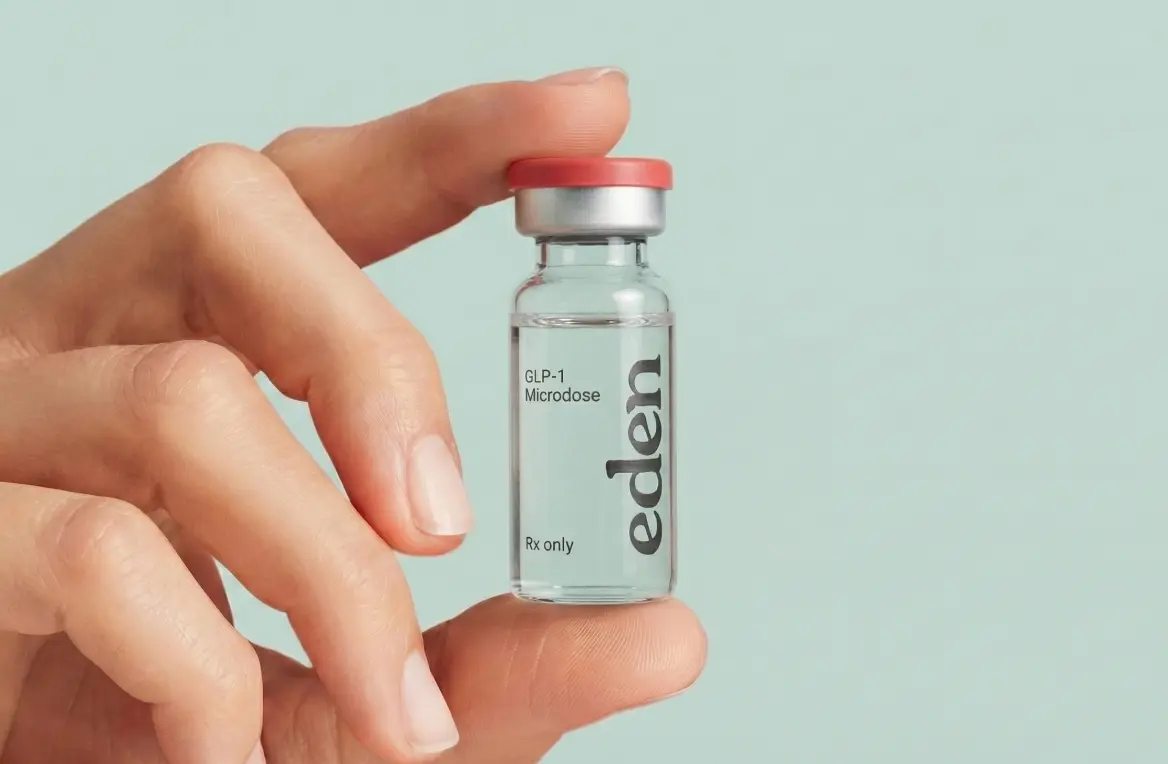
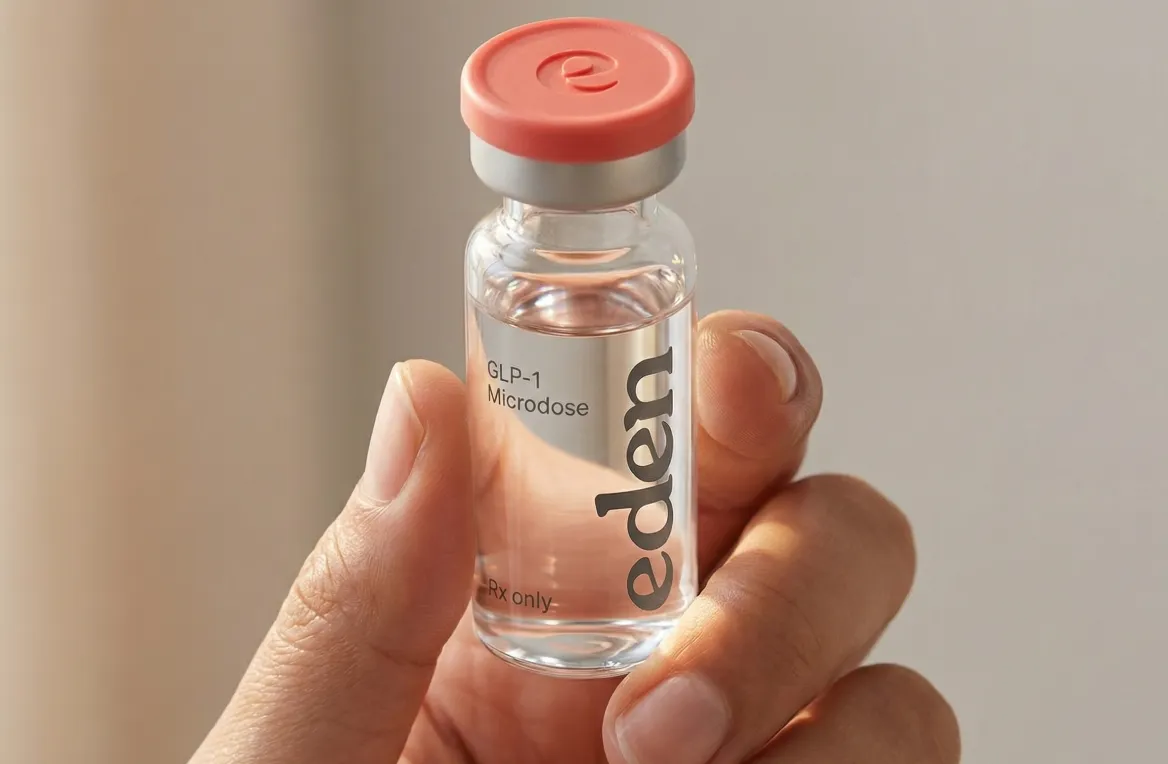
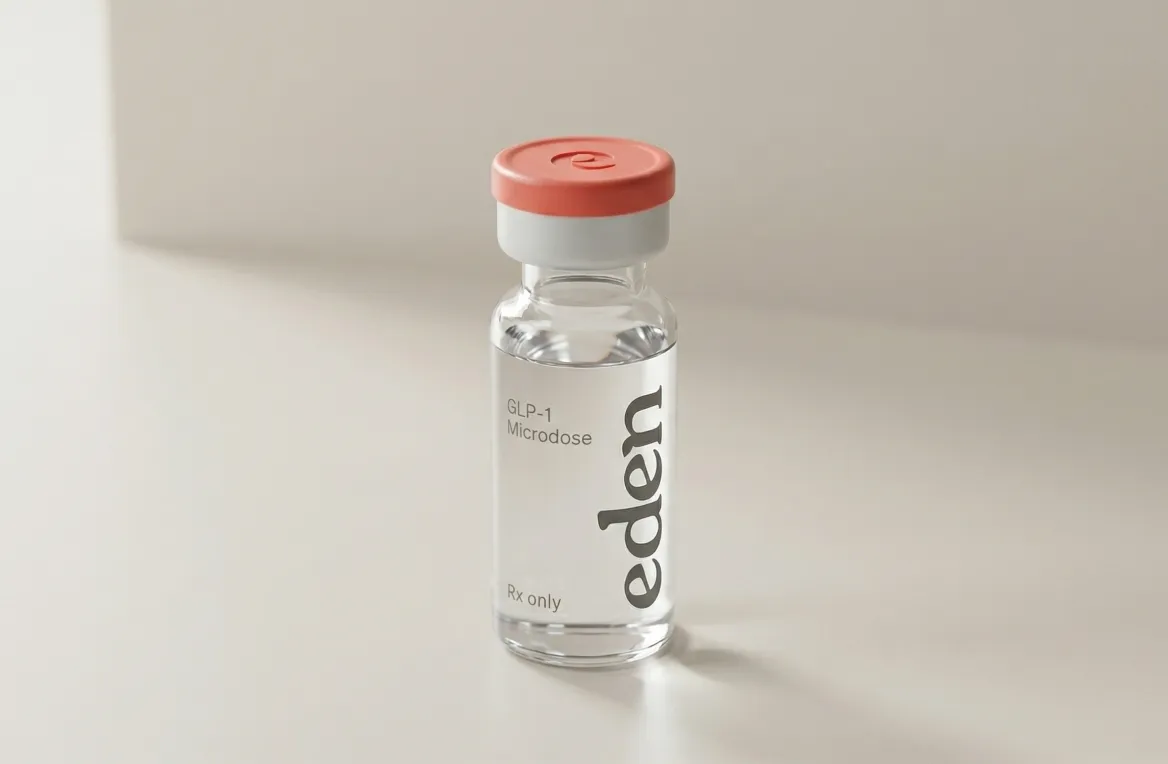
GLP-1 microdosing is taking a lower-than-standard dose of a GLP-1 receptor agonist under the supervision of a licensed healthcare provider.
Standard dosing protocols for these medications follow a gradual titration schedule, starting at a lower dose and increasing over time to a target maintenance dose. Microdosing, by contrast, involves staying at a sub-therapeutic or reduced dose for an extended period. Eventually, the goal may be to increase, but this will depend on your individual circumstances and your provider’s recommendations.
{{primary-cta}}
Why Are More People Trying It?
Microdosing is becoming a more talked-about topic. And there are many reasons for this, including cost considerations, side-effect management, access considerations, and a general interest in GLP-1 therapies. Below, we take a closer look at each of these factors.
Cost Concerns
GLP-1 medications may fall outside of many people’s health and wellness budgets. For those without insurance coverage, monthly costs can run into the hundreds—sometimes topping a thousand dollars.
For individuals managing these costs out of pocket, dosing decisions should be made in consultation with a licensed provider based on clinical appropriateness.
Managing Side Effects
The most common side effects reported with GLP-1 medications include nausea, vomiting, fatigue, and gastrointestinal discomfort. This may be particularly more pronounced when increasing the dosage. However, some people may find that staying at a lower dose may improve tolerability.
Access Considerations
In some cases, patients may discuss alternative dosing approaches with their provider when navigating access or availability considerations. But any changes should be made under medical supervision.
Longevity and Metabolic Health Interest
Weight loss isn’t the only reason people are curious about microdosing. GLP-1 receptor agonists are FDA-approved for the treatment of type 2 diabetes and, in some cases, chronic weight management.
Some individuals are interested in how GLP-1 receptor agonists affect metabolic processes such as blood sugar regulation. Research in this area is ongoing, and any use outside FDA-approved indications should be determined by a licensed healthcare provider. Ultimately, a qualified healthcare provider can help determine whether any GLP-1 approach is appropriate for your individual health goals.
How Does GLP-1 Microdosing Work?
GLP-1 receptor agonists work by mimicking the glucagon-like peptide-1 hormone, which helps regulate appetite, slow gastric emptying, and stimulate insulin release in response to food. And these mechanisms are associated with their FDA-approved uses.
At lower doses, the same mechanisms are still at play, just to a lesser degree. However, it’s worth noting that what counts as a microdose for one person may be a standard starting dose for another. This variability makes it difficult to study and even harder to generalize, which is an important limitation to keep in mind.
What the Research Says (and What It Doesn’t)
The clinical evidence specifically on GLP-1 microdosing is very limited. Most of what’s known comes from anecdotal reports, online communities, and a small number of observational accounts rather than controlled trials.
The research that does exist on GLP-1 medications broadly shows clear dose-dependent effects, meaning higher doses tend to produce stronger outcomes for weight loss and blood sugar control. Whether meaningful clinical benefit is achievable at significantly lower doses, and for whom, remains poorly established.
On top of this, a common misconception is that microdosing is simply a gentler or safer version of standard treatment. But this isn’t necessarily true. Reduced efficacy can be a concern, and without proper medical oversight, medications may be used inappropriately.
{{primary-cta}}
Potential Benefits and Risks
For the right person, under appropriate guidance, a lower-dose approach may offer improved tolerability during early treatment and a slower adjustment period that some may find easier to manage.
Without clear clinical definitions, however, individuals may be making dosing decisions based on incomplete information or anecdotal advice. Reduced efficacy is another factor; for example, if someone is using it to manage type 2 diabetes, an inadequate dose may not provide the therapeutic effect needed.
There’s also the broader issue of medical supervision. GLP-1 medications are prescription drugs for a reason. Adjusting dosage without provider involvement always carries risks, which is why it’s always recommended to work alongside a licensed healthcare professional.
At Eden, we can coordinate your care by connecting you with a licensed provider who can evaluate what may be appropriate for you. Our process starts with a brief online intake.
Final Thoughts
At the end of the day, GLP-1 microdosing should only be considered under the supervision of a licensed healthcare provider. They can help you weigh whether it makes sense given your health history, your goals, and what you’re currently taking, and guide any adjustments safely, with the full clinical picture in mind.









The FDA does not approve compounded medications for safety, quality, or manufacturing. Prescriptions and a medical evaluation are required for certain products. The information provided on this blog is for general informational purposes only. It is not intended as a substitute for professional advice from a qualified healthcare professional and should not be relied upon as personal health advice. The information contained in this blog is not meant to diagnose, treat, cure, or prevent any disease. Readers are advised to consult with a qualified healthcare professional for any medical concerns, including side effects. Use of this blog's information is at your own risk. The blog owner is not responsible for any adverse effects or consequences resulting from the use of any suggestions or information provided in this blog.
Eden is not a medical provider. Eden connects individuals with independent licensed healthcare providers who independently evaluate each patient to determine whether a prescription treatment program is appropriate. All prescriptions are written at the sole discretion of the licensed provider. Medications are filled by state-licensed pharmacies. Please consult a licensed healthcare provider before making any medical decisions.
Frequently asked questions
What is GLP-1 microdosing?

GLP-1 microdosing refers to taking a lower-than-standard dose of a GLP-1 receptor agonist under the supervision of a licensed medical professional.
Does microdosing GLP-1 still work for weight loss?
Results vary from person to person. Lower doses generally produce less pronounced outcomes than standard therapeutic doses, but a healthcare provider can help determine what approach is appropriate for your goals.
Is GLP-1 microdosing safe?
Any adjustment to a prescribed medication should be done under the supervision of a licensed healthcare provider, as unsupervised dosing changes carry risks, including reduced efficacy and unintended health effects.
Related articles




Collins, L., & Costello, R. A. (2024e, February 29). Glucagon-Like peptide-1 receptor agonists. StatPearls - NCBI Bookshelf. https://www.ncbi.nlm.nih.gov/books/NBK551568/
Xie, X., Yang, S., Deng, S., Liu, Y., Xu, Z., & He, B. (2025). Comparative gastrointestinal adverse effects of GLP-1 receptor agonists and multi-target analogs in type 2 diabetes: a Bayesian network meta-analysis. Frontiers in pharmacology, 16, 1613610. https://pmc.ncbi.nlm.nih.gov/articles/PMC12491879/
Thank you!
We'll be in touch.
Thank you!