GLP‑1 Microdosing Chart: Understanding Dose Titration


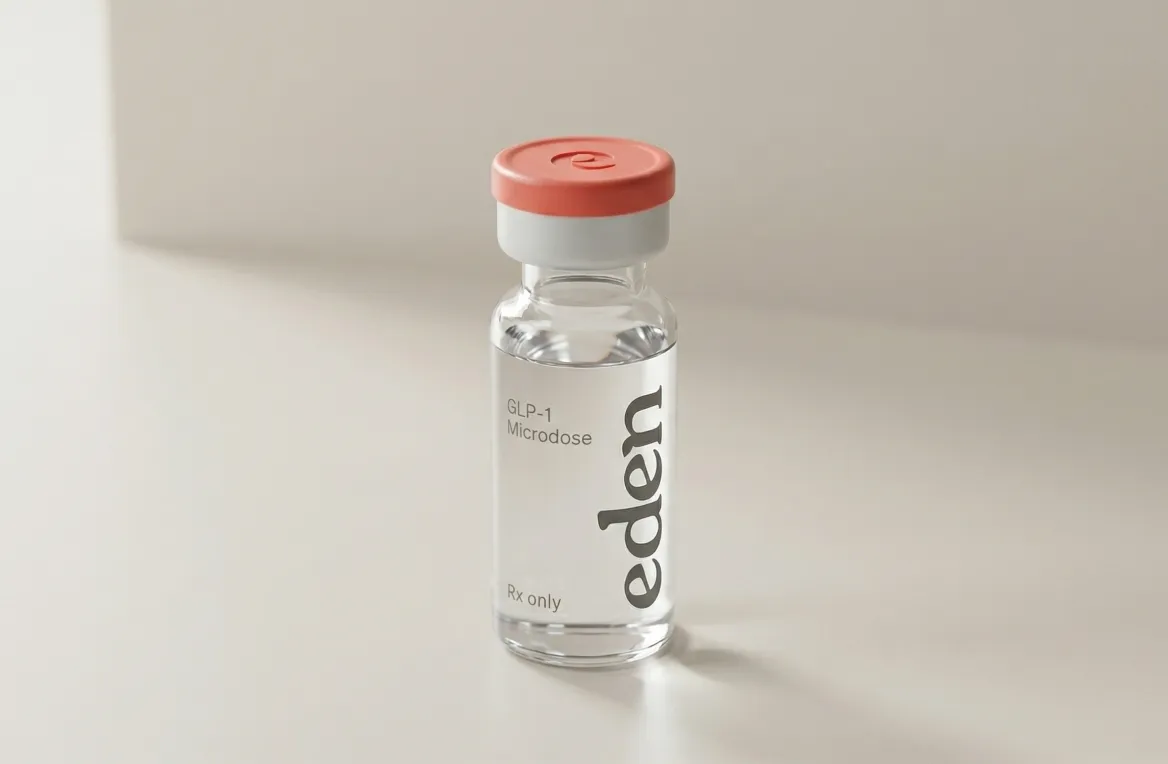

GLP-1 microdosing charts can help you better understand dose titration, general considerations, and how a licensed provider can determine whether treatment options may be appropriate.
- A GLP-1 microdosing chart may help guide gradual dose titration, potentially reducing tolerability challenges that some patients experience.
- Microdosing means starting below the standard approved dose and increasing slowly based on your body’s response.
- Even at lower doses, GLP-1 medications are understood to act on pathways involved in glucose regulation and appetite.
- Microdosing is off-label and should always be done under the supervision of a licensed healthcare provider who can determine an appropriate treatment approach based on your medical history.
- Individuals with certain health conditions should not use GLP-1 medications, regardless of the dose.
This article is for educational purposes only and does not constitute medical advice. Always consult a licensed healthcare provider before starting, adjusting, or stopping any medication.
Compounded GLP-1 medications, if prescribed, are not FDA-approved and are only provided when a licensed prescriber determines a clinically significant difference for an identified patient. These medications have not been reviewed by the FDA for safety, efficacy, or quality.
What Is GLP-1 Microdosing?
For some individuals, the standard dosing protocols for GLP-1s come with a frustrating catch. Common side effects, including nausea, constipation, and reflux, may lead some to stop treatment altogether.
Microdosing means starting at a dose substantially lower than the standard starting dose and increasing it very gradually based on how your body responds.
At the same time, microdosing GLP-1 medications isn’t officially recognized in FDA-approved prescribing guidelines. This means it’s essential to work with a licensed healthcare provider who can monitor your progress and adjust your treatment approach accordingly.
But what are general GLP-1 microdosing charts? Is this something you should bring up with your provider?
{{primary-cta}}
GLP-1 Microdosing Charts
The most commonly discussed GLP-1 receptor agonists include medications such as semaglutide, tirzepatide, and liraglutide. Since each medication has a different standard starting point, microdosing protocols vary accordingly.
Semaglutide Microdosing Chart
The FDA-approved starting dose for semaglutide is 0.25 mg weekly. A microdosing approach typically begins at half that or lower. This table provides an illustrative example of how a provider may approach dose adjustments; actual dosing must be determined by a licensed clinician.
If you have a sensitive stomach, your provider may keep you at the same dose for up to six weeks before increasing it. Overall, dosing protocols vary from individual to individual.
Tirzepatide Microdosing Chart
The standard starting dose for tirzepatide is 2.5 mg weekly. A microdosing schedule often begins at 1.0 mg or lower:
Liraglutide
Taking liraglutide involves a daily injection. The standard starting dose is 0.6 mg daily, increasing by 0.6 mg each week until reaching 3.0 mg. Generally, this means that a microdosing approach would keep patients below the 0.6 mg daily threshold and would then increase more slowly than the standard schedule.
Potential Benefits of Low-Dose GLP-1
With GLP-1 medications, dose selection depends on individual factors as determined by a licensed provider. Even at doses lower than standard therapeutic levels, GLP-1 receptor agonists continue to act on multiple pathways in the body.
At lower doses, you may still experience effects on glucose regulation, though individual responses vary and are not guaranteed.
Some research also points to anti-inflammatory activity at the tissue level, including effects on blood vessels and fat cells.
From a practical standpoint, some patients on lower-dose protocols also report changes in cravings.
Perhaps most importantly, microdosing may improve tolerability for some patients. In fact, the side effects that accompany standard titration are one of the leading reasons people discontinue GLP-1 treatment.
How Dose Titration Works
Dose titration is the process of starting a medication at a low dose and gradually increasing it over time until you reach a level that is determined to be appropriate by your provider. So, what guides this process exactly?
Most providers recommend staying on each dose for at least four weeks before increasing. After this window, signs that you may be ready to titrate up include a noticeable weakening of appetite control, a weight loss plateau lasting three to four weeks despite staying consistent with your meals, and no significant gastrointestinal side effects at your current dose.
If you’re still experiencing nausea, vomiting, diarrhea, or dizziness, it’s unlikely your provider will recommend increasing your dose. And if things are genuinely working well, there’s also no need to rush things. In other words, a higher dose isn’t automatically more effective, especially if the current one is doing its job.
So, what exactly should you expect after titrating up?
Side effects typically peak within 24 to 72 hours after an injection and tend to ease from there. This means that it may be beneficial to plan lighter, easy-to-digest meals in the first couple of days, stay hydrated, and keep ginger tea or bland snacks on hand.
{{primary-cta}}
Is Microdosing GLP-1 Right for You?
If you’ve experienced difficulty tolerating standard GLP-1 protocols or have a history of GI sensitivity, you may want to discuss a lower-dose approach with your provider. As with any treatment decision, whether microdosing is appropriate depends entirely on an individual’s health history, goals, and a licensed provider’s assessment.
With that said, GLP-1 medications aren’t appropriate for everyone. These medications should be avoided if:
- You’re pregnant, breastfeeding, or planning to become pregnant.
- You have a history of pancreatitis, gallbladder disease, kidney failure, or severe gastrointestinal conditions.
- You have a personal or family history of medullary thyroid carcinoma or MEN2 syndrome.
- You have a current or past diagnosis of anorexia or bulimia.
It’s also always important to consult a licensed healthcare provider to determine whether any GLP-1 therapy is appropriate for you. Additionally, GLP-1 medications are only available by prescription.
When it comes to microdosing, a qualified provider should review your health history, monitor your labs, and adjust your plan over time based on your body’s response. With Eden, this process can start with a brief online intake. From there, Eden connects you with licensed healthcare providers who review your health history, goals, and current medications to determine whether a GLP-1 medication (if any) is appropriate for you.
Final Thoughts
The above offers a general overview of GLP-1 microdosing charts. It’s not meant to replace any medical advice or be used outside the supervision and guidance of a licensed healthcare provider.
Overall, titration schedules and tolerances vary from individual to individual. What works well for one person may not be the right fit for another.









The FDA does not approve compounded medications for safety, quality, or manufacturing. Prescriptions and a medical evaluation are required for certain products. The information provided on this blog is for general informational purposes only. It is not intended as a substitute for professional advice from a qualified healthcare professional and should not be relied upon as personal health advice. The information contained in this blog is not meant to diagnose, treat, cure, or prevent any disease. Readers are advised to consult with a qualified healthcare professional for any medical concerns, including side effects. Use of this blog's information is at your own risk. The blog owner is not responsible for any adverse effects or consequences resulting from the use of any suggestions or information provided in this blog.
Eden is not a medical provider. Eden connects individuals with independent licensed healthcare providers who independently evaluate each patient to determine whether a prescription treatment program is appropriate. All prescriptions are written at the sole discretion of the licensed provider. Medications are filled by state-licensed pharmacies. Please consult a licensed healthcare provider before making any medical decisions.
Frequently asked questions
What is the difference between microdosing and standard GLP-1 dosing?

Microdosing starts below the approved starting dose and increases more slowly and individually than standard protocols.
What are the most common side effects during titration?
The most common side effects during GLP-1 titration include nausea, diarrhea, and constipation. These typically peak within 24 to 72 hours after injection and improve over time.
Who should avoid GLP-1 medications altogether?
Individuals who are pregnant, breastfeeding, or have a history of pancreatitis, kidney failure, gallbladder disease, medullary thyroid carcinoma, MEN2 syndrome, or eating disorders should not use GLP-1 medications regardless of dose.
Can I split my weekly dose into smaller, more frequent injections?
Some providers may use split dosing to reduce peak-level side effects and maintain more consistent appetite control throughout the week. However, again, this should only be done under the guidance and supervision of a licensed provider.
Related articles





Mashayekhi, M., Nian, H., Mayfield, D., Devin, J. K., Gamboa, J. L., Yu, C., Silver, H. J., Niswender, K., Luther, J. M., & Brown, N. J. (2024). Weight Loss-Independent Effect of Liraglutide on Insulin Sensitivity in Individuals With Obesity and Prediabetes. Diabetes, 73(1), 38–50. https://pubmed.ncbi.nlm.nih.gov/37874653/
OZEMPIC (2027). Highlights of prescribing information. https://www.accessdata.fda.gov/drugsatfda_docs/label/2025/209637s025lbl.pdf
Sikirica, M. V., Martin, A. A., Wood, R., Leith, A., Piercy, J., & Higgins, V. (2017). Reasons for discontinuation of GLP1 receptor agonists: data from a real-world cross-sectional survey of physicians and their patients with type 2 diabetes. Diabetes, metabolic syndrome and obesity: targets and therapy, 10, 403–412. https://pmc.ncbi.nlm.nih.gov/articles/PMC5630073/
ZEPBOUND (2022). Highlights of prescribing information. https://www.accessdata.fda.gov/drugsatfda_docs/label/2025/217806s031lbl.pdf
Thank you!
We'll be in touch.
Thank you!