Phentermine vs. GLP-1 Medications: What’s the Difference and Which May Be Right for You?



Compare phentermine and GLP-1 medications on safety, mechanism, and long-term results. Learn which weight loss drug may suit your health goals. Get started today.
- Phentermine is a short-term stimulant appetite suppressant, while GLP-1 medications are long-term hormone-mimicking therapies.
- Phentermine has been FDA-approved since 1959 for short-term use (typically up to 12 weeks), whereas some GLP-1 medications, such as semaglutide and tirzepatide, are designed for ongoing, chronic weight management.
- Clinical studies of certain FDA-approved GLP-1 medications show differences in average weight loss compared to phentermine; outcomes vary by medication, duration, and individual factors.
- Phentermine tends to cause stimulant-related effects (such as insomnia, raised heart rate, and a dry mouth); GLP-1 medications most commonly cause gastrointestinal symptoms (including nausea, constipation, and diarrhea).
- Phentermine raises heart rate and blood pressure and is contraindicated in patients with heart disease, but some GLP-1 medications have shown cardiovascular benefits in clinical trials.
- Weight regain is a possibility with both medications when treatment ends, which is why obesity is increasingly treated as a chronic condition that benefits from long-term, supervised care.
- The right option depends on your health history, goals, and what a licensed provider determines is appropriate for your individual situation.
This article is for informational purposes only and does not constitute medical advice. Please consult a licensed healthcare provider before starting, stopping, or changing any medication. Compounded medications are not FDA-approved. Compounded GLP-1 therapies are prepared only when a licensed prescriber determines a clinically significant difference for an identified patient. Compounded medications are not reviewed or approved by the FDA for safety, efficacy, or quality.
More people are living with obesity than ever before. This also means more people are exploring medical weight-loss options. As such, phentermine and GLP-1 medications tend to come up a lot in research and conversations around weight loss medications.
Both are prescription physician-led tools for weight loss. While phentermine has been around since the 1950s, GLP-1 medications offer a newer alternative. But is one better than the other? If you’ve been taking phentermine, should you consider switching to GLP-1s?
Below, we outline what each medication is, how they compare side by side, including GLP-1 vs stimulants like phentermine, what the long-term outlook looks like, and how to think about which may be right for you.
What Is Phentermine and How Does It Work?
Phentermine is an FDA-approved prescription appetite suppressant that has been used for weight loss since 1959, making it one of the oldest weight loss medications still prescribed today.
It belongs to a class of drugs called anorectics (medications that reduce appetite) and is classified by the United States Drug Enforcement Administration (DEA) as a Schedule IV controlled substance, meaning it has recognized medical use but also some potential for dependence.
So, how does it work exactly?
Phentermine stimulates the central nervous system (CNS) similarly to amphetamines, primarily triggering the release of norepinephrine in the brain. This signal tells the hypothalamus to reduce appetite, and it can also slightly increase heart rate and blood pressure.
Put simply, it works by signaling your brain that you’re not hungry, similar to the body’s natural “fight or flight” response.
However, phentermine is approved only for short-term use, typically up to 12 weeks, and is generally prescribed for adults with a BMI of 30 or higher, or 27 or higher when paired with a weight-related condition such as diabetes, high cholesterol, or controlled high blood pressure.
Common Forms and Dosing
Phentermine is available as tablets and capsules. Adipex-P® is the most recognized brand at the standard 37.5 mg strength and comes in both tablet and capsule form. Meanwhile, Lomaira® is a lower-dose 8 mg tablet taken three times daily, about 30 minutes before meals.
Standard dosing for the larger strengths is typically 15 mg, 30 mg, or 37.5 mg once daily before breakfast. Dosing is always physician-directed and should never be self-adjusted.
What Are GLP-1 Medications and How Do They Work?
GLP-1 medications are a newer class of drugs that mimic the glucagon-like peptide-1 hormone. This hormone is produced by the gut after eating, and helps regulate appetite, slow digestion, and support steadier blood sugar levels. For a deeper look at how semaglutide works, you can explore additional educational resources that break down its mechanism in more detail.
Unlike phentermine, GLP-1 medications don’t rely on stimulating the nervous system. Instead, they work through several pathways at once, including:
- Slowing how quickly the stomach empties (which keeps you fuller longer)
- Reducing appetite signals in the brain
- Supporting insulin release
- Blunting glucagon (a hormone that raises blood sugar)
Tirzepatide goes a step further by acting on a second hormone pathway (GIP) in addition to GLP-1, which may further support metabolic regulation.
It’s likely you’re already familiar with some types of these medications, including semaglutide (Ozempic®, Wegovy®) and tirzepatide (Mounjaro®, Zepbound®). Most of these are administered as once-weekly subcutaneous injections, though some are daily. Additionally, oral semaglutide (Rybelsus®) is approved for type 2 diabetes.
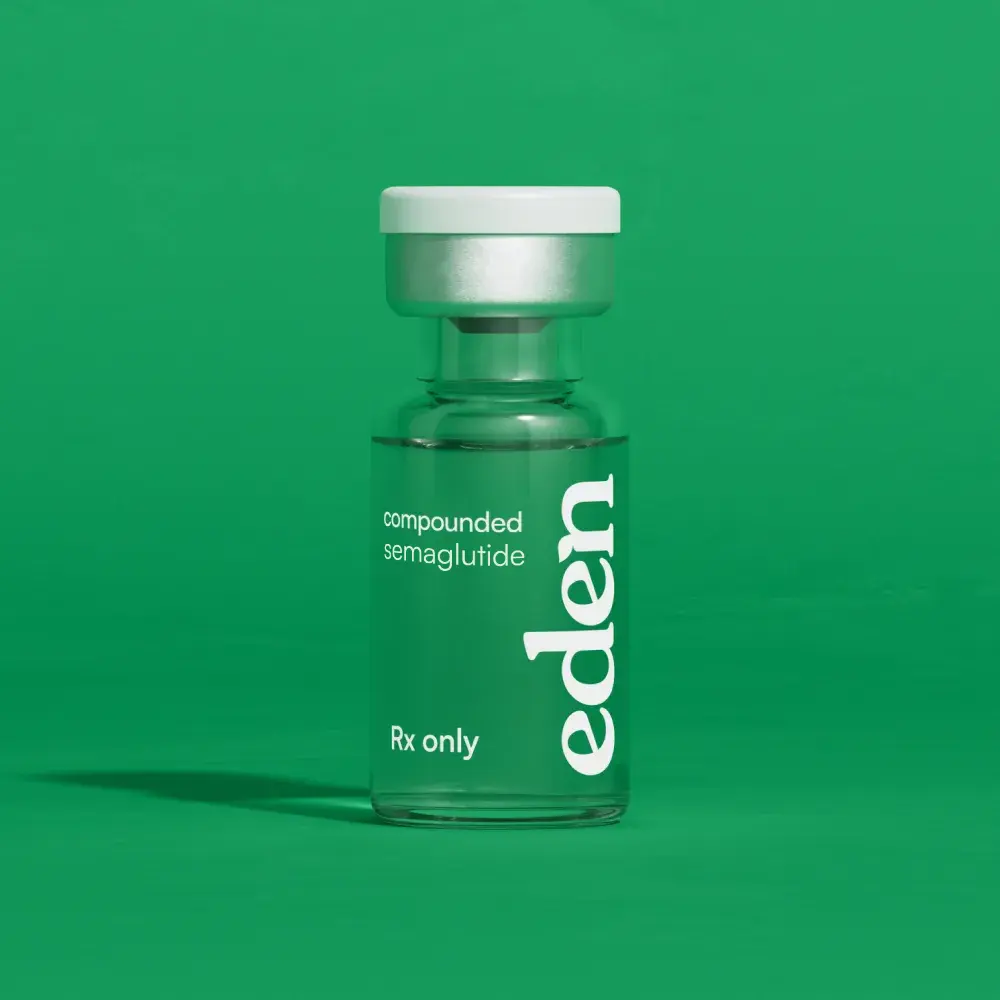
Compounded versions of semaglutide and tirzepatide are also available through licensed telehealth providers and compounding pharmacies. Yet, compounded GLP-1 medications may only be prescribed by a licensed provider and prepared by a compounding pharmacy when a clinically significant difference is identified for an individual patient. These medications are not FDA-approved and may vary in formulation and availability.
FDA Approval and Intended Use
Wegovy® (semaglutide 2.4 mg) and Zepbound® (tirzepatide) are specifically FDA-approved for chronic weight management in adults with a BMI of 30 or higher, or 27 or higher with at least one weight-related condition.
Ozempic® and Mounjaro® are FDA-approved for the management of type 2 diabetes (with Ozempic® also approved to reduce cardiovascular risk in T2D patients), but both are sometimes prescribed off-label at a provider’s discretion.
Unlike phentermine, GLP-1 medications are approved for long-term, chronic use.
Phentermine vs. GLP-1 Medications: A Side-by-Side Comparison
Here’s a side-by-side weight loss drug comparison that includes how they’re taken, how long they’re used, how they work, and side effects.
Mechanism of Action
Phentermine essentially overrides hunger signals by stimulating the central nervous system, which is why people often feel its effects quickly and why side effects like jitteriness or sleep disruption can appear early.
GLP-1 medications, on the other hand, work with the body’s own gut-brain hormonal system. The experience tends to feel less stimulating and more like a gradual change in appetite and fullness.
Duration of Use
Phentermine is approved for short-term treatment, typically capped at 12 weeks, because tolerance may develop and the risk of dependence increases with prolonged use.
GLP-1 medications, by contrast, are designed for long-term use and are often continued indefinitely as part of an ongoing weight management plan.
In fact, these clinical guidelines reflect the growing recognition of obesity as a chronic condition that benefits from sustained treatment, as opposed to a problem that needs to be solved in a matter of weeks.
Weight Loss Efficacy
Studies on phentermine have shown average weight loss of approximately 5% of body weight over 12 weeks when combined with diet and exercise.
For GLP-1 medications, the numbers are larger and are measured over longer time frames. The STEP 1 trial of semaglutide found participants lost an average of about 14.9% of body weight over 68 weeks. The SURMOUNT-1 trial of tirzepatide reported average reductions of up to 20.9% of body weight at the highest dose over 72 weeks. As with any medication, individual results may vary based on dose, duration, lifestyle, and overall health.
Safety Profile and Side Effects
Phentermine may cause:
- Increased heart rate
- Elevated blood pressure
- Insomnia
- Dry mouth
- Restlessness
- Headaches
- Dizziness
These effects tend to surface early in treatment. As a Schedule IV controlled substance, it also carries recognized risks of misuse, dependence, and withdrawal.
GLP-1 medications may cause gastrointestinal symptoms, such as:
- Nausea
- Vomiting
- Diarrhea
- Constipation
These tend to happen most often when increasing doses, but usually improve over time.
For more context on weight loss medication safety, readers can review additional educational resources before discussing options with a licensed provider.
More serious but rare risks of GLP-1s include pancreatitis. GLP-1 medications also carry a boxed warning for patients with a personal or family history of medullary thyroid carcinoma or multiple endocrine neoplasia type 2 (MEN2).
Cardiovascular Considerations
Since phentermine is a stimulant, it raises heart rate and blood pressure and is contraindicated in patients with existing heart disease, uncontrolled hypertension, or a history of stroke.
Certain FDA-approved GLP-1 medications, by contrast, have shown cardiovascular benefits in clinical trials. The SUSTAIN-6 trial of semaglutide demonstrated a reduction in major adverse cardiovascular events (MACE) in patients with type 2 diabetes and established cardiovascular disease.
For patients whose health history includes cardiovascular concerns, this difference often plays a major role in what a provider may recommend.
Eligibility and Contraindications
As stated above, phentermine may not be appropriate for people with cardiovascular disease, uncontrolled high blood pressure, hyperthyroidism, glaucoma, a history of substance misuse, or anyone pregnant or breastfeeding. It’s also generally not recommended for adults 65 and older, and it shouldn’t be taken within 14 days of an MAO inhibitor.
GLP-1 medications, on the other hand, may not be appropriate for people with a personal or family history of medullary thyroid carcinoma or MEN2, a history of pancreatitis, severe gastrointestinal conditions like gastroparesis, or anyone pregnant or breastfeeding.
Ultimately, a licensed healthcare provider who reviews your full medical history, current medications, and overall health can help you make the best decision for you.
Long-Term Outcomes and Weight Regain
So, will you regain the weight lost with these medications? This depends on a few factors and the specific medication.
With phentermine, most patients discontinue treatment within 12 weeks because of its current approved usage by the FDA. Studies report that weight regain after stopping phentermine is common, since the underlying hormonal and metabolic drivers of obesity are no longer being addressed. Without continued treatment or significant lifestyle changes, the appetite suppression effect ends when the medication does.
When comparing phentermine vs semaglutide, the STEP 1 trial reported that participants who stopped semaglutide medication after 68 weeks regained roughly two-thirds of their lost weight within one year. However, GLP-1 medications, such as semaglutide, are approved for long-term use, so many patients can continue this treatment as part of a sustained weight management plan (an option that may not be available with phentermine).
With that said, however, both medications work best alongside ongoing lifestyle support; neither is a permanent fix on its own.
Which May Be Right for You?
Choosing between GLP-1 medications and phentermine depends on your health history, preferences, and what a licensed healthcare provider determines is appropriate for your individual needs.
GLP-1 medications may be considered for individuals looking for a longer-term approach to weight management, particularly when combined with lifestyle changes and ongoing medical supervision. In some cases, providers may consider these options for individuals with a body mass index (BMI) of 30 or higher, or 27 or higher with weight-related health conditions—you can calculate your BMI to better understand where you fall.
A provider may consider phentermine for short-term use in certain patients, particularly when a stimulant-based approach is appropriate, and no cardiovascular contraindications are present.
For individuals who prefer not to use injections or who may be transitioning off GLP-1 therapy, there are also oral weight loss program options that a provider may consider as part of a broader, medically guided plan.
The best approach depends on your goals, medical history, and how your body responds to treatment, which is why working with a licensed provider is an important part of the process.
How Eden Supports GLP-1 Weight Loss
If treatment options may be appropriate for you, Eden can help coordinate your care. Eden’s platform is 100% online, available in all 50 states, and doesn’t require insurance.
It all begins with a quick online intake. From there, you’ll be connected with a licensed healthcare provider via telehealth who will review your health history, goals, and lifestyle to determine whether treatment is appropriate.
To learn more about your options, you can explore Eden’s GLP-1 weight loss program, where licensed providers determine whether treatment may be appropriate as part of a broader care plan.
Through Eden, you may have access to features such as provider messaging and follow-up care. Eden offers transparent pricing with no hidden fees, and you can use FSA/HSA funds for eligible expenses.












The FDA does not approve compounded medications for safety, quality, or manufacturing. Prescriptions and a medical evaluation are required for certain products. The information provided on this blog is for general informational purposes only. It is not intended as a substitute for professional advice from a qualified healthcare professional and should not be relied upon as personal health advice. The information contained in this blog is not meant to diagnose, treat, cure, or prevent any disease. Readers are advised to consult with a qualified healthcare professional for any medical concerns, including side effects. Use of this blog's information is at your own risk. The blog owner is not responsible for any adverse effects or consequences resulting from the use of any suggestions or information provided in this blog.
Eden is not a medical provider. Eden connects individuals with independent licensed healthcare providers who independently evaluate each patient to determine whether a prescription treatment program is appropriate. All prescriptions are written at the sole discretion of the licensed provider. Medications are filled by state-licensed pharmacies. Please consult a licensed healthcare provider before making any medical decisions.
Frequently asked questions
Can I switch from phentermine to a GLP-1?

Switching is possible in many cases, but the timing and transition should be guided by a licensed provider who can review your response to phentermine and determine whether a GLP-1 may be an appropriate next step.
Which causes more weight loss: phentermine or GLP-1 medications?
Some GLP-1 medications have produced larger average reductions in clinical trials than phentermine, though individual results may vary based on dose, duration, lifestyle, and other health factors.
How long can I take phentermine vs. a GLP-1?
Phentermine is FDA-approved for short-term use, typically up to 12 weeks, and GLP-1 medications are designed for long-term, ongoing weight management under provider supervision.
Can phentermine and GLP-1 medications be taken together?
In some cases, providers may prescribe them together with careful monitoring, but this should never be attempted on your own.
Related articles












Adipex-P. (2012). HIGHLIGHTS OF PRESCRIBING INFORMATION. https://www.accessdata.fda.gov/drugsatfda_docs/label/2012/085128s065lbl.pdf
ClinicalTrials.gov. (n.d.). https://clinicaltrials.gov/study/NCT05176626
Collins, L., & Costello, R. A. (2024g, February 29). Glucagon-Like peptide-1 receptor agonists. StatPearls - NCBI Bookshelf. https://www.ncbi.nlm.nih.gov/books/NBK551568/
DEA. (n.d.). Drug Scheduling. https://www.dea.gov/drug-information/drug-scheduling
Farzam, K., & Patel, P. (2024b, February 20). Tirzepatide. StatPearls - NCBI Bookshelf. https://www.ncbi.nlm.nih.gov/books/NBK585056/
Lomaira. (n.d.). Description. https://www.fda.gov/media/138795/download
MOUNJARO®. (2022). Highlights of prescribing information. https://www.accessdata.fda.gov/drugsatfda_docs/label/2022/215866s000lbl.pdf
National Institute of Diabetes and Digestive and Kidney Diseases. (2020, June 4). Phentermine. LiverTox - NCBI Bookshelf. https://www.ncbi.nlm.nih.gov/books/NBK547916/
Nauck, M. A., & Quast, D. R. (2021). Cardiovascular Safety and Benefits of Semaglutide in Patients With Type 2 Diabetes: Findings From SUSTAIN 6 and PIONEER 6. Frontiers in endocrinology, 12, 645566. https://pmc.ncbi.nlm.nih.gov/articles/PMC8039387/
OZEMPIC®. (2023). HIGHLIGHTS OF PRESCRIBING INFORMATION. https://www.accessdata.fda.gov/drugsatfda_docs/label/2023/209637s020s021lbl.pdf
Rybelsus®. (2024). HIGHLIGHTS OF PRESCRIBING INFORMATION. https://www.accessdata.fda.gov/drugsatfda_docs/label/2024/213051s018lbl.pdf
Wadden, T. A., Chao, A. M., Machineni, S., Kushner, R., Ard, J., Srivastava, G., Halpern, B., Zhang, S., Chen, J., Bunck, M. C., Ahmad, N. N., & Forrester, T. (2023). Tirzepatide after intensive lifestyle intervention in adults with overweight or obesity: the SURMOUNT-3 phase 3 trial. Nature medicine, 29(11), 2909–2918. https://pmc.ncbi.nlm.nih.gov/articles/PMC10667099/
WEGOVY®. (2017). HIGHLIGHTS OF PRESCRIBING INFORMATION. https://www.accessdata.fda.gov/drugsatfda_docs/label/2025/218316Orig1s000lbl.pdf
Wilding, J. P., Batterham, R. L., Calanna, S., Davies, M., Van Gaal, L. F., Lingvay, I., McGowan, B. M., Rosenstock, J., Tran, M. T., Wadden, T. A., Wharton, S., Yokote, K., Zeuthen, N., & Kushner, R. F. (2021b). Once-Weekly Semaglutide in Adults with Overweight or Obesity. New England Journal of Medicine, 384(11), 989–1002. https://www.nejm.org/doi/full/10.1056/NEJMoa2032183
World Health Organization: WHO. (2025, December 8). Obesity and overweight. https://www.who.int/news-room/fact-sheets/detail/obesity-and-overweight
ZEPBOUND®. (2022). Highlights of prescribing information. https://www.accessdata.fda.gov/drugsatfda_docs/label/2024/217806s003lbl.pdf
Thank you!
We'll be in touch.
Thank you!