NAD Cream vs Retinol: How They Compare and How to Use Both



NAD cream vs retinol explained. Compare benefits, irritation, and how to layer NAD face cream with retinol serum safely.
- In the NAD cream vs retinol comparison, retinol has stronger research supporting wrinkle reduction and collagen production.
- NAD face cream focuses on supporting cellular repair and overall skin resilience.
- Retinol cream and retinol serum can improve texture and fine lines but may cause irritation.
- NAD based formulas are typically gentler and easier to tolerate.
- Many people use both ingredients together in a balanced routine.
NAD Cream vs Retinol: What’s the Real Difference?
Most people searching for NAD cream vs retinol are simply trying to figure out what will actually improve their skin.
Retinol has been used in dermatology for decades. It increases cell turnover and encourages collagen production, which is why it is often recommended for fine lines and uneven texture. Results take time, and some dryness or peeling is common at first.
NAD face cream is newer in the skincare conversation. Instead of speeding up visible renewal, it supports cellular energy and repair pathways inside the skin. The improvements tend to feel more gradual. Many people describe better hydration, smoother texture, or a healthier overall look rather than dramatic resurfacing.
The difference comes down to approach. Retinol pushes change at the surface level. NAD supports how the skin functions beneath the surface. Some skincare products include both NAD supporting ingredients and retinol in one formula, but many people prefer using separate products so they can control strength and irritation.
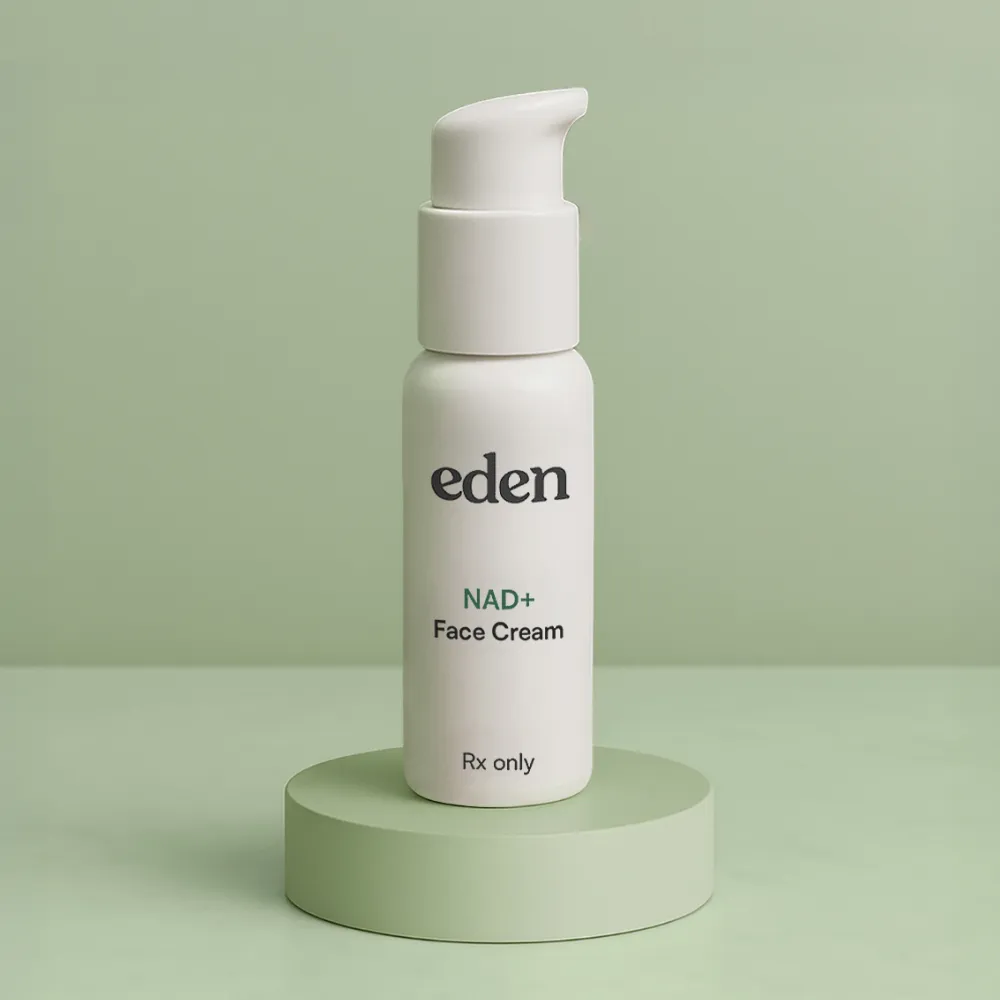
What Is NAD Face Cream?
NAD stands for nicotinamide adenine dinucleotide, a molecule found in every cell of the body. It plays a role in energy production and DNA repair. As we age, NAD levels naturally decline, and researchers continue to study how that decline affects cellular function.
Most NAD face cream products do not contain pure NAD in high amounts because it is difficult to stabilize and deliver through skin. Instead, formulas typically include precursors such as niacinamide or nicotinamide riboside. These ingredients help support NAD related pathways within skin cells.
Unlike exfoliating acids or retinoids, NAD based products are not designed to create visible peeling. They are usually formulated to strengthen the barrier and support long term skin quality.
{{primary-cta}}
What Is Retinol Cream or Retinol Serum?
Retinol is a vitamin A derivative. Once applied, the skin converts it into retinoic acid, which interacts with receptors in skin cells.
Retinol cream and retinol serum are known for:
- Increasing cell turnover
- Stimulating collagen production
- Reducing the appearance of fine lines
- Improving uneven texture
- Supporting clearer pores
Because of its long history of study, retinol remains one of the most established ingredients in anti aging skincare.
That said, irritation is common, especially during the first few weeks. Some people experience redness, dryness, or temporary breakouts while their skin adjusts. If you use retinol, apply sunscreen daily, since retinoids can increase sun sensitivity.
Comparing Effectiveness
Collagen and Wrinkles
If visible wrinkle reduction is your primary goal, retinol has stronger clinical support. Studies consistently show improvement in fine lines with regular use over several months.
NAD related ingredients may support collagen indirectly through improved cellular energy and repair processes. However, the evidence for direct wrinkle reduction is not as extensive as it is for retinol.
Texture and Tone
Retinol improves texture because it speeds up how quickly skin cells turn over. This can lead to smoother skin over time.
NAD face cream tends to improve overall skin quality in a more subtle way. Many users notice improved hydration and resilience before dramatic changes in texture.
Irritation and Tolerance
Retinol cream and retinol serum can cause dryness, peeling, and sensitivity, particularly when introduced too quickly.
NAD based creams are typically easier to tolerate. For people with sensitive skin or those who have struggled with retinoids in the past, NAD may feel more manageable.
Can You Use NAD Cream and Retinol Together?
Yes, and many people do.
Since NAD and retinol work through different mechanisms, they can complement each other in the same routine.
A simple approach looks like this:
- Retinol serum at night to support renewal and collagen production
- NAD face cream in the morning to support repair and barrier strength
Some people choose to apply NAD after retinol at night to help maintain skin comfort, though this depends on individual tolerance.
If you are new to retinol, it helps to introduce it slowly before layering additional active ingredients. Daily sunscreen is essential when using any retinoid.
Which One Should You Choose?
Choose retinol cream or serum if:
- Fine lines and wrinkles are your main concern
- You want an ingredient with decades of research
- Your skin tolerates active treatments
Choose NAD face cream if:
- Your skin is sensitive or reactive
- You want to focus on barrier support
- You prefer gradual improvement with minimal irritation
Use both if:
- You want visible renewal and long term resilience
- Your skin tolerates layered routines
- You are building a comprehensive anti aging plan
{{primary-cta}}
Why Formulation and Brand Philosophy Matter
When you are combining active ingredients like NAD and retinol, the quality of the formulation becomes just as important as the ingredients themselves. Stability, concentration, and delivery systems all influence how well products perform and how comfortably your skin tolerates them.
Eden takes a science-forward approach to skincare, focusing on ingredient transparency and thoughtfully developed formulations. That kind of clarity matters, especially when working with newer ingredients like NAD. Clear guidance around how to layer products and what to expect helps reduce guesswork and makes it easier to build a routine that feels sustainable rather than overwhelming.
As with any active routine, it is still wise to introduce products gradually and pay attention to how your skin responds. Consistency and thoughtful use tend to deliver better long-term results than trying to do everything at once.
Final Thoughts
The NAD cream vs retinol comparison is less about competition and more about understanding function. Retinol is established and well studied for collagen stimulation and wrinkle reduction. NAD face cream focuses on supporting cellular repair and long term skin resilience.
For many people, the most effective routine includes both, used thoughtfully and consistently. Healthy skin typically responds best to consistent, practical care rather than relying on quick fixes.









The FDA does not approve compounded medications for safety, quality, or manufacturing. Prescriptions and a medical evaluation are required for certain products. The information provided on this blog is for general informational purposes only. It is not intended as a substitute for professional advice from a qualified healthcare professional and should not be relied upon as personal health advice. The information contained in this blog is not meant to diagnose, treat, cure, or prevent any disease. Readers are advised to consult with a qualified healthcare professional for any medical concerns, including side effects. Use of this blog's information is at your own risk. The blog owner is not responsible for any adverse effects or consequences resulting from the use of any suggestions or information provided in this blog.
Eden is not a medical provider. Eden connects individuals with independent licensed healthcare providers who independently evaluate each patient to determine whether a prescription treatment program is appropriate. All prescriptions are written at the sole discretion of the licensed provider. Medications are filled by state-licensed pharmacies. Please consult a licensed healthcare provider before making any medical decisions.
Related articles

.webp)
.webp)
.webp)
.webp)
.webp)


Bissett, D. L., Oblong, J. E., & Berge, C. A. (2005). Niacinamide: A B vitamin that improves aging facial skin appearance. Dermatologic Surgery, 31(7 Pt 2), 860–865. https://doi.org/10.1111/j.1524-4725.2005.31732
Cantó, C., Menzies, K. J., & Auwerx, J. (2015). NAD+ metabolism and the control of energy homeostasis: A balancing act between mitochondria and the nucleus. Cell Metabolism, 22(1), 31–53. https://doi.org/10.1016/j.cmet.2015.05.023
Covarrubias, A. J., Perrone, R., Grozio, A., & Verdin, E. (2021). NAD+ metabolism and its roles in cellular processes during ageing. Nature Reviews Molecular Cell Biology, 22(2), 119–141. https://www.nature.com/articles/s41580-020-00313-x
Kafi, R., Kwak, H. S., Schumacher, W. E., Cho, S., Hanft, V. N., Hamilton, T. A., King, A. L., Neal, J. D., & Kang, S. (2007). Improvement of naturally aged skin with vitamin A (retinol). Archives of Dermatology, 143(5), 606–612. https://doi.org/10.1001/archderm.143.5.606
Mukherjee, S., Date, A., Patravale, V., Korting, H. C., Roeder, A., & Weindl, G. (2006). Retinoids in the treatment of skin aging: An overview of clinical efficacy and safety. Clinical Interventions in Aging, 1(4), 327–348. https://www.ncbi.nlm.nih.gov/pmc/articles/PMC2699641/
Yoshino, J., Baur, J. A., & Imai, S. I. (2018). NAD+ intermediates: The biology and therapeutic potential of NMN and NR. Cell Metabolism, 27(3), 513–528. https://doi.org/10.1016/j.cmet.2017.11.002
Zhang, H., Ryu, D., Wu, Y., Gariani, K., Wang, X., Luan, P., D’Amico, D., Ropelle, E. R., Lutolf, M. P., Aebersold, R., Schoonjans, K., Menzies, K. J., & Auwerx, J. (2016). NAD+ repletion improves mitochondrial and stem cell function and enhances life span in mice. Science, 352(6292), 1436–1443. https://www.science.org/doi/10.1126/science.aaf2693
Thank you!
We'll be in touch.
Thank you!