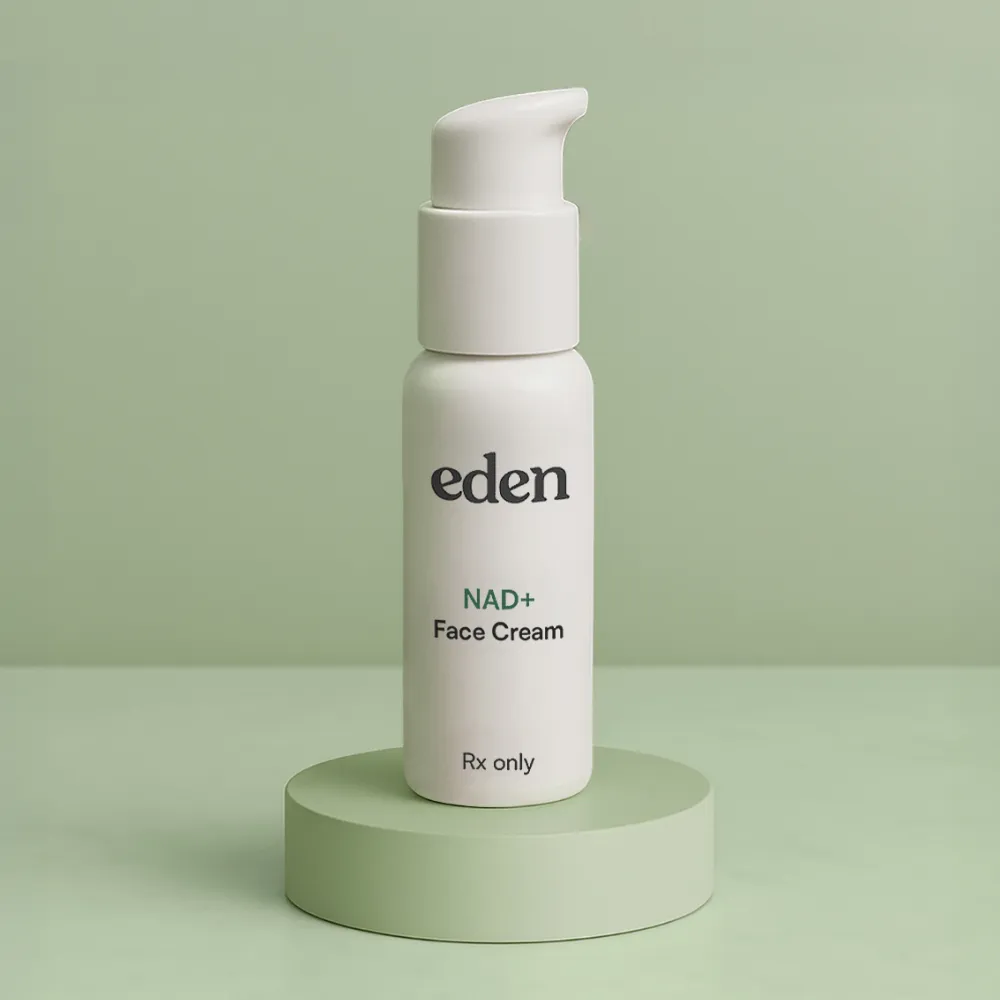
NAD+ Cream: What It Is, Benefits & How to Buy It Safely


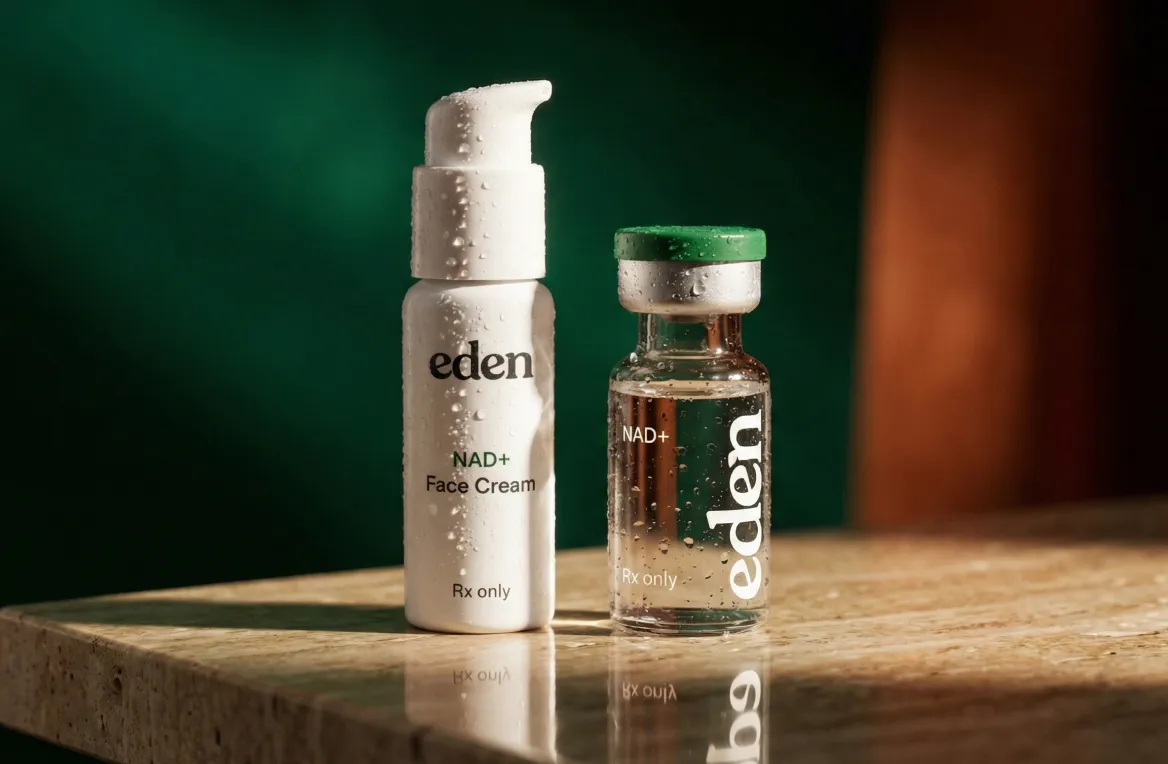

Thinking about NAD cream? Explore NAD+ cream benefits, ingredients, and what to look for before buying, plus how Eden can help you get started safely.
- NAD cream (or NAD+ cream) contains nicotinamide adenine dinucleotide, a molecule involved in cellular energy processes.
- People discuss NAD cream for its potential benefits to skin health and overall wellness.
- There’s no FDA-approved NAD+ cream for treating medical conditions.
- Before you buy, it helps to choose something with a clear ingredient list, a quality formula, and a team that takes safety seriously.
- Eden connects patients with licensed providers to determine whether NAD-related options are appropriate for their individual health.
Introduction
Buying NAD cream can feel confusing from the get-go because products don’t use the same ingredients or concentrations. Here’s a simple breakdown of what NAD+ cream is, what NAD cream benefits people usually look for, and what to check before you buy.
What Is NAD+?
NAD+ stands for nicotinamide adenine dinucleotide. It’s a coenzyme found naturally in every cell of the body and plays an important role in how cells produce and use energy.
At a foundational level, NAD+ helps support cellular processes involved in metabolism and energy production. Because these pathways are essential to normal cellular function, NAD+ has become a focus in both wellness and skincare.
When you see NAD+ listed in a cream, the formula may contain nicotinamide adenine dinucleotide (NAD+) itself, or it may use a more stable ingredient that supports the same NAD+ pathway, most commonly niacinamide (also called nicotinamide).
NAD+ is a large, delicate molecule, which can make it harder to keep stable in a topical formula. That’s one reason some skincare products focus on niacinamide, a form of vitamin B3 that cells can use as part of the process of making NAD+. In skincare, niacinamide is also widely used because it is generally stable in creams and serums and is often included in formulas designed to support the skin barrier and overall skin appearance.
This is also why reading the full ingredient list matters. Two products labeled “NAD+ cream” may not use the same form of the ingredient, may vary in concentration, and may include very different supporting ingredients. The details of the formula can influence how the product feels on your skin and what kind of cosmetic results you might notice over time.
{{primary-cta}}
What to Look for Before Buying NAD Cream
Now that you understand how NAD+ cream formulations can vary, the next step is to learn how to evaluate products responsibly.
If you are comparing NAD cream options, focus on these factors:
Ingredient Transparency
A reputable product clearly lists its active ingredients. Look for straightforward labeling rather than vague “proprietary blends.” Knowing whether the formula uses NAD+ directly or relies primarily on niacinamide helps set realistic expectations early on.
Concentration and Supporting Formula
The presence of NAD+ alone does not determine performance. Supporting ingredients, such as humectants, emollients, and barrier-supporting components, influence hydration and overall skin feel.
Brand Credibility
Look for companies that provide educational content, clear safety information, and accessible customer support, such as provider-guided platforms like Eden.
Taking a few minutes to evaluate these factors can help you make a more informed decision.
NAD Cream Benefits: What to Realistically Expect
If you’re thinking about adding NAD cream to your skincare routine, it helps to know what results are reasonable. Here’s what to expect from a well-formulated NAD+ cream.
Support for Skin Appearance
Because NAD+ is involved in cellular energy pathways, it has become associated with supporting healthy-looking skin. In topical products, this generally refers to helping maintain:
- Smooth-looking texture
- Hydration, when paired with moisturizing ingredients
- Overall skin appearance
Cosmetic results vary depending on skin type, consistency of use, and the formulation.
Barrier Support Through Niacinamide
If a formula includes niacinamide, users may notice improvements commonly associated with that ingredient, such as support for the skin barrier and a more balanced-looking tone. In many NAD+ cream products, niacinamide plays a key functional role.
Complementary to Broader Wellness Goals
Some individuals incorporate NAD+ cream into a larger wellness strategy that includes sleep, nutrition, and provider-guided care. While topical products focus on surface-level support, other NAD-related therapies involve different delivery methods and medical oversight.
Maintaining realistic expectations is important. NAD cream is not a substitute for medical treatment.
Does NAD+ Cream Absorb Through the Skin?
Some ingredients in NAD+ cream can be absorbed into the outer layers of the skin, but how much gets through and what that means in practice depends on the formula. Skin is designed to be a protective barrier, so larger or more delicate molecules, like NAD+, tend to be harder to deliver consistently than smaller, more stable ingredients.
Here’s the practical takeaway for shoppers:
- If a product relies on niacinamide (nicotinamide): Niacinamide is a form of vitamin B3 that’s widely used in skincare because it’s generally stable in creams and serums. That stability is one reason it’s common in products marketed around NAD+ pathways, and it often plays a role in how the formula supports overall skin appearance.
- If a product lists NAD+ directly: NAD+ is a more delicate molecule, so results can depend heavily on how the product is made and packaged to help keep it stable. Two NAD+ creams may use the same headline ingredient but still perform differently based on concentration, supporting ingredients (which can affect stability), and packaging (for example, an airtight pump or opaque container may better protect sensitive ingredients than an open jar).
Because topical delivery varies, the best approach is to treat NAD+ cream as a cosmetic skincare product and evaluate it based on ingredient transparency, formulation quality, and realistic expectations.
Is NAD Cream FDA-Approved?
There is currently no FDA-approved NAD+ cream for treating medical conditions.
Cosmetic products are intended to support appearance, not to function as medical therapies. If a product implies FDA approval for treatment-level outcomes, that is a sign to proceed with caution.
Who Might Consider NAD+ Cream?
NAD cream may be considered by individuals who:
- Want to support overall skin appearance
- Are interested in incorporating NAD-related ingredients into skincare
- Prefer topical products as part of a broader wellness routine
If you have sensitive skin, are using prescription topical medications, or have underlying health conditions, consulting a licensed healthcare provider before starting a new product is advisable.
Where to Buy NAD Cream Safely
If you’re ready to buy NAD cream, prioritize:
- Clear ingredient labeling
- Transparent communication
- Realistic claims
- Access to professional guidance when appropriate
Choosing a platform with provider oversight can give you peace of mind and help you feel more confident about your decision.
{{primary-cta}}
Why Patients Choose Eden for NAD-Related Options
When you’re exploring NAD creams and other NAD-related therapies, it’s nice to have guidance instead of trying to sort through product claims by yourself.
Eden connects patients with licensed healthcare providers who evaluate individual health history and goals before recommending options. If a provider determines that a NAD-related product may be appropriate, Eden helps coordinate access responsibly.
This provider-guided approach makes it easier to understand your options so that you can choose with confidence.
If you’re considering NAD cream and would like individualized guidance, start an assessment with Eden to better understand your options.
Take the Next Step
You’ve already done the hardest part by learning what to look for. Now it’s about choosing a formula that matches your skin needs and expectations.
If you’d like professional guidance, connect with a licensed provider through Eden to explore whether NAD-related options are appropriate for you.









The FDA does not approve compounded medications for safety, quality, or manufacturing. Prescriptions and a medical evaluation are required for certain products. The information provided on this blog is for general informational purposes only. It is not intended as a substitute for professional advice from a qualified healthcare professional and should not be relied upon as personal health advice. The information contained in this blog is not meant to diagnose, treat, cure, or prevent any disease. Readers are advised to consult with a qualified healthcare professional for any medical concerns, including side effects. Use of this blog's information is at your own risk. The blog owner is not responsible for any adverse effects or consequences resulting from the use of any suggestions or information provided in this blog.
Eden is not a medical provider. Eden connects individuals with independent licensed healthcare providers who independently evaluate each patient to determine whether a prescription treatment program is appropriate. All prescriptions are written at the sole discretion of the licensed provider. Medications are filled by state-licensed pharmacies. Please consult a licensed healthcare provider before making any medical decisions.
Frequently asked questions
What is NAD cream used for?

NAD cream is typically used as part of a skincare routine to support the appearance of healthy-looking skin. Products may include NAD+ or niacinamide, which are involved in the same biological pathway.
What are realistic NAD cream benefits?
NAD cream benefits are generally cosmetic and may include support for hydration, smoother-looking skin, and barrier function when paired with supportive ingredients. Results vary by formulation and individual skin type.
Is NAD+ cream FDA-approved?
No. There is currently no FDA-approved NAD+ cream for treating, curing, or preventing medical conditions. NAD cream products are for cosmetic support only.
Does NAD cream increase energy?
Topical NAD cream supports skin-level cosmetic goals. While NAD+ plays a role in cellular energy processes in the body, topical creams are not the same as medical or intravenous NAD therapies.
How do I choose a quality NAD cream?
Look for transparent ingredient labeling, realistic claims, and clear communication about formulation. Eden provides access to licensed healthcare providers if you want personalized guidance.
Related articles

.webp)
.webp)
.webp)
.webp)
.webp)


Canto, C., Menzies, K. J., & Auwerx, J. (2015). NAD+ metabolism and the control of energy homeostasis: A balancing act between mitochondria and the nucleus. Cell Metabolism, 22(1), 31–53. https://doi.org/10.1016/j.cmet.2015.05.023
Ong, R. R., & Goh, C. F. (2024). Niacinamide: A review on dermal delivery strategies and clinical evidence. Drug Delivery and Translational Research. https://doi.org/10.1007/s13346-024-01593-y
Verdin, E. (2015). NAD+ in aging, metabolism, and neurodegeneration. Science, 350(6265), 1208–1213. https://doi.org/10.1126/science.aac4854
Zhang, H., Ryu, D., Wu, Y., Gariani, K., Wang, X., Luan, P., et al. (2016). NAD+ repletion improves mitochondrial and stem cell function and enhances life span in mice. Science, 352(6292), 1436–1443. https://doi.org/10.1126/science.aaf2693
U.S. Food and Drug Administration. (n.d.). FDA authority over cosmetics: How cosmetics are not FDA-approved, but are FDA-regulated. https://www.fda.gov/cosmetics/cosmetics-laws-regulations/fda-authority-over-cosmetics-how-cosmetics-are-not-fda-approved-are-fda-regulated
Thank you!
We'll be in touch.
Thank you!