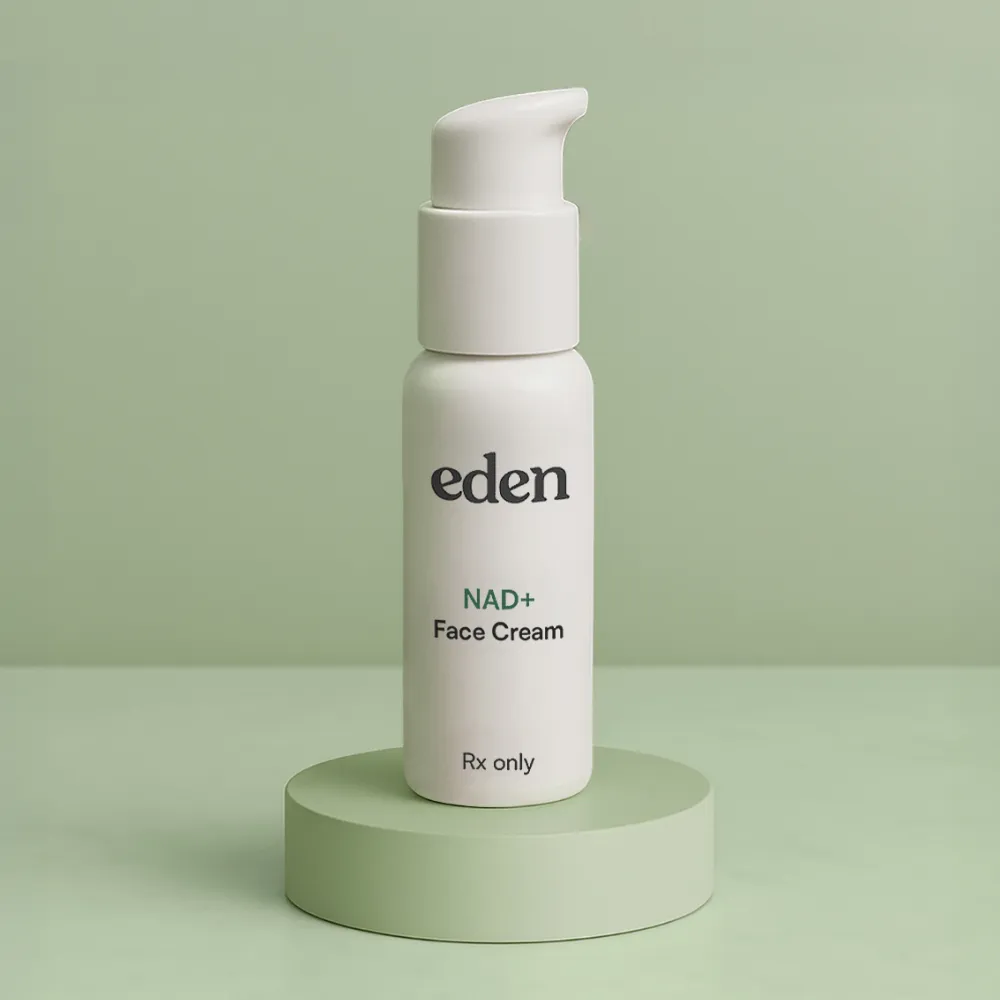
How to Use NAD in Skincare Routines and What to Expect


.webp)

Learn how to use NAD in skincare routines to support skin health. Discover what NAD+ does, its benefits, and how to add it to your daily regimen.
- Using NAD in skincare may support your skin health in a few different ways: it's a naturally occurring molecule that supports processes involved in cell repair and energy.
- NAD benefits for skin may include supporting cellular energy processes, helping maintain normal skin function, and supporting overall skin appearance.
- When shopping for NAD+ skincare, look for precursor ingredients such as niacinamide, NR, or NMN; they are commonly used in skincare formulations to support NAD-related cellular pathways.
- Using NAD+ products regularly as part of a consistent skincare routine may help support overall skin health.
This article is for informational purposes only and does not constitute medical advice. Always consult a qualified healthcare provider before starting any new supplement or treatment. Compounded medications are not FDA-approved and are prepared only when a prescriber determines they are appropriate for an individual patient.
What Is NAD in Skincare?
You may have seen NAD face cream or NAD+ showing up on serum labels and in skincare articles lately. But what is NAD, exactly?
NAD stands for nicotinamide adenine dinucleotide. It’s a coenzyme, essentially a helper molecule, found in every cell of your body. It fuels key processes, including energy production, DNA repair, and cellular signaling related to stress responses. In fact, your skin cells rely on it to perform the basic maintenance that keeps your complexion looking healthy and youthful.
NAD+ in skincare refers to products formulated to help support NAD+ levels in your skin cells, either by delivering NAD+ directly or by including ingredients your cells can convert into NAD+.
The unfortunate truth is that NAD tends to decline with age. So, why does this happen? And should you incorporate NAD into your skincare routine?
{{primary-cta}}
How NAD+ Works in Skin Cells
NAD+ plays an important role in cellular metabolism. Inside skin cells, it functions as a coenzyme that helps transfer energy during metabolic reactions. These reactions are involved in processes such as cellular repair, DNA maintenance, and the production of cellular energy (ATP). Researchers continue to study how NAD-related pathways interact with proteins involved in cellular stress responses and aging. Because of this role in cellular metabolism, NAD+ and its precursor molecules, such as niacinamide, NR, and NMN, are increasingly discussed in skincare formulations designed to support normal skin function.
Why Do NAD+ Levels Decline With Age?
There are a few mechanisms and pathways that may lead to the decline of NAD levels. These include:
CD38 Enzymes
As you age, your body produces more of an enzyme called CD38. CD38’s job is essentially to break down NAD+. The older you get, the more CD38 activity your body has, which means NAD+ may decline that much faster.
UV Exposure
Sun exposure doesn’t just cause an uncomfortable sunburn. When UV rays hit your skin, they create DNA damage that your cells have to repair. The repair process requires NAD+ as fuel; this means that the more UV exposure you accumulate over time, the more NAD+ your skin may use.
Lifestyle Factors
Beyond aging and sun exposure, everyday habits may also contribute to NAD decline. For example, excess alcohol increases the body’s demand for NAD+ during metabolism, while a diet high in processed foods and a sedentary lifestyle are associated with reduced activity of NAMPT (an enzyme your body needs to produce NAD+).
NAD Benefits for Skin
When NAD+ levels are supported, your skin has more cellular energy to do its job. Here’s what that may look like
May Reduce Fine Lines and Wrinkles
Research suggests NAD+ plays a role in cellular energy production, which is linked to your skin's natural renewal cycle. When your cells have enough energy, they may be better able to replace old or damaged cells with new, healthy ones.
May Help Maintain the Skin Barrier
Your skin barrier is the outermost protective layer; it keeps moisture in and irritants out. NAD+ is involved in cellular energy pathways that support processes associated with maintaining the skin barrier. In turn, a well-functioning barrier is associated with better hydration and less sensitivity.
May Aid Collagen Production
NAD+ is involved in cellular pathways that interact with enzymes such as sirtuins (SIRT1 and SIRT6), which researchers are studying for their role in cellular aging and skin structure.
Collagen is what gives skin its firmness and structure, and it naturally decreases with age. Maintaining NAD+ levels, however, may help support this process.
May Help Protect Against UV Damage
Your skin cells activate repair enzymes called PARPs in response to UV-induced DNA damage, and NAD+ is involved in the cellular energy processes that support DNA repair.
Improves Skin Tone and Texture
NAD-related cellular pathways are involved in processes associated with cellular turnover, the process by which your skin sheds old cells and generates new ones. Additionally, certain cellular pathways involving NAD+ have been studied for their role in pigmentation biology (like melanin) and overall skin cell function.
{{primary-cta}}
How to Choose the Right NAD in Skincare Products
When purchasing an NAD product, here's what you should look for.
What to Look for on Ingredient Labels
Skip anything that just says “NAD+ complex” without specifying the actual molecule. Look for niacinamide, NR (nicotinamide riboside), or NMN (nicotinamide mononucleotide) on the label. These are the forms your skin may be able to convert into NAD-related molecules.
Serums vs. Creams
Serums absorb quickly and are great for layering. If your skin is oily or you prefer lightweight products, a NAD+ serum may provide what you need. If your skin tends to run dry, a cream formulation that combines NAD+ precursors with hydrating ingredients, such as ceramides, may be more comfortable for daily use.
Delivery Systems and Packaging
Some formulations use liposomal or encapsulated delivery systems designed to improve ingredient stability and absorption.
For niacinamide formulations, specifically, concentrations around 2-5% are commonly used in skincare products. Also, pay attention to packaging; NAD+ precursors degrade when exposed to light and heat, so opaque, airless containers are important.
How to Use NAD in Skincare Routines
Whether you use it first thing or in the evening, there are several ways to incorporate NAD into your skincare routine.
Morning
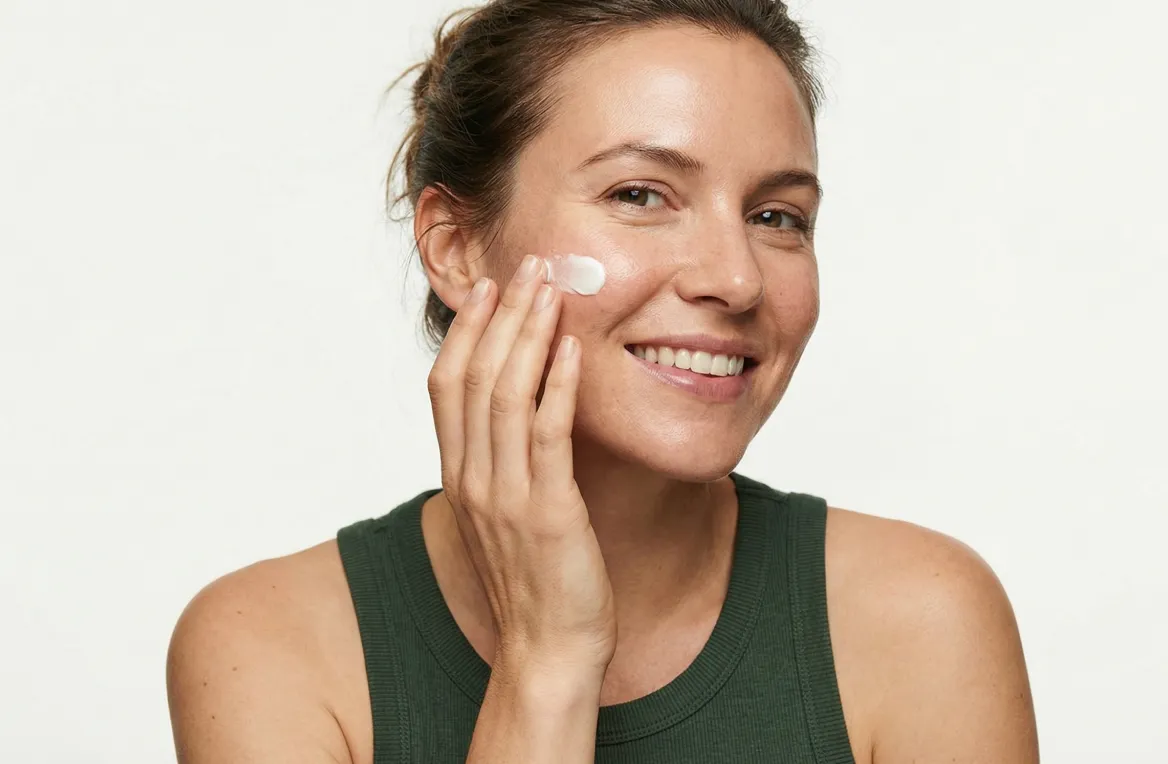
Cleanse first to clear overnight oils, then apply your NAD+ serum to slightly damp skin; this helps improve absorption. Then, follow with moisturizer to lock everything in.
Finish your routine with a broad-spectrum SPF 30 or higher. Protecting your skin from UV exposure helps support overall skin health.
Evening
Start with a double cleanse to remove SPF and any makeup. Apply your NAD+ serum after cleansing and before your night cream.
Many people prefer applying restorative skincare products in the evening as part of their nighttime routine. If you exfoliate, limit it to two to three times per week to avoid over-stripping.
How to Layer NAD+ With Other Actives
NAD+ is often used alongside other skincare ingredients such as vitamin C, hyaluronic acid, and peptides, which are commonly used to support hydration and antioxidant protection. As a general rule, apply lighter products first (such as your NAD+ serum) and follow with heavier ones (such as moisturizer or night cream).
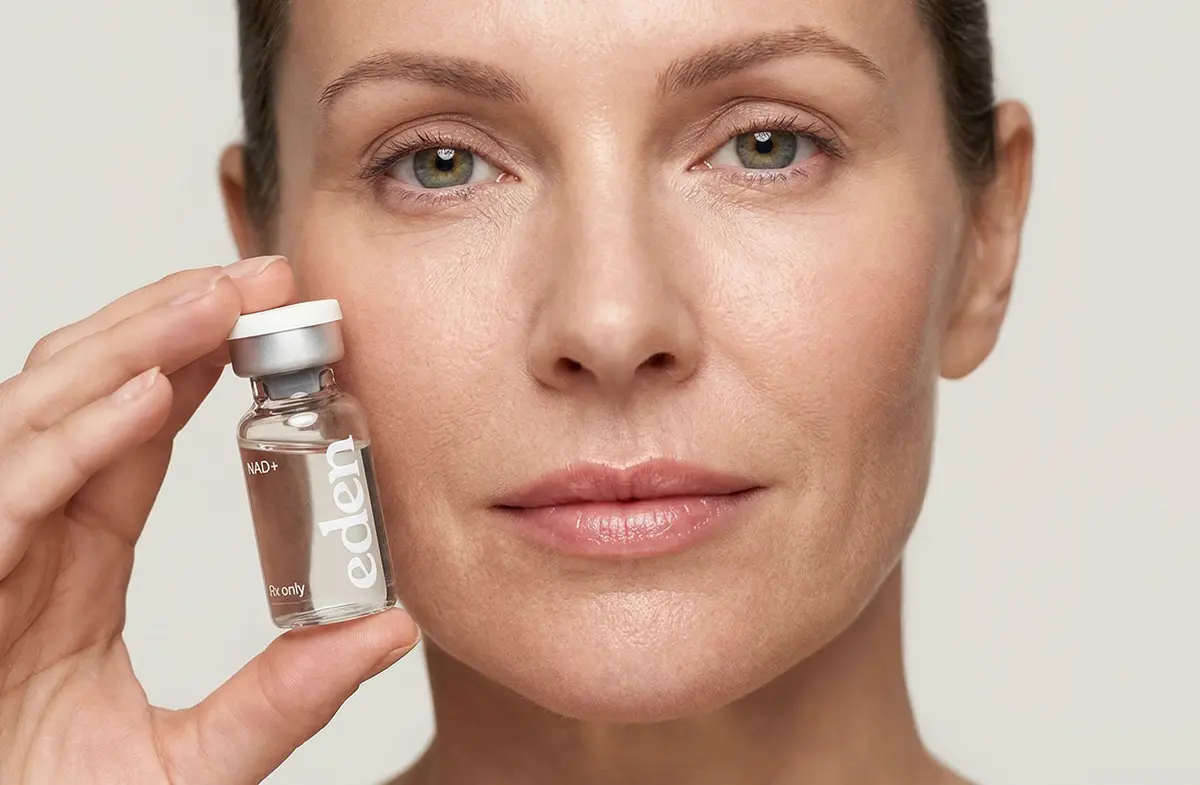
If you’re curious about whether NAD+ supplementation could complement your skincare routine, Eden connects you with a licensed healthcare provider who will review your health history and goals. Start with a brief intake form, and we’ll take care of the rest.
Final Thoughts
NAD works at the cellular level, playing a role in cellular energy processes to support normal skin function. The key is choosing the right products (look for niacinamide, NR, or NMN), applying them consistently, and protecting your skin from UV exposure each and every day.









The FDA does not approve compounded medications for safety, quality, or manufacturing. Prescriptions and a medical evaluation are required for certain products. The information provided on this blog is for general informational purposes only. It is not intended as a substitute for professional advice from a qualified healthcare professional and should not be relied upon as personal health advice. The information contained in this blog is not meant to diagnose, treat, cure, or prevent any disease. Readers are advised to consult with a qualified healthcare professional for any medical concerns, including side effects. Use of this blog's information is at your own risk. The blog owner is not responsible for any adverse effects or consequences resulting from the use of any suggestions or information provided in this blog.
Eden is not a medical provider. Eden connects individuals with independent licensed healthcare providers who independently evaluate each patient to determine whether a prescription treatment program is appropriate. All prescriptions are written at the sole discretion of the licensed provider. Medications are filled by state-licensed pharmacies. Please consult a licensed healthcare provider before making any medical decisions.
Frequently asked questions
Can NAD+ actually make my skin look younger?

There’s limited research on whether topical NAD+ can make skin look younger; however, NAD+ is involved in cellular processes related to skin health, and some formulations may help support hydration, barrier function, and overall skin appearance. Results can vary, and more research is needed.
What’s the difference between NAD+ and niacinamide in skincare?
Niacinamide is a form of vitamin B3 that your skin converts into NAD+ once absorbed. Because NAD+ molecules are large and unstable, products with niacinamide, NR, or NMN are often more effective than direct NAD+ formulations.
How often should I use NAD+ products?
Daily, both morning and evening. Apply after cleansing and before moisturizer or SPF in the morning, and before night cream in the evening.
What concentration of NAD+ should I look for?
There isn’t a standard concentration for topical NAD+ in skincare, and many products use NAD+ precursors instead because NAD+ is unstable. When NAD+ is included directly, concentrations vary by formulation. For precursors like niacinamide, concentrations around 2–5% are commonly used.
Related articles
.webp)
.webp)
.webp)
.webp)


Bonkowski, M. S., & Sinclair, D. A. (2016). Slowing ageing by design: the rise of NAD+ and sirtuin-activating compounds. Nature reviews. Molecular cell biology, 17(11), 679–690. https://pmc.ncbi.nlm.nih.gov/articles/PMC5107309/
Camacho-Pereira, J., Tarragó, M. G., Chini, C. C. S., Nin, V., Escande, C., Warner, G. M., Puranik, A. S., Schoon, R. A., Reid, J. M., Galina, A., & Chini, E. N. (2016). CD38 Dictates Age-Related NAD Decline and Mitochondrial Dysfunction through an SIRT3-Dependent Mechanism. Cell metabolism, 23(6), 1127–1139. https://pmc.ncbi.nlm.nih.gov/articles/PMC4911708/
Costford, S. R., Bajpeyi, S., Pasarica, M., Albarado, D. C., Thomas, S. C., Xie, H., Church, T. S., Jubrias, S. A., Conley, K. E., & Smith, S. R. (2010). Skeletal muscle NAMPT is induced by exercise in humans. American journal of physiology. Endocrinology and metabolism, 298(1), E117–E126. https://pmc.ncbi.nlm.nih.gov/articles/PMC2806106/
Katayoshi, T., Nakajo, T., & Tsuji-Naito, K. (2021). Restoring NAD+ by NAMPT is essential for the SIRT1/p53-mediated survival of UVA- and UVB-irradiated epidermal keratinocytes. Journal of photochemistry and photobiology. B, Biology, 221, 112238. https://pubmed.ncbi.nlm.nih.gov/34130091/
Thank you!
We'll be in touch.
Thank you!