NAD Skin Benefits: Can It Slow Aging?


.webp)

NAD skin research is growing. Discover how NAD+ may help with anti-aging, collagen support, and overall skin health.
- NAD skin benefits start at the cellular level; NAD+ is a naturally occurring molecule that plays a key role in energy production and cell repair, both of which are essential for healthy, youthful-looking skin.
- NAD+ levels decline with age, which may contribute to slower cell turnover, reduced collagen production, and increased visible signs of aging.
- Boosting NAD+ through supplements, injections, or topical products is being studied for its potential role in skin health, though research is still evolving.
- NAD+ works differently from most skincare ingredients; instead of targeting the surface, it involves the body’s own repair and renewal processes at the cellular level.
- Combining NAD+ with commonly used skincare approaches, such as antioxidants or collagen, may be part of a broader skin health routine, though evidence on combined effects is still emerging.
This article is for educational purposes only and is not a substitute for professional medical advice, diagnosis, or treatment. Always consult a licensed healthcare provider before starting any new supplement or skincare regimen.
How NAD+ Affects Skin and the Aging Process
You may have seen NAD+ showing up in wellness conversations alongside anti-aging supplements and IV drips. But what actually is it? And why does it matter to your skin?
NAD+, which stands for nicotinamide adenine dinucleotide, is a coenzyme (meaning a helper molecule) found in every cell of the body. It plays a role in cellular energy production, metabolism, and DNA repair, processes that researchers study for their potential relationship to skin health.
However, by the time we reach our 50s, NAD levels can drop to roughly half of what they were in our 20s. This decline has been linked in some research with slower cell turnover, reduced ability to repair UV-related DNA damage, and changes in structural proteins such as collagen and elastin that contribute to skin firmness and elasticity.
This is why NAD+ has caught the attention of researchers and skincare enthusiasts alike: the theory is that maintaining NAD+ levels may support cellular processes involved in skin maintenance.
{{primary-cta}}
NAD and Skin Health: What the Research Says
The science here is still developing, but here are the early findings.
Collagen and Elasticity
NAD+ activates a family of proteins called sirtuins, proteins involved in regulating cellular stress responses and metabolic processes. Sirtuins play a role in maintaining collagen production and protecting against the enzymes that break it down.
Some research suggests that supporting sirtuin activity through NAD+ precursors (compounds that the body converts into NAD+, such as NMN or NR) may influence cellular processes associated with skin structure. However, human-specific research on skin outcomes is currently very limited.
Oxidative Stress and Sun Damage
Oxidative stress occurs when there’s an imbalance between free radicals (unstable molecules that damage cells) and the body’s ability to neutralize them. UV exposure is one of the biggest drivers of oxidative stress in skin, and it’s a leading cause of premature aging, including dark spots, loss of firmness, and fine lines.
NAD+ is involved in cellular pathways related to antioxidant activity and DNA repair. However, this doesn’t mean NAD+ replaces sunscreen, but it is sometimes discussed alongside other skin health practices as part of a broader skin health approach.
Cell Repair and Turnover
Skin renews itself through a process called cell turnover, in which old cells are shed, and new ones replace them. As NAD+ levels decline, this process has been suggested in some studies to slow down, potentially leaving your skin looking dull and uneven. Yet, NAD+ is involved in cellular pathways related to DNA repair and metabolic function.
At the same time, researchers continue studying how these processes may relate to skin health.
How to Get NAD+ for Skin Benefits
There are a few different ways to incorporate NAD+ into your routine. Here are the most common ones.
Oral Supplements
NAD+ precursors such as NMN (nicotinamide mononucleotide) and NR (nicotinamide riboside) are the most accessible options. Instead of taking NAD+ directly, which the body can’t absorb efficiently on its own, these compounds are converted into NAD+ once inside the body.
Oral supplements are widely available, though absorption rates and outcomes may vary between individuals.
IV Therapy and Injections
For those seeking more direct delivery, NAD+ IV infusions and injections bypass the digestive system entirely, delivering NAD+ directly into the bloodstream. This method is typically used under medical supervision in clinical and wellness settings.
Topical NAD+ Products
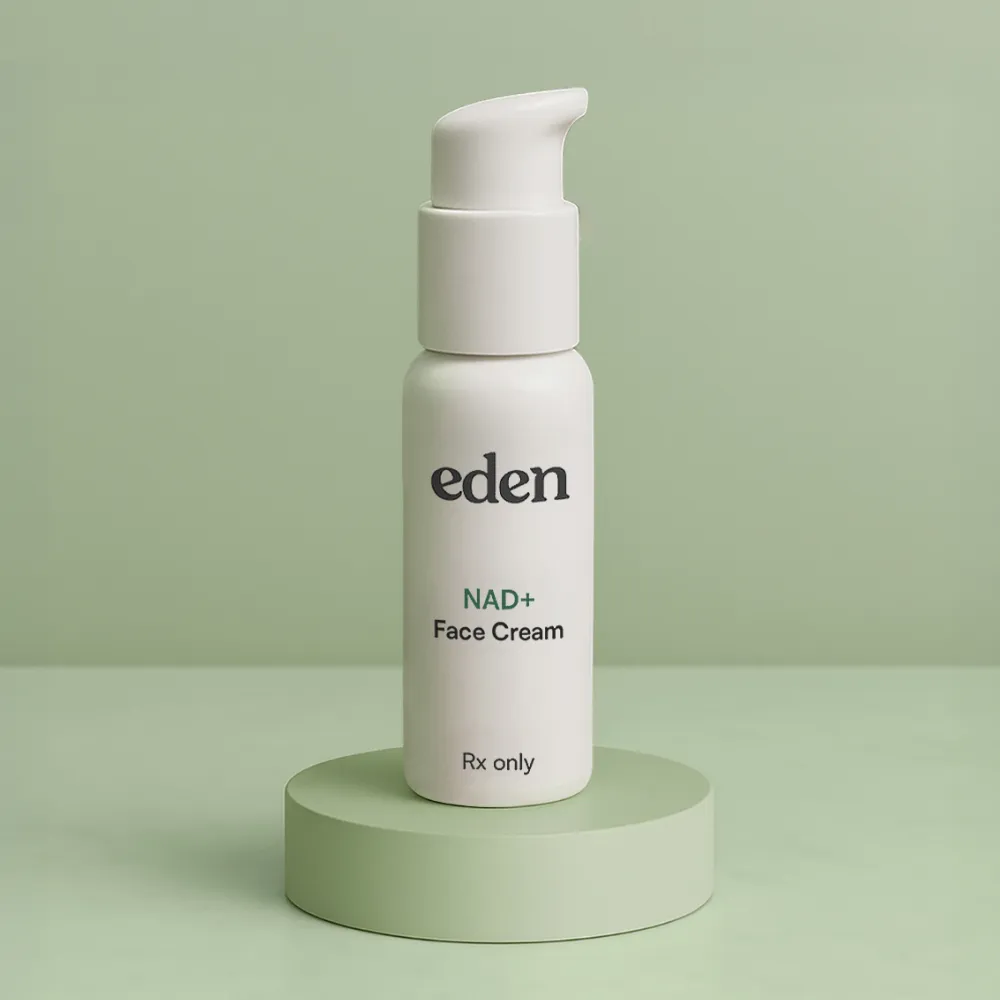
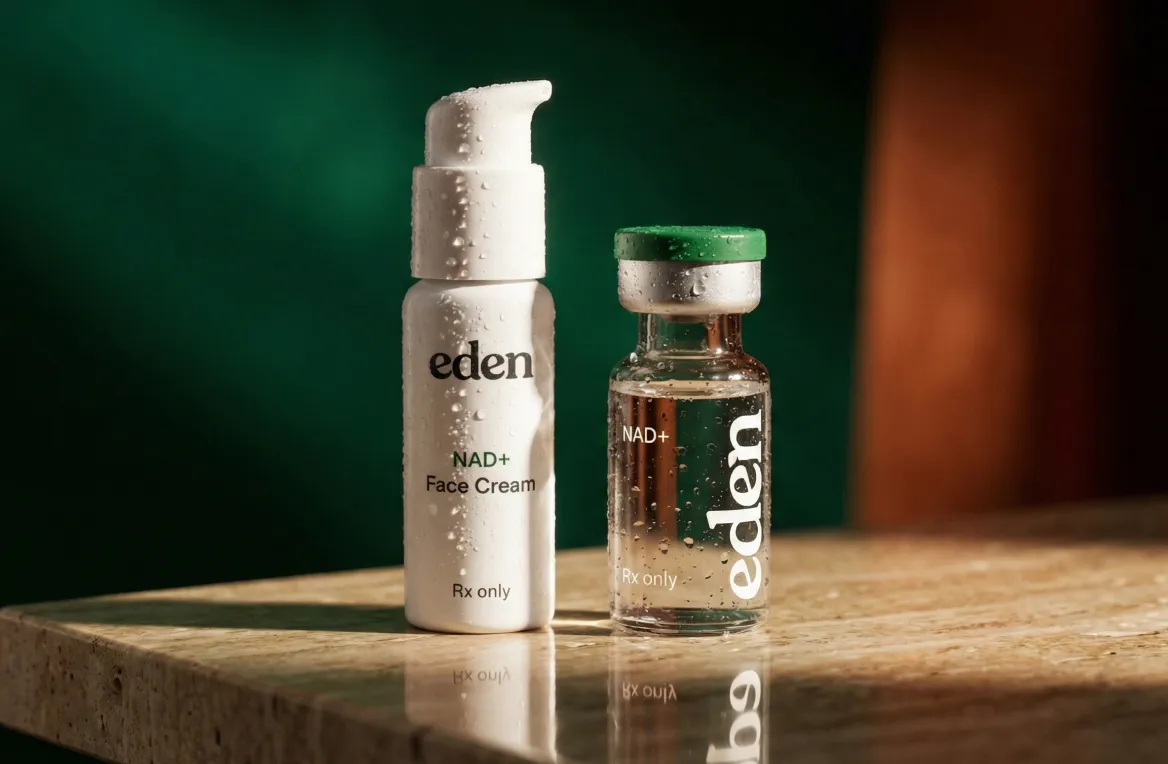
Topical NAD+ skincare, such as serums and creams, is a newer category. The idea is to apply NAD+ or its precursors directly to the skin, though research on their penetration through the skin barrier is still limited. As such, they’re generally considered a complementary option to other skincare products.
Not sure which treatment approach is right for you? After you complete a brief online intake, Eden connects you with a licensed healthcare provider who will review your health history and goals to help determine the best path forward.
{{primary-cta}}
NAD+ vs. Other Skin Health Approaches
Retinoids, vitamin C, peptides, and collagen supplements are also associated with maintaining skin health at any age. Rather than an either/or choice, NAD+ is best thought of as one potential layer in a broader skin health approach.
However, when determining the right routine for you and your skin, it may be helpful to consult with a dermatologist. They can evaluate your current skin health and provide recommendations unique to you and your situation.
Final Thoughts
NAD+ is gaining attention in the skincare world. However, with limited research, no proven benefits have been confirmed. With research still emerging, this could change in the future.
As with any wellness approach, individual results vary, and what works well for one person may not be the right fit for another. A licensed healthcare provider can help you determine whether NAD+ is appropriate for your specific situation.









The FDA does not approve compounded medications for safety, quality, or manufacturing. Prescriptions and a medical evaluation are required for certain products. The information provided on this blog is for general informational purposes only. It is not intended as a substitute for professional advice from a qualified healthcare professional and should not be relied upon as personal health advice. The information contained in this blog is not meant to diagnose, treat, cure, or prevent any disease. Readers are advised to consult with a qualified healthcare professional for any medical concerns, including side effects. Use of this blog's information is at your own risk. The blog owner is not responsible for any adverse effects or consequences resulting from the use of any suggestions or information provided in this blog.
Eden is not a medical provider. Eden connects individuals with independent licensed healthcare providers who independently evaluate each patient to determine whether a prescription treatment program is appropriate. All prescriptions are written at the sole discretion of the licensed provider. Medications are filled by state-licensed pharmacies. Please consult a licensed healthcare provider before making any medical decisions.
Frequently asked questions
What is NAD and why does it matter for skin health?

NAD+ is a coenzyme found in every cell of the body. It plays an important role in cellular energy production and metabolic processes that help cells function normally. Because skin cells rely on these processes to repair and renew themselves, researchers are studying how NAD+ may relate to overall skin maintenance as we age.
Is NAD+ better than collagen?
NAD+ and collagen support skin in different ways. Collagen is a structural protein that helps give skin firmness and elasticity, while NAD+ is involved in cellular processes that help cells maintain normal function.
Does NAD+ actually help reduce signs of aging skin?
Research into NAD+ and aging is ongoing. Scientists are studying how age-related changes in NAD+ levels may affect cellular function over time, including processes that influence skin appearance. However, current evidence is still limited, and NAD+ should not be considered a proven treatment for aging skin.
What ingredients should I look for in NAD+ skincare products?
Look for products containing NMN (nicotinamide mononucleotide) or NR (nicotinamide riboside); these are NAD+ precursors that the skin may be able to utilize in metabolic processes. Pairing them with antioxidants, including vitamin C or niacinamide, is sometimes included in skincare formulations designed to support overall skin health.
Is NAD+ safe for daily skin use?
NAD+ has been used in various wellness and skincare products, but as with any supplement or skincare ingredient, it’s a good idea to consult with a healthcare provider before adding it to your daily routine, especially if you’re taking other medications or have underlying health conditions.
Related articles
.webp)
.webp)
.webp)
.webp)


Baohua, Y., & Li, L. (2012). Effects of SIRT6 silencing on collagen metabolism in human dermal fibroblasts. Cell biology international, 36(1), 105–108. https://pubmed.ncbi.nlm.nih.gov/21981042/
Conlon N. J. (2022). The Role of NAD+ in Regenerative Medicine. Plastic and reconstructive surgery, 150(4 Suppl ), 41S–48S. https://pmc.ncbi.nlm.nih.gov/articles/PMC9512238/
Li, M., Zhang, M., Zhang, Y., Liang, Y., & Ying, W. (2023). NAD+ administration profoundly decreases UVC-induced skin damage by attenuating oxidative stress, inflammation, DNA damage and apoptosis. International journal of physiology, pathophysiology and pharmacology, 15(2), 41–49. https://pubmed.ncbi.nlm.nih.gov/37216171/
Thank you!
We'll be in touch.
Thank you!