A Step-by-Step Guide to GLP 1 Injection Sites




Learn the best GLP 1 injection sites, including the stomach, thigh, and arm. Follow our step-by-step guide for safe, effective self-injection at home.
- The commonly recommended subcutaneous GLP 1 injection sites are the abdomen, upper thigh, and upper arm, each offering reliable subcutaneous access for medication delivery when prescribed and used as directed.
- Rotating your injection site with every dose helps prevent tissue damage and may help support consistent absorption.
- Small technique details, such as using room temperature medication, letting the alcohol dry, and holding the needle for a few seconds, may help support your comfort during injection.
- If you’re new to GLP-1 therapy or want guidance on what’s best for you, talking with a licensed provider can ensure your approach makes sense for you and your circumstances.
This article is for informational purposes only and does not constitute medical advice. Always consult a licensed healthcare provider before starting or adjusting any medication.
What Are GLP-1 Injections?
GLP-1 receptor agonists, a class of medications including semaglutide and tirzepatide, are injectable medications used in certain FDA-approved products for blood sugar management and chronic weight management, depending on the medication and indication. They work by mimicking a naturally occurring hormone that regulates appetite, slows digestion, and helps stabilize glucose levels.
Since these medications need to enter the bloodstream gradually and consistently, they’re administered subcutaneously. This means the injection goes into the fatty tissue just beneath the skin. And getting the right technique down from the start may help protect your skin over time.
Below, we offer a step-by-step guide to injecting GLP-1 medications and overview the three commonly used injection sites.
GLP-1 Injection Sites at a Glance
3 GLP-1 Injection Sites
All three commonly used injection sites have sufficient subcutaneous fat for the medication to be absorbed steadily. However, the exact site you inject your medication into may ultimately come down to personal preference, comfort, and ease of access.
Abdomen
The abdomen is the most popular choice since it offers a generous surface area and is easy to reach. When injecting in the stomach area, aim for at least two inches away from your belly button in any direction. Avoid areas with visible scars, moles, bruises, or any skin irritation.
The abdomen also provides ample room to rotate across multiple zones, which may be especially helpful for those on a once-weekly injection schedule.
Upper Thigh
The front and outer portion of the upper thigh is another reliable option. Aim for the middle section, roughly three finger-widths above the knee up to about a hand’s width below the hip joint. Avoid the inner thigh and areas near the groin or knee.
Upper Arm
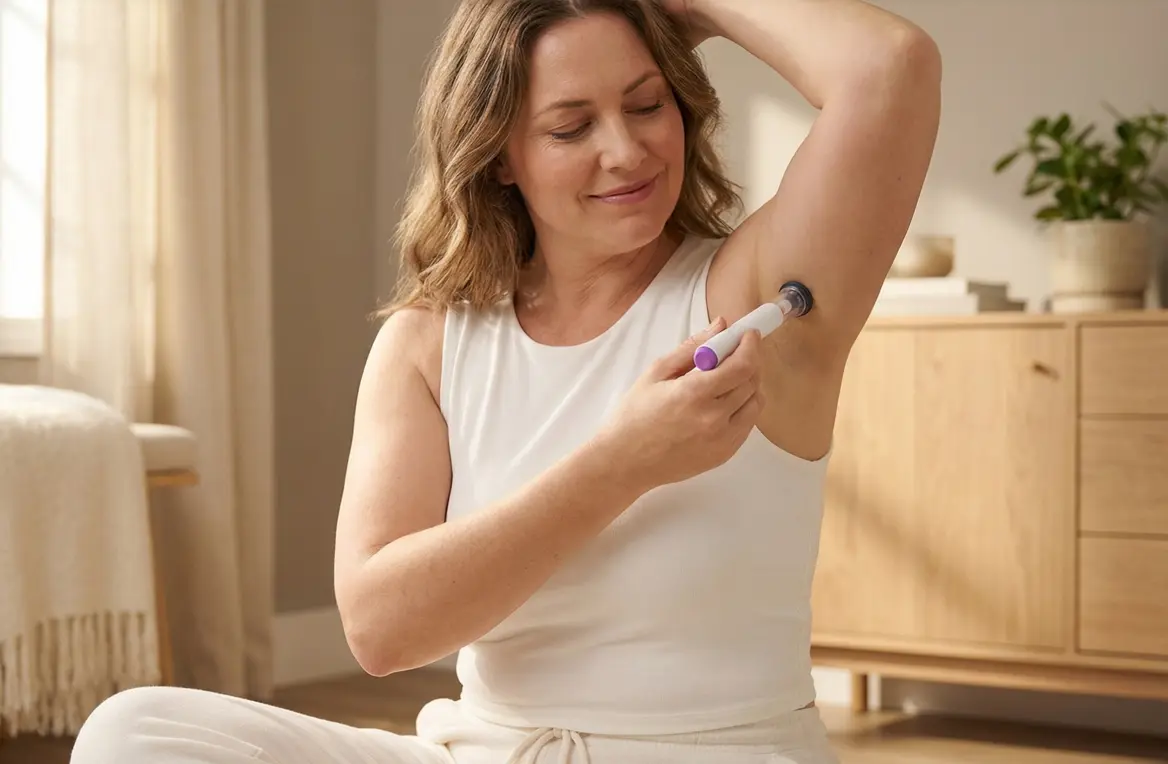
The back of the upper arm, specifically over the triceps muscle, between the shoulder and elbow, is your third option. This site can be a little trickier to access solo and may require using your non-dominant hand or asking for assistance.
With that said, some people report reduced sensation here. If you choose this site, make sure you’re targeting the fatty tissue rather than the muscle itself, and raise a small skinfold before injecting if needed.
Step-by-Step: How to Administer a GLP-1 Injection
Once you’ve done it a few times, the process usually becomes quick and straightforward. So, here’s how to do it safely from start to finish.
Step 1: Gather Your Supplies
Your provider will prescribe either a pre-filled injection pen or a vial with syringes. For a pen, you’ll need the pen itself, alcohol swabs, and a sharps container. For a vial setup, you’ll also need sterile syringes with needles. Have everything within reach before you start so you’re not searching mid-process.
Step 2: Prepare Your Medication
Take your medication out of the refrigerator 15-30 minutes before injecting. This allows the medication to come closer to room temperature, which may improve your comfort.
Check the medication for clarity, confirm the expiration date, and make sure you have the correct prescribed dose.
If you’re drawing from a vial, clean the rubber top with an alcohol swab, draw air into the syringe equal to your dose, insert the needle, push the air in, then invert the vial and pull back to your dose. Tap out any air bubbles before proceeding.
Step 3: Choose and Clean Your Injection Site
Select your site based on your rotation schedule (more on this below). Clean the area using an alcohol swab in gentle outward circles about the size of a quarter. Then let the skin air-dry completely.
Step 4: Perform the Injection
Hold the pen or syringe at a 90-degree angle to your skin. If you have less subcutaneous fat in the area, pinch a small fold of skin with your free hand. Insert the needle in one smooth, steady motion. Once the needle is in, press the plunger or pen button fully and steadily until the full dose is delivered.
Step 5: Hold and Remove the Needle
After the full dose is delivered, keep the needle in place for about 5 to 10 seconds before removing it. This pause may help reduce medication leakage at the injection site. Remove along the same angle you inserted; don’t pull at an angle or wiggle the needle.
Step 6: Dispose of the Needle Properly
Place the used needle directly into an FDA-cleared sharps container immediately after removal. Never cap the needle with two hands, and never dispose of sharps in household trash or recycling. Your pharmacy or healthcare provider can advise on sharps disposal options in your area.
{{primary-cta}}
How to Rotate GLP-1 Injection Sites
Each time you inject, move at least one inch (roughly the width of an adult finger) from your previous spot. You can stay within the same general body area, but never return to the exact same point too quickly.
A simple way to stay organized is to divide your abdomen or thigh into quadrants and work through them in a clockwise pattern. For example, you could inject in the upper left abdomen one week, upper right the next, then lower right, then lower left, before cycling back. Some people prefer to keep one body area for weekly injections and another as a backup. Whatever system you use, tracking your sites in a journal, calendar, or notes app helps prevent accidentally repeating a spot too soon.
Eden has an injection tracker our members can use for tracking their injection times and sites. This tool may help members stay organized and maintain a consistent rotation schedule.
So, why bother rotating? Skipping rotation may lead to lipohypertrophy, small, rubbery lumps of thickened fatty tissue that develop from repeated trauma to the same area. These lumps may quietly interfere with how the medication is absorbed, which may lead to variability in absorption.
Tips for Reducing Injection Discomfort
A little preparation may go a long way in managing injection discomfort. Try these simple strategies to make each injection as comfortable as possible:
- Let your medication reach room temperature: Remove it from the fridge 15-30 minutes before injecting.
- Let the alcohol fully dry: Injecting into wet alcohol is a common and easily avoidable cause of stinging.
- Keep the injection site relaxed: Tensing your muscles may amplify the pain.
- Insert the needle quickly and smoothly: Hesitating tends to make the experience more uncomfortable.
- Apply a cool compress afterward: Mild redness or swelling is normal and typically resolves within 24-48 hours.
Final Thoughts
Mastering the GLP-1 injection technique typically doesn’t take long. Rotating your sites consistently, using the right angle and approach, and taking a few small preparatory steps may reduce any discomfort.
If you have questions about GLP-1 therapy or want support getting started, Eden connects you with licensed healthcare providers through a simple online intake. From there, your provider will evaluate whether treatment is appropriate for you and guide you on the next steps.












The FDA does not approve compounded medications for safety, quality, or manufacturing. Prescriptions and a medical evaluation are required for certain products. The information provided on this blog is for general informational purposes only. It is not intended as a substitute for professional advice from a qualified healthcare professional and should not be relied upon as personal health advice. The information contained in this blog is not meant to diagnose, treat, cure, or prevent any disease. Readers are advised to consult with a qualified healthcare professional for any medical concerns, including side effects. Use of this blog's information is at your own risk. The blog owner is not responsible for any adverse effects or consequences resulting from the use of any suggestions or information provided in this blog.
Eden is not a medical provider. Eden connects individuals with independent licensed healthcare providers who independently evaluate each patient to determine whether a prescription treatment program is appropriate. All prescriptions are written at the sole discretion of the licensed provider. Medications are filled by state-licensed pharmacies. Please consult a licensed healthcare provider before making any medical decisions.
Frequently asked questions
Where’s the best place to inject GLP-1?

The abdomen is the most commonly recommended site because it offers a large surface area and is easily self-accessible. However, the upper thigh and upper arm are equally valid options; the best site is ultimately the one you can access comfortably and rotate consistently.
Is it better to inject Ozempic® in the thigh or stomach?
Both are approved injection sites for Ozempic®, and neither is definitively better than the other. The more important factor is rotating between sites regularly and using proper technique, regardless of which area you choose.
Related articles









Blanco, M., Hernández, M. T., Strauss, K. W., & Amaya, M. (2013). Prevalence and risk factors of lipohypertrophy in insulin-injecting patients with diabetes. Diabetes & metabolism, 39(5), 445–453. https://pubmed.ncbi.nlm.nih.gov/23886784/
Collins, L., & Costello, R. A. (2024c, February 29). Glucagon-Like peptide-1 receptor agonists. StatPearls - NCBI Bookshelf. https://www.ncbi.nlm.nih.gov/books/NBK551568/
OZEMPIC. (2023). Highlights of prescribing information. https://www.accessdata.fda.gov/drugsatfda_docs/label/2023/209637s020s021lbl.pdf
Thank you!
We'll be in touch.
Thank you!