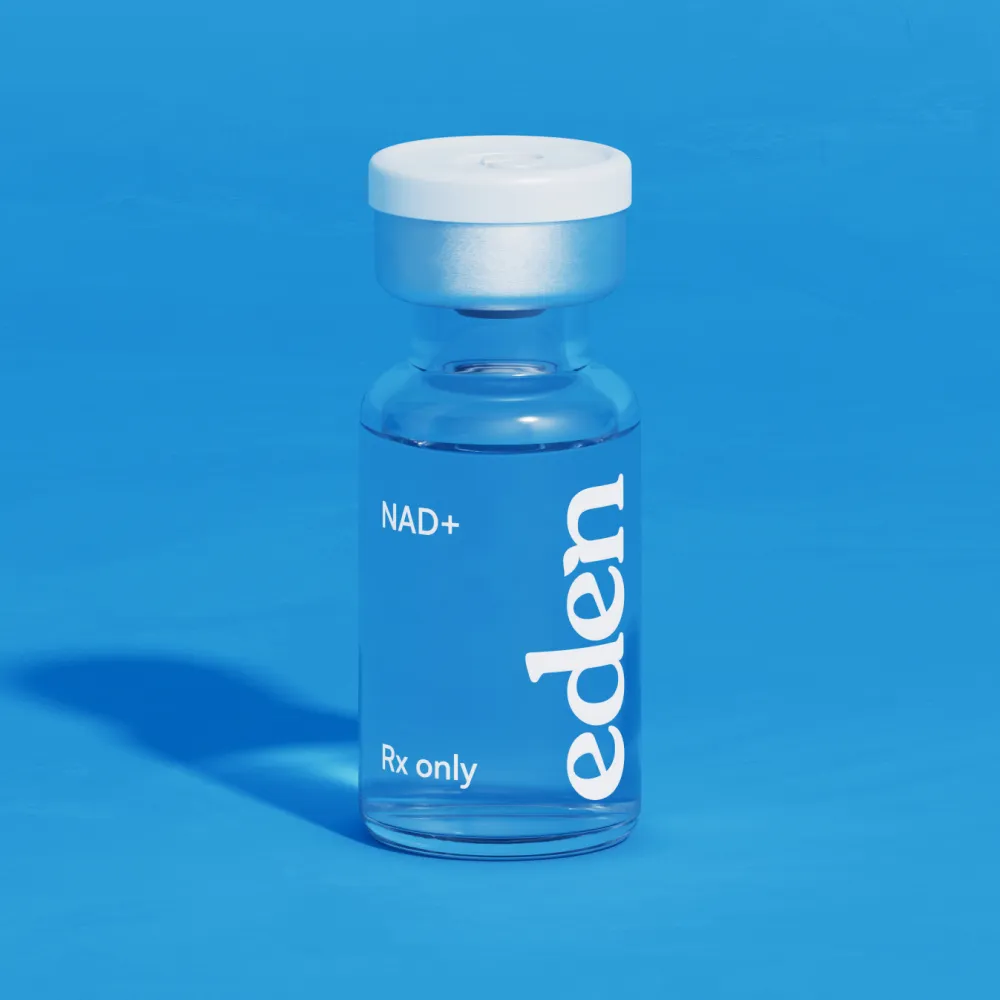
Is NAD Good for You? The Science Behind NAD and Your Health




Wondering if NAD is good for you? Explore what NAD does in the body, the science behind its health benefits, and how it fits into regenerative medicine.
- Is NAD good for you? In short, NAD is an essential molecule your body naturally produces and relies on. It’s involved in everything from energy production to cellular repair.
- NAD plays a direct role in how your cells produce energy, repair DNA, and support immune function.
- NAD levels naturally decline with age, which is why there’s a growing interest in supplementation.
- Research into NAD’s role in regenerative medicine is growing, with studies exploring aging and cellular health.
This article is for informational purposes only and is not intended as medical advice, diagnosis, or treatment. NAD+ supplements are not FDA-approved to diagnose, treat, cure, or prevent any disease. Always consult a qualified healthcare provider before starting any new supplement, therapy, or wellness program. Individual results may vary.
What Is NAD?
NAD is a coenzyme your body relies on to carry out some of its most basic and important functions. Your body naturally produces NAD using forms of vitamin B3. Once made, it exists in two forms, NAD+ (the active, oxidized form) and NADH (the reduced form). Together, they contribute to important processes in every single cell in your body.
In the world of health and wellness, this coenzyme has been talked about for a few years now, and research interest in its role in cellular metabolism has expanded in recent years.
{{primary-cta}}
What Does NAD Do in the Body?
NAD wears a lot of hats. So, here’s a closer look at its biggest roles.
Energy Production
NAD+ is central to how your body turns the food you eat into usable energy. It helps drive key metabolic pathways, including glycolysis and the tricarboxylic acid cycle (TCA cycle), that ultimately produce ATP, your cells' main energy source. Without enough NAD+, that process slows down.
DNA Repair
NAD+ helps regulate enzymes called PARPs and sirtuins, both of which play a major role in identifying and repairing damaged DNA. This matters because DNA damage happens constantly, from normal metabolic activity, UV exposure, and environmental stress. Your cells need NAD+ to keep up with repairs.
Immune Support
NAD+ is involved in cellular signaling pathways that influence immune cell function and inflammatory responses. However, researchers continue to study how NAD+ levels relate to immune function.
Sleep and Circadian Rhythm
NAD+ levels fluctuate throughout the day and are closely tied to your internal clock. Research suggests that healthy NAD+ levels help support consistent sleep-wake cycles, which has a ripple effect on mood, focus, and recovery.
Why NAD Levels Decline
Ultimately, your body doesn’t maintain the same NAD+ levels forever. Research shows that NAD+ can decline by as much as 50% in some tissues as you age.
So, why does this happen?
Simply put, as you get older, your body uses NAD+ faster than it can produce it. Enzymes that consume NAD+, such as CD38, become more active over time, especially in the presence of chronic inflammation. On top of that, lifestyle factors, including poor sleep, high stress, excessive alcohol use, and sun exposure, have been associated with changes in NAD+ metabolism in some studies.
Is NAD Good for You? What the Research Says
NAD is essential for normal cellular function, and your body depends on it to support metabolic processes. The more nuanced question is whether supplementing NAD+ levels leads to measurable health improvements.
While animal studies have suggested potential benefits, human research is in a much earlier stage but is still growing. Some clinical trials have shown that NAD+ precursors such as NMN and NR may raise blood NAD+ levels. Other trials have shown more modest outcomes, with elevated NAD+ levels not always translating into noticeable functional changes.
What researchers are most excited about is NAD’s potential role in regenerative medicine. Its involvement in DNA repair, cellular energy, and immune regulation makes it a molecule that piques many people’s interest, specifically in relation to aging.
Overall, however, there’s more research to be done before potential benefits can be stated as fact.
{{primary-cta}}
How Can You Support Your NAD Levels?
If you’re interested in maintaining or boosting your NAD+ levels, here are the most common approaches:
- Precursor supplements like NMN and NR are popular options. These compounds are converted to NAD+ in the body and are widely available as oral supplements.
- IV therapy and injections are administered by licensed clinical providers. Research comparing delivery methods is still ongoing, and clinical outcomes may vary.
- Lifestyle habits may also make a difference. Regular exercise, quality sleep, a nutrient-rich diet, and reducing alcohol intake are associated with overall metabolic health and may influence NAD+ metabolism.
At Eden, we start with a brief online intake, then connect you with a licensed healthcare provider who can determine what’s appropriate based on your health history and goals.
Final Thoughts
NAD is a foundational molecule your body depends on every single day. It plays a key role in normal cellular processes. Yet, research is limited, making it an emerging field of study.
If you’re curious about whether NAD support is right for you, talking to a healthcare provider is the best place to start.









The FDA does not approve compounded medications for safety, quality, or manufacturing. Prescriptions and a medical evaluation are required for certain products. The information provided on this blog is for general informational purposes only. It is not intended as a substitute for professional advice from a qualified healthcare professional and should not be relied upon as personal health advice. The information contained in this blog is not meant to diagnose, treat, cure, or prevent any disease. Readers are advised to consult with a qualified healthcare professional for any medical concerns, including side effects. Use of this blog's information is at your own risk. The blog owner is not responsible for any adverse effects or consequences resulting from the use of any suggestions or information provided in this blog.
Eden is not a medical provider. Eden connects individuals with independent licensed healthcare providers who independently evaluate each patient to determine whether a prescription treatment program is appropriate. All prescriptions are written at the sole discretion of the licensed provider. Medications are filled by state-licensed pharmacies. Please consult a licensed healthcare provider before making any medical decisions.
Frequently asked questions
Do NAD+ supplements really work?

NAD+ precursors such as NMN and NR have been shown to effectively raise blood NAD+ levels. However, the degree to which elevated levels translate into noticeable health benefits can vary from person to person, and research is still ongoing.
What happens when you take NAD every day?
Daily NAD+ supplementation typically increases blood NAD+ levels over time, and most people tolerate it well in the short term. Long-term effects are still being studied, so it’s always a good idea to work with a licensed provider who can monitor your progress.
What are the risks of NAD+?
Common side effects are generally mild and may include nausea, headaches, or digestive discomfort. If you’re taking medications or managing a health condition, it’s important to consult your qualified healthcare provider before starting any NAD supplement.
Related articles









Cantó, C., Menzies, K. J., & Auwerx, J. (2015). NAD(+) Metabolism and the Control of Energy Homeostasis: A Balancing Act between Mitochondria and the Nucleus. Cell metabolism, 22(1), 31–53. https://pmc.ncbi.nlm.nih.gov/articles/PMC4487780/
Mann, R., Stavrou, V., & Dimeloe, S. (2025). NAD + metabolism and function in innate and adaptive immune cells. Journal of inflammation (London, England), 22(1), 30. https://pmc.ncbi.nlm.nih.gov/articles/PMC12317530/
McReynolds, M. R., Chellappa, K., & Baur, J. A. (2020). Age-related NAD+ decline. Experimental gerontology, 134, 110888. https://pmc.ncbi.nlm.nih.gov/articles/PMC7442590/
Mendelsohn, A. R., & Larrick, J. W. (2017). The NAD+/PARP1/SIRT1 Axis in Aging. Rejuvenation research, 20(3), 244–247. https://pubmed.ncbi.nlm.nih.gov/28537485/
Okabe, K., Yaku, K., Uchida, Y., Fukamizu, Y., Sato, T., Sakurai, T., Tobe, K., & Nakagawa, T. (2022). Oral Administration of Nicotinamide Mononucleotide Is Safe and Efficiently Increases Blood Nicotinamide Adenine Dinucleotide Levels in Healthy Subjects. Frontiers in nutrition, 9, 868640. https://pmc.ncbi.nlm.nih.gov/articles/PMC9036060/
Yang, Y., & Sauve, A. A. (2016). NAD(+) metabolism: Bioenergetics, signaling and manipulation for therapy. Biochimica et biophysica acta, 1864(12), 1787–1800. https://pmc.ncbi.nlm.nih.gov/articles/PMC5521000/
Thank you!
We'll be in touch.
Thank you!