Tirzepatide Before and After: Weight Loss Results Over Time




See tirzepatide before and after expectations for weight loss, including typical timelines, what can affect results, and key safety info to discuss with a clinician.
- Tirzepatide before and after results vary from individual to individual.
- Several factors may influence your results, including starting weight, dosage, diet quality, physical activity, and individual metabolism.
- Simple strategies may help support overall health, such as prioritizing protein, staying hydrated, eating mindfully, sticking to the titration schedule, and staying patient through plateaus.
- It’s best to discuss your health situation with a licensed healthcare provider to determine the right approach for you and your goals.
This article is for informational purposes only and is not intended as medical advice, treatment, or diagnosis. It’s important to consult a licensed healthcare provider before starting any new medication or treatment. Tirzepatide is a prescription medication and can cause side effects, including gastrointestinal symptoms (like nausea, vomiting, diarrhea, constipation), and in some people, serious risks. A licensed clinician can help you weigh benefits and risks based on your medical history.
Tirzepatide Weight Loss Before and After: What Should You Expect?
“Before and after” stories can be compelling—but they can also set unrealistic expectations. Behind any visible change is a timeline, and progress can look different from person to person. When it comes to tirzepatide, results vary, and changes may be gradual.
Tirzepatide is an injectable medication that works on two gut hormones—GLP-1 and GIP —which are involved in appetite regulation, digestion, and blood sugar signaling. It’s the active ingredient in Mounjaro® (approved for type 2 diabetes) and Zepbound® (approved for chronic weight management).
In FDA-approved clinical trials of tirzepatide products, weight reduction was observed. But this data came from controlled study environments with specific dosing schedules and lifestyle support. Real-world results can vary based on your starting point, how your body responds, and what else you’re doing alongside the medication.
So, what should you realistically expect?
{{primary-cta}}
How Long Does Tirzepatide Take to Work?
Tirzepatide begins interacting with the body’s systems after administration—but that doesn’t mean you’ll see the scale move right away.
Some people notice changes in appetite before anything else. Food feels less urgent. Portions that used to feel normal now feel excessive.
Ultimately, the timeline varies from person to person, but here’s a general idea of what to expect.
What to Expect in the First Week of Tirzepatide
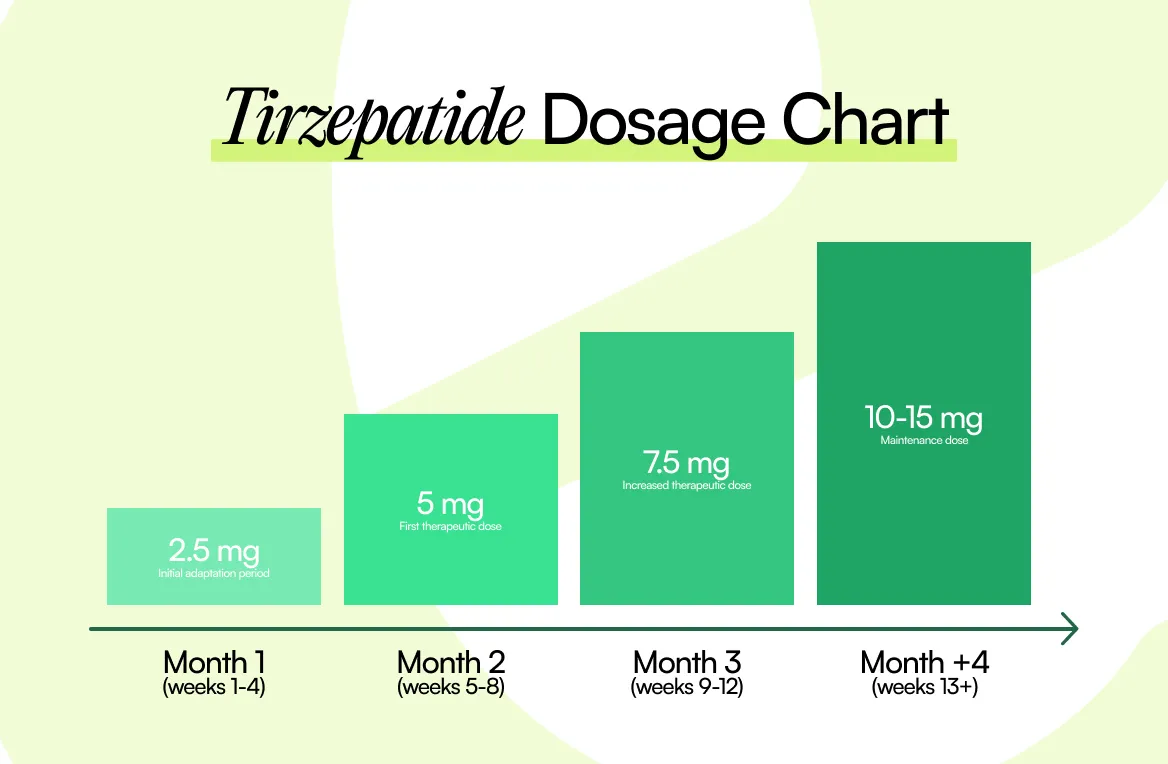
It’s always essential to discuss with a licensed healthcare provider if tirzepatide is right for you. From there, your provider may start you at the lowest dose (2.5 mg), which allows your body to acclimate before potentially increasing the dose.
During this time, many people notice reduced appetite and early satiety. Some experience mild GI side effects, such as nausea, bloating, or constipation, as their system adapts. These typically ease up within a few days to a couple of weeks.
Weight loss in week one is usually minimal, if any. Some people see a slight drop; others see nothing. Both are normal.
At the same time, if you notice any severe or extreme side effects (or have concerns about any symptoms you’re experiencing), make sure you bring these up with a qualified healthcare professional; they can determine if adjustments are needed.
When to seek urgent care
Seek urgent medical care for symptoms that may signal a serious issue, such as severe abdominal pain (especially if persistent), signs of an allergic reaction (swelling, trouble breathing), or severe dehydration.
Tirzepatide Before and After 3 Months
By this point, most people have titrated up to a higher dose, and their bodies have adjusted to the medication.
Some people report noticeable weight changes in the first three months, though individual results depend on dosage, diet, activity level, and metabolic factors.
Beyond the number on the scale, this is also when some people notice other changes, such as clothes fitting differently, changes in perceived energy levels, or shifts in eating patterns.
Factors That Influence Results
No two people respond to tirzepatide exactly the same way. Several factors can impact individual outcomes, including:
- Starting weight
- Dosage and titration schedule
- Diet quality
- Physical activity
- Individual metabolic health
Working with a licensed healthcare provider can help you determine the best strategies for you.
{{primary-cta}}
Tips for Getting the Best Results
Some general strategies may help support overall health during treatment, such as:
- Prioritizing protein: Protein helps preserve muscle mass, keeps you fuller longer, and supports your metabolism as you lose weight.
- Staying hydrated: Aim for plenty of water throughout the day, especially if you’re experiencing GI side effects.
- Eating slowly and mindfully: Smaller, more frequent meals often work better than large ones.
- Don’t skip the lower doses: Starting at a lower dose helps your body adjust and reduces the risk of side effects.
- Moving your body: Walking, strength training, or any movement you enjoy helps maintain muscle and supports long-term results.
- Being patient with plateaus: Weight loss isn’t linear, and plateaus are normal. Trust the process and focus on overall trends.
- Keeping your provider in the loop: If side effects are interfering with your quality of life or results have stalled for an extended period, a licensed healthcare provider can help troubleshoot and adjust your plan.
Key Safety Information to Discuss With a Clinician
Tirzepatide isn’t right for everyone. A clinician may review:
- Common side effects: nausea, vomiting, diarrhea, constipation, stomach pain, decreased appetite, heartburn/bloating.
- Serious risks to ask about: pancreatitis, gallbladder problems, kidney issues (sometimes related to dehydration), low blood sugar (especially if used with insulin or certain diabetes meds), and severe allergic reactions.
- Boxed warning/contraindications: People with a personal or family history of medullary thyroid carcinoma (MTC) or Multiple Endocrine Neoplasia syndrome type 2 (MEN2) should discuss this carefully with a clinician.
This is not a complete list—your clinician can provide full prescribing information and personalized guidance.
Final Thoughts
Tirzepatide before-and-after results can be misleading, especially when setting expectations. Yet, as with any goal, a sustainable, long-term approach is best, and tirzepatide may be part of a broader wellness plan.
Combined with the right habits and realistic expectations, tirzepatide may be part of a longer-term health plan, as determined by a qualified healthcare provider. And at the end of the day, a licensed healthcare professional can help determine if it makes sense for you and your life.









The FDA does not approve compounded medications for safety, quality, or manufacturing. Prescriptions and a medical evaluation are required for certain products. The information provided on this blog is for general informational purposes only. It is not intended as a substitute for professional advice from a qualified healthcare professional and should not be relied upon as personal health advice. The information contained in this blog is not meant to diagnose, treat, cure, or prevent any disease. Readers are advised to consult with a qualified healthcare professional for any medical concerns, including side effects. Use of this blog's information is at your own risk. The blog owner is not responsible for any adverse effects or consequences resulting from the use of any suggestions or information provided in this blog.
Eden is not a medical provider. Eden connects individuals with independent licensed healthcare providers who independently evaluate each patient to determine whether a prescription treatment program is appropriate. All prescriptions are written at the sole discretion of the licensed provider. Medications are filled by state-licensed pharmacies. Please consult a licensed healthcare provider before making any medical decisions.
Frequently asked questions
How quickly do you notice tirzepatide working?

Results can vary from person to person and depend on various factors. It’s best to discuss your expectations with a licensed healthcare provider who knows you and your health situation best. At the same time, some people report decreased appetite within a few weeks.
How long does it take to lose weight on tirzepatide?
This varies depending on the individual. It’s important to discuss what to expect with a qualified healthcare provider. A licensed healthcare provider can help set realistic expectations, review your health history, and discuss potential risks and side effects.
Do tirzepatide side effects go away?
For most people, yes. GI side effects, such as nausea and bloating, are most common in the early weeks and typically improve as your body adjusts to each dose. If side effects are persistent, severe, or worsening, contact a licensed clinician promptly.
Related articles










Aronne, L. J., Horn, D. B., le Roux, C. W., Ho, W., Falcon, B. L., Gomez Valderas, E., Das, S., Lee, C. J., Glass, L. C., Senyucel, C., Dunn, J. P., & SURMOUNT-5 Trial Investigators (2025). Tirzepatide as Compared with Semaglutide for the Treatment of Obesity. The New England journal of medicine, 393(1), 26–36. https://doi.org/10.1056/NEJMoa2416394
Kokura, Y., Ueshima, J., Saino, Y., & Maeda, K. (2024). Enhanced protein intake on maintaining muscle mass, strength, and physical function in adults with overweight/obesity: A systematic review and meta-analysis. Clinical nutrition ESPEN, 63, 417–426. https://doi.org/10.1016/j.clnesp.2024.06.030
MOUNJARO. (2022). Highlights of prescribing information. https://www.accessdata.fda.gov/drugsatfda_docs/label/2022/215866s000lbl.pdf
ZEPBOUND. (2022). Highlights of prescribing information. https://www.accessdata.fda.gov/drugsatfda_docs/label/2024/217806s003lbl.pdf
Thank you!
We'll be in touch.
Thank you!