Sermorelin vs TRT: Differences, Benefits & How They Work



TRT therapy directly replaces testosterone, while sermorelin supports natural growth hormone signaling. Here’s how they compare and what else you should know.
- TRT therapy directly replaces testosterone in the body, while sermorelin acts on pathways involved in the body’s natural growth hormone signaling through the pituitary gland. They work through two very different mechanisms.
- TRT may be appropriate for men with clinically diagnosed low testosterone (hypogonadism), based on labs and symptoms, not lifestyle goals alone.
- Sermorelin acts as a growth hormone-releasing hormone (GHRH) analog that stimulates the pituitary to release growth hormone.
- Both options may come with certain risks and require ongoing provider oversight, including labs and follow-ups.
- The right choice depends on the underlying clinical picture, which is why hormone optimization options should always start with a licensed provider and proper testing.
This article is for informational purposes only and is not intended to be a substitute for professional medical advice, diagnosis, or treatment. Always seek the advice of your physician or other qualified healthcare provider with any questions you may have regarding a medical condition or treatment options.
Compounded medications are not reviewed or approved by the FDA for safety, effectiveness, or quality, and may be prescribed only when a licensed provider determines a clinically significant difference for an identified patient.
TRT and sermorelin frequently come up when discussing hormone optimization for men. While they’re often grouped together, they work through different mechanisms and produce different results.
This article explores what each does, how they compare, and what’s worth considering before talking with a licensed provider about either one.
What Is TRT Therapy?
TRT therapy (testosterone replacement therapy) is a medical treatment that uses synthetic testosterone as a treatment for men who have clinically low levels. It’s typically considered for men diagnosed with hypogonadism, which is a condition where the body doesn’t produce enough testosterone on its own.
According to the Endocrine Society, a diagnosis usually requires both consistent symptoms and a confirmed low testosterone level on at least two morning blood tests.
However, TRT isn’t intended for men with normal testosterone levels. In other words, aging-related fluctuations alone don’t typically warrant treatment. The decision to start TRT should be based on your labs, symptoms, and full health history, in consultation with a licensed healthcare provider.
Common forms of TRT include:
- Intramuscular or subcutaneous injections (typically testosterone cypionate or enanthate)
- Topical gels
- Skin patches
- Long-acting pellets implanted under the skin
- Oral capsules (newer formulations like testosterone undecanoate)
FDA-approved labeling for testosterone cypionate lists typical dosing of 50 to 400 mg given by intramuscular injection every two to four weeks. Yet, specific protocols may vary based on your individual response and your provider’s judgment.
How TRT Works in the Body
TRT works by raising circulating testosterone levels, allowing the hormone to bind to androgen receptors throughout the body.
As testosterone levels rise, the brain senses the increase and signals the hypothalamic-pituitary-gonadal (HPG) axis to slow or shut down the body’s own testosterone and sperm production.
This is partially why TRT requires careful medical supervision. In some cases, stopping abruptly may leave the HPG axis suppressed for months (or even years). This also means that starting without a proper diagnosis may affect long-term hormone function and fertility.
What Is Sermorelin?
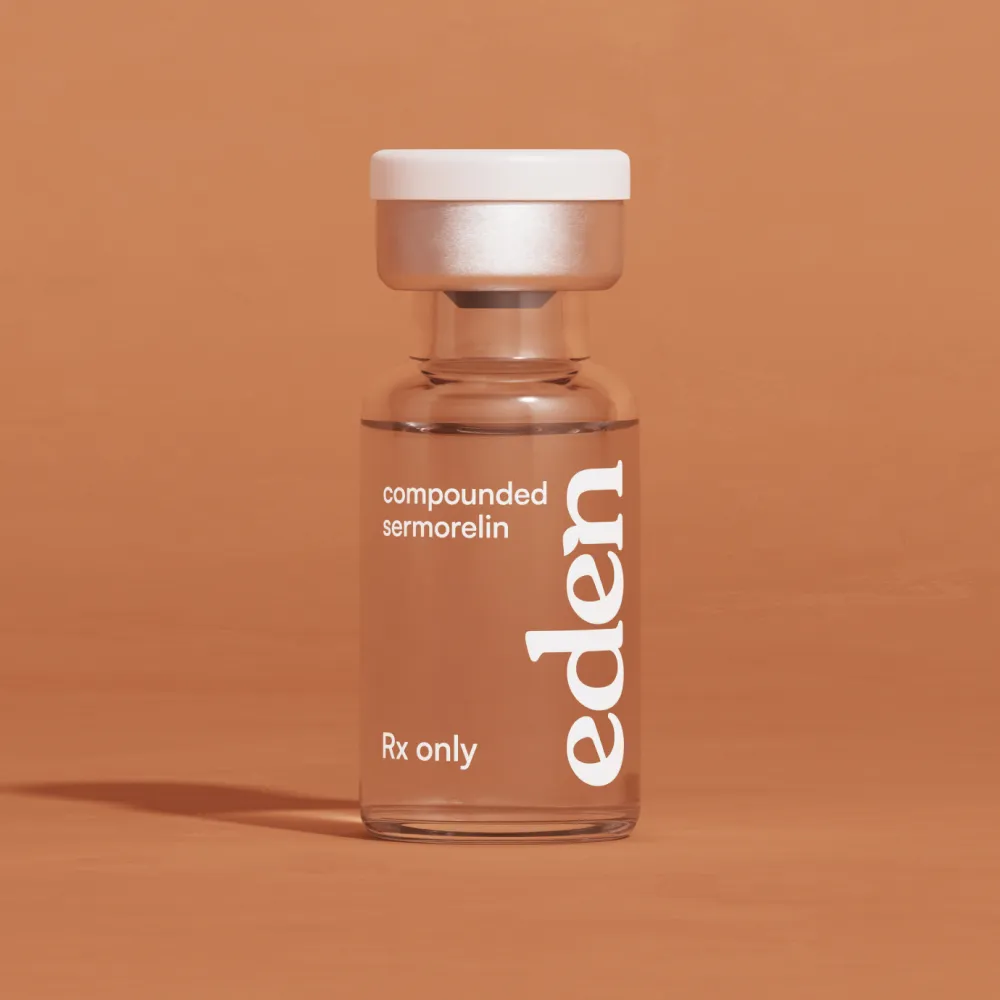
Sermorelin is a synthetic peptide consisting of the first 29 amino acids of growth hormone-releasing hormone (GHRH), which is the natural signal your hypothalamus sends to your pituitary gland to trigger growth hormone (GH) release.
It was originally FDA-approved under the brand name Geref® for pediatric growth hormone deficiency. When prescribed today, however, sermorelin is often obtained through compounding pharmacies, and compounded medications are not reviewed or approved by the FDA for safety, effectiveness, or quality.
Typically administered as a subcutaneous injection, it’s usually taken at bedtime to align with the body’s largest natural GH pulse, which occurs during deep (slow-wave) sleep.
How Sermorelin Works in the Body
Instead of replacing a hormone, sermorelin signals the pituitary to release more of the body’s own growth hormone in its natural pulsatile pattern. Unlike TRT, sermorelin acts upstream at the pituitary level to support natural production.
And since it operates through the body’s existing signaling pathways, sermorelin works within the body’s existing feedback mechanisms that regulate growth hormone levels. Growth hormone signaling may also interact with other hormone systems in the body, and some research suggests it can indirectly support healthy testosterone levels in certain individuals.
Sermorelin vs TRT: Side-By-Side Comparison
The table below breaks down how the two compare across the most important factors.
Benefits of TRT Therapy
In men with clinically low testosterone, TRT may improve a range of symptoms tied to hormone deficiency. Potential benefits may include:
- Improved libido
- Better sexual function
- Increased lean muscle mass
- Increased bone mineral density.
These benefits are specific to men who are actually deficient. Other effects often promoted online, such as sharper focus, stronger workouts, or faster recovery, aren’t reliably shown in men with normal testosterone levels. This often means that approaching TRT as a general performance enhancer leads to disappointment at best and an unnecessary risk at worst.
Sermorelin Benefits
Research on sermorelin in adults is still developing, with most clinical evidence coming from its original FDA approval for pediatric growth hormone deficiency.
Some potential effects being explored in limited research include:
- May be associated with improvements in sleep patterns in some individuals
- May be associated with changes in body composition through its effects on growth hormone signaling
- May play a role in how your body recovers from workouts or physical stress
- May support muscle repair and recovery through its effects on growth hormone signaling
- May be associated with changes in skin health and connective tissue in limited research
- Works upstream by signaling the pituitary instead of replacing a hormone directly
It’s also worth knowing that most sermorelin prescribed today comes from compounding pharmacies. Compounded medications are mixed by licensed pharmacists for individual patients, but unlike FDA-approved drugs, they are not reviewed or approved by the FDA for safety, effectiveness, or quality. This is why having an honest conversation with a licensed provider is especially important.
Risks & Side Effects
With TRT, possible side effects may include:
- Elevated red blood cell count (hematocrit)
- Worsening of sleep apnea
- Acne
- Breast tenderness
- Impacts on fertility
The FDA labeling for testosterone products also notes the importance of cardiovascular and prostate monitoring. Men on TRT typically need regular bloodwork to track testosterone, hematocrit, and PSA levels.
Sermorelin’s reported side effects may differ from TRT and are generally described as:
- Injection site reactions
- Headache
- Flushing
- Occasional dizziness
With sermorelin, long-term safety data in adults are more limited than for TRT, which is, again, why it’s important to use it only under the guidance and supervision of a licensed healthcare provider.
Choosing Between Hormone Optimization Options
When determining what path is right for you, it’s essential to work with a licensed provider who can take into account your bloodwork, history, goals, and overall health. TRT therapy and sermorelin are also best thought of as clinical tools to be used alongside a broader strategy.
With Eden, we help coordinate access to care by connecting you virtually with a licensed provider who reviews your health history, goals, and labs. Prescribing decisions are made solely by the provider, and they can determine what’s best for you. It all starts with a quick online intake.
Final Thoughts
At the end of the day, TRT therapy and sermorelin are used for different clinical purposes and work through different mechanisms. TRT directly replaces testosterone, and sermorelin acts on pathways involved in the body’s natural growth hormone signaling. The right choice depends on what your body needs.
If you’re considering either, the best first step is to get proper labs and talk to a licensed provider who can interpret the full picture and help you understand which path, if any, makes sense for your situation.









The FDA does not approve compounded medications for safety, quality, or manufacturing. Prescriptions and a medical evaluation are required for certain products. The information provided on this blog is for general informational purposes only. It is not intended as a substitute for professional advice from a qualified healthcare professional and should not be relied upon as personal health advice. The information contained in this blog is not meant to diagnose, treat, cure, or prevent any disease. Readers are advised to consult with a qualified healthcare professional for any medical concerns, including side effects. Use of this blog's information is at your own risk. The blog owner is not responsible for any adverse effects or consequences resulting from the use of any suggestions or information provided in this blog.
Eden is not a medical provider. Eden connects individuals with independent licensed healthcare providers who independently evaluate each patient to determine whether a prescription treatment program is appropriate. All prescriptions are written at the sole discretion of the licensed provider. Medications are filled by state-licensed pharmacies. Please consult a licensed healthcare provider before making any medical decisions.
Frequently asked questions
Can you take sermorelin and TRT together?

Some providers may consider combining them in specific clinical cases, but this should only happen under close medical supervision. Taking both adds complexity, which usually means more monitoring and limited long-term safety data to consider.
Is sermorelin safer than TRT?
Sermorelin and TRT have different risk profiles, but neither is technically safer. Sermorelin’s long-term adult data are more limited, meaning safety may depend on the individual and ongoing provider oversight.
How long does it take to see results from TRT therapy?
Some men may notice changes in energy or libido within a few weeks, but improvements in muscle mass or body composition typically take several months. Results may vary based on baseline labs, the form of TRT, and overall health.
Does insurance cover TRT or sermorelin?
Insurance coverage for TRT depends on whether hypogonadism has been clinically diagnosed and the specific plan. Sermorelin, on the other hand, is generally not covered when used off-label for adult hormone optimization.
Related articles








Bassil, N., Alkaade, S., & Morley, J. E. (2009). The benefits and risks of testosterone replacement therapy: a review. Therapeutics and clinical risk management, 5(3), 427–448. https://pmc.ncbi.nlm.nih.gov/articles/PMC2701485/
Bhasin, S., Brito, J. P., Cunningham, G. R., Hayes, F. J., Hodis, H. N., Matsumoto, A. M., Snyder, P. J., Swerdloff, R. S., Wu, F. C., & Yialamas, M. A. (2018). Testosterone therapy in men with hypogonadism: An Endocrine Society clinical practice guideline. The Journal of Clinical Endocrinology & Metabolism, 103(5), 1715–1744. https://academic.oup.com/jcem/article/103/5/1715/4939465
FDA. (1991). CENTER FOR DRUG EVALUATION AND RESEARCH https://www.accessdata.fda.gov/drugsatfda_docs/nda/pre96/019863_S001_GEREF.pdf
Ishida, J., Saitoh, M., Ebner, N., Springer, J., Anker, S. D., & Von Haehling, S. (2020). Growth hormone secretagogues: history, mechanism of action, and clinical development. JCSM Rapid Communications, 3(1), 25–37. https://doi.org/10.1002/rco2.9
McBride, J. A., & Coward, R. M. (2016). Recovery of spermatogenesis following testosterone replacement therapy or anabolic-androgenic steroid use. Asian journal of andrology, 18(3), 373–380. https://pmc.ncbi.nlm.nih.gov/articles/PMC4854084/
Society, E. (2022, December 8). Testosterone Therapy for Hypogonadism Guideline Resources. Endocrine Society. https://www.endocrine.org/clinical-practice-guidelines/testosterone-therapy
TESTOSTERONE CYPIONATE. (1982). HIGHLIGHTS OF PRESCRIBING INFORMATION. https://www.accessdata.fda.gov/drugsatfda_docs/label/2022/216318s000lbl.pdf
Thank you!
We'll be in touch.
Thank you!