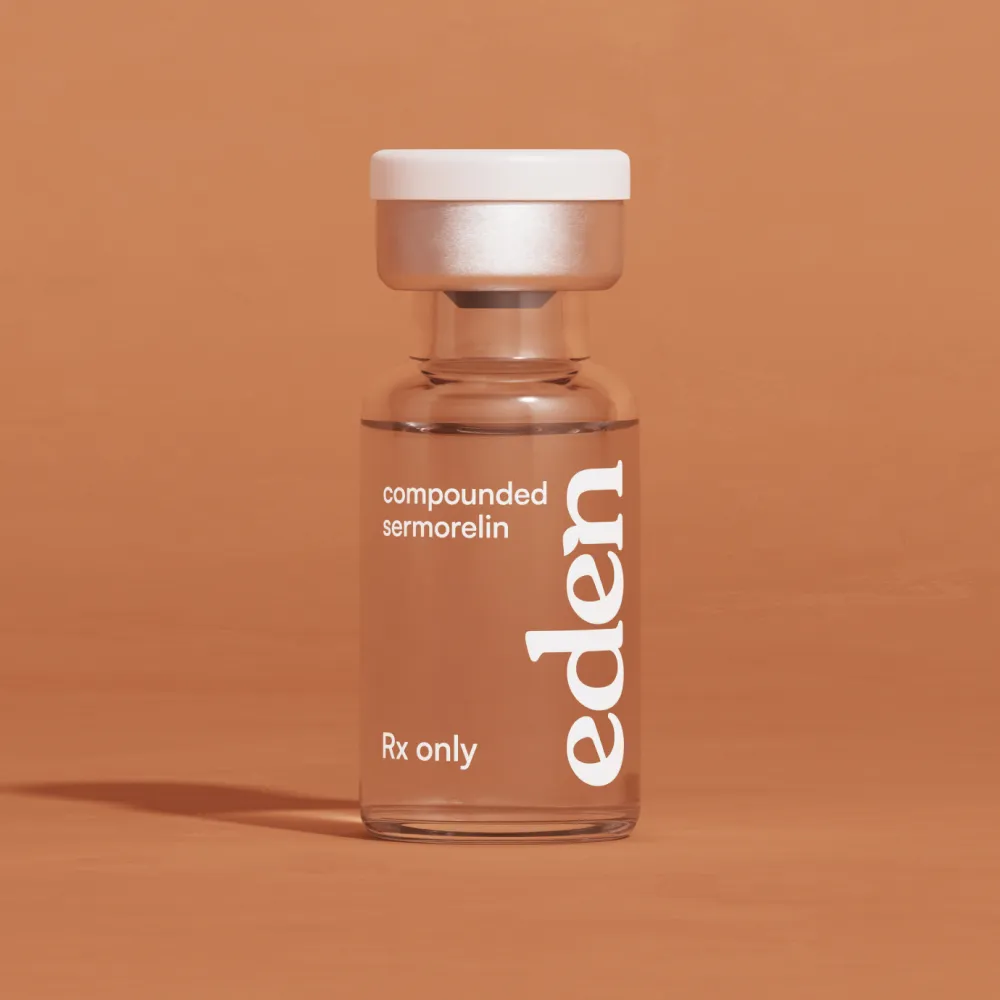
Sermorelin Pills vs Injections: What to Know


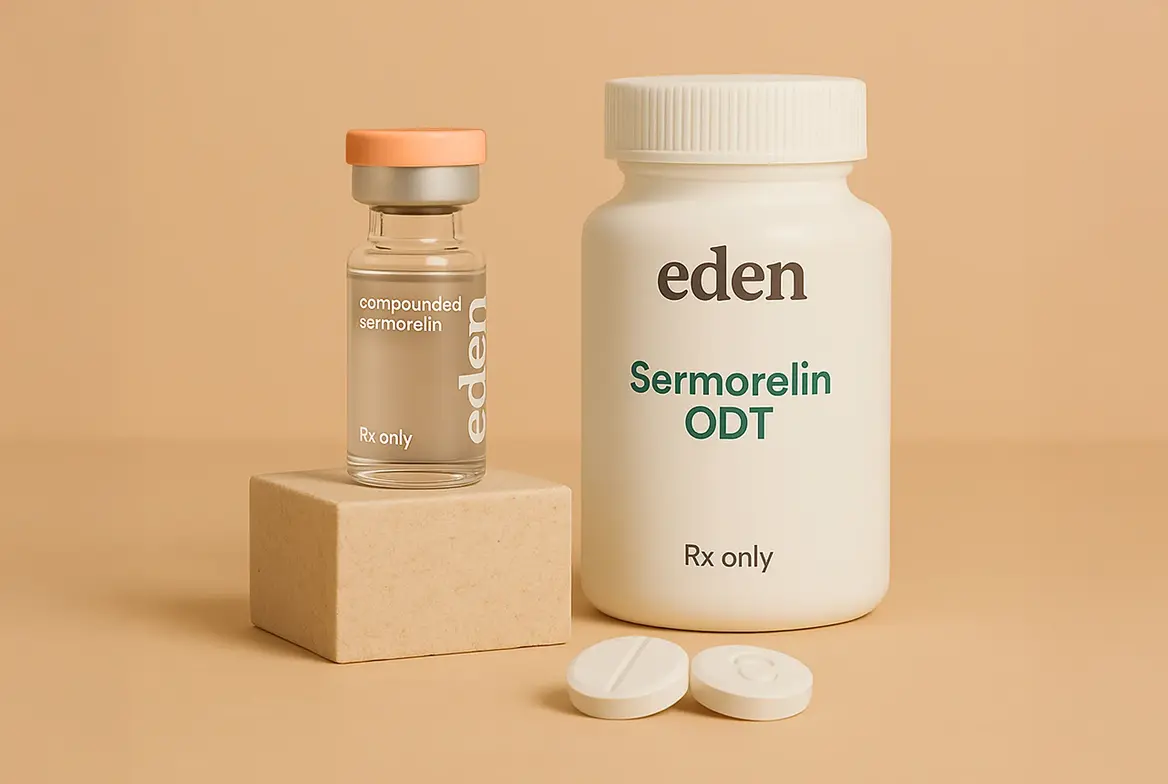

Compare Sermorelin Pills vs Injections: key differences, risks, side effects, costs, and how providers decide.
- Sermorelin pills vs injections? Route matters. Injections bypass digestion for more direct delivery; non-injectables trade some punch for needle-free convenience.
- No hype, just trade-offs. Injections are typically more predictable; pills/troches can be more variable person-to-person.
- Pick by priorities. Want straight-shot delivery and don’t mind technique and supplies? Go injections. Prefer simple, travel-friendly? Talk to your prescriber about non-injectables.
- Your provider sets the dose, timing, and monitoring. No outcomes are guaranteed.
- Costs vary. Pricing depends on dose, pharmacy, and supplies; get exact quotes from the dispensing pharmacy. Wellness uses are rarely covered by insurance.
- Compounded medications are not FDA-approved and may be prescribed only when a licensed prescriber determines a clinically significant difference for an identified patient.
- Who does what? Eden coordinates care; licensed providers evaluate and prescribe; partner pharmacies dispense and label.
This guide is educational, not medical advice. Talk to a licensed provider about what fits your goals and health history. Individual responses vary.
Understanding Sermorelin Therapy Goals
Sermorelin is a synthetic peptide that signals your pituitary to release growth hormone (GH). Same peptide, different routes. Injections skip the gut; non-injectables don’t. That difference can change how much reaches your system. Pick the route that fits your goal, whether it’s for simple wellness support or a guided protocol.
Who Typically Asks About Sermorelin?
You’ll hear about sermorelin most often from people who are:
- Adults in their 30s+ noticing changes in sleep, energy, or routines and seeking a licensed provider's advice on GH patterns.
- Active individuals who want a clinician to compare routes (needle vs needle-free) and discuss monitoring.
- Patients already in hormone care (endocrinology or wellness clinics) looking for a non-HGH, provider-guided option.
- People finishing structured weight-management programs who want to talk with their prescriber about next steps.
Bottom line: this is a provider conversation. A clinician determines if sermorelin is appropriate for you, sets the plan, and reviews risks and benefits. No outcomes are guaranteed.
Focus Areas: Energy, Sleep, Body Composition, Recovery
- Energy: People ask about a steadier daytime drive. Sermorelin may support healthy GH patterns as part of a clinician-guided plan. There aren’t set timelines for this, and experiences vary.
- Sleep: Many clinicians time dosing to align with natural GH rhythms (often evenings). But that’s a clinical decision without promise of deeper sleep.
- Body composition: If prescribed, sermorelin is one piece of a broader plan, where nutrition, training, recovery, and sleep do most of the work. No fat-loss promises guaranteed.
- Recovery: Talk load management and rest with your provider. Sermorelin isn’t an injury treatment, and responses vary from person to person.
Bottom line: Ask your clinician what to expect, how you’ll monitor progress, and when to adjust. No outcomes are guaranteed.
Why Delivery Method Matters for Results
Route matters. Injections skip the gut, while non-injectables are subject to digestion and the oral mucosa. That difference can change how much makes it into circulation and how consistent it feels from dose to dose.
- Injections = a direct path that bypasses digestion for more predictable delivery. Your clinician sets the timing.
- Pills/troches = needle-free and convenient, but exposure can be lower or more variable person-to-person and product-to-product.
Your provider will align the route, dose, and monitoring with your goals and health history and adjust based on how you respond.
Sermorelin Injections: Pros and Cons
Injectable sermorelin is the direct route as it bypasses digestion. It’s given subcutaneously (or as directed) and avoids gastrointestinal breakdown.
Pros: Why people choose it
- Injections offer more predictable delivery than swallowed tablets. Exact numbers and timelines vary by person and product, so your clinician will set expectations and monitoring.
- Users can administer it subcutaneously (or as directed by your prescriber), which bypasses the gut.
- Less food and drink interference: Dosing isn’t dependent on what or when you ate or drank.
- No taste considerations: skips issues like flavor or dissolving time.
- Many prescribers align dosing with natural GH rhythms (often evenings).
Cons: What to consider
- Local reactions (redness, irritation) can occur. Report concerns to your clinician.
- Expect a prescribed timeline, meaning you can’t take it “whenever.”
- Extra equipment over pills (e.g., syringes, swabs, sharps disposal).
- Techniques needed: site rotation, sterile prep, and self-injection comfort take practice.
- Travel logistics: refrigeration and supplies make it less grab-and-go.
Sermorelin Peptide Pills: Pros and Cons
Sermorelin in non-injectable forms offers a needle-free option under clinician guidance.
Pros: Why people choose it
- Needle-free convenience if you prefer not to inject.
- Travel-friendly setup: no sharps and easy to carry (follow the pharmacy's storage directions).
- No injection technique required: avoids site rotation and sterile prep.
- Easy to fit into routines when timed per prescriber instructions.
- No injection-site reactions (may still have oral/GI sensitivities).
Cons: What to consider
- Absorption can be lower or more variable than injections; experiences differ person to person and product to product.
- Food and drink can affect use: timing around meals, beverages, or oral rinses may be required.
- Taste or mouth irritation is possible: GI upset can occur with swallowed tablets.
- Technique still matters (e.g., dissolve time, cheek/tongue placement for buccal/sublingual).
- Adherence risk if doses are missed or not held under the tongue long enough.
Comparing Sermorelin Pills vs Injections Side-by-Side
Choosing the Right Form
Start with your goal and your routine. Then decide with your clinician.
Pick injections when you:
- Want a more direct, food-independent route, and you’re comfortable with needles/technique.
- Can follow a set schedule (often evening-leaning per prescriber).
- Prefer dosing that’s easy to link to labs and symptom logs for adjustments.
Pick pills/troches when you:
- Are needle-averse or not ready to self-inject.
- Need simple travel carry with no sharps (follow storage/timing directions).
- Can reliably handle oral/sublingual/buccal technique (placement, dissolve time, meal/beverage timing).
Both are prescription-only and clinician-guided. Compounded medications are not FDA-approved and may be prescribed only when a licensed prescriber determines a clinically significant difference for an identified patient. No outcomes are guaranteed.
Transitioning Between Forms Safely
Rule one: don’t DIY. Route changes are prescription-only and should be planned with your clinician.
How clinicians typically handle a switch:
- Finish the current plan (or follow a prescriber-directed taper) before changing route. Avoid overlap unless your clinician instructs it.
- Re-set timing to match the new route (many align dosing with natural GH rhythms, but your prescriber will specify).
- Re-train technique: injection skills (sterile prep, site rotation) or correct sublingual/buccal placement and dissolve time.
- Update storage/gear: refrigeration and sharps for injections; label-specific storage for pills/troches.
- Monitor and adjust: your clinician may use symptoms and periodic labs to fine-tune dose and schedule.
Smart do’s
- Log doses and how you feel for the first few weeks after the switch.
- Ask about interactions (meals, beverages, mouth rinses) if moving to sublingual/buccal.
- Confirm travel plans (refrigeration, supplies, etc.) if moving to injections.
Hard don’ts
- Don’t stack routes “just to be sure” unless your prescriber says so.
- Don’t change dose or timing on the fly; call your clinic first.
- Don’t ignore side effects; report new or worsening symptoms promptly.
Reminder: Both routes are clinician-guided and require a prescription. Compounded medications are not FDA-approved and may be prescribed only when a licensed prescriber determines a clinically significant difference for an identified patient.
Conclusion
In short, route matters. Injections emphasize direct delivery and more predictable scheduling, while pills/troches prioritize needle-free convenience; neither guarantees outcomes, and responses vary. Make the call with your clinician, who will set the route, dose, timing, and monitoring based on your goals and health history. Keep it practical: consider routine, travel, storage, supplies, and comfort with technique, and get exact pricing from the dispensing pharmacy.







The FDA does not approve compounded medications for safety, quality, or manufacturing. Prescriptions and a medical evaluation are required for certain products. The information provided on this blog is for general informational purposes only. It is not intended as a substitute for professional advice from a qualified healthcare professional and should not be relied upon as personal health advice. The information contained in this blog is not meant to diagnose, treat, cure, or prevent any disease. Readers are advised to consult with a qualified healthcare professional for any medical concerns, including side effects. Use of this blog's information is at your own risk. The blog owner is not responsible for any adverse effects or consequences resulting from the use of any suggestions or information provided in this blog.
Eden is not a medical provider. Eden connects individuals with independent licensed healthcare providers who independently evaluate each patient to determine whether a prescription treatment program is appropriate. All prescriptions are written at the sole discretion of the licensed provider. Medications are filled by state-licensed pharmacies. Please consult a licensed healthcare provider before making any medical decisions.
Frequently asked questions
Are pills as effective as injections?

Not necessarily. Injections bypass digestion for more direct delivery; pills/troches are needle-free, but exposure can be lower or more variable. Decide with your clinician.
How fast will I notice anything?
Timing varies. Injections are often easier to schedule predictably; pills/troches can feel more variable person-to-person. Your prescriber sets expectations.
Which route is better for travel?
Pills/troches are simpler to carry (no sharps). Injections may require refrigeration, supplies, and planning. Follow your pharmacy’s storage instructions either way.
Can I switch routes later?
Yes, but only with your clinician’s plan. Finish your current protocol (or taper if instructed), re-train technique, and monitor labs/symptoms after the switch.
What side effects should I know about?
Injections: possible site irritation (redness, tenderness). Pills/troches: possible taste changes, mouth irritation, or GI upset. Report new or worsening symptoms promptly.
How do food and drinks factor in?
Injections are largely food-independent. Pills/troches may require timing around meals, beverages, or rinses. Follow the prescriber/pharmacy directions.
What does it typically cost?
Ranges vary by dose, formulation, pharmacy, and services. As a rough guide: injections ~$150–$500/month; pills/troches ~$150–$300+/month. Get exact quotes from the dispensing pharmacy.
Related articles









Brayden, D. J., et al. (2025). Devices to overcome the buccal mucosal barrier to administer therapeutic peptides. Advanced Drug Delivery Reviews. https://www.sciencedirect.com/science/article/pii/S0169409X25000572
DrugBank Online. (n.d.). Sermorelin (DB00010). https://go.drugbank.com/drugs/DB00010
Elsevier. (2016). Sermorelin – an overview | ScienceDirect Topics. https://www.sciencedirect.com/topics/pharmacology-toxicology-and-pharmaceutical-science/sermorelin
Frontiers in Endocrinology. (2023). Complex relationship between growth hormone and sleep in children. https://www.frontiersin.org/articles/10.3389/fendo.2023.1332114/full
Journal of Endocrine Society. (2022). Acute sleep disruption does not diminish pulsatile growth hormone secretion in pubertal children. Journal of the Endocrine Society, 6(11), bvac146. https://doi.org/10.1210/jendso/bvac146
U.S. Food & Drug Administration. (n.d.). Compounding and the FDA: Questions and answers. https://www.fda.gov/drugs/human-drug-compounding/compounding-and-fda-questions-and-answers
U.S. Food & Drug Administration. (n.d.). Human drug compounding. https://www.fda.gov/drugs/guidance-compliance-regulatory-information/human-drug-compounding
U.S. Food & Drug Administration. (n.d.). Human drug compounding: Policies and rules. https://www.fda.gov/drugs/human-drug-compounding/human-drug-compounding-policies-and-rules
Van Cauter, E., Leproult, R., & Plat, L. (2000). Age-related changes in slow wave sleep and REM sleep and relationship with growth hormone and cortisol levels in healthy men. JAMA, 284(7), 861–868. https://doi.org/10.1001/jama.284.7.861
Zhang, J., Ding, F., & colleagues. (2025). Neuroendocrine circuit for sleep-dependent growth hormone release. Cell, 186(xx), xxx–xxx. https://www.cell.com/cell/fulltext/S0092-8674%2825%2900626-9
Thank you!
We'll be in touch.
Thank you!