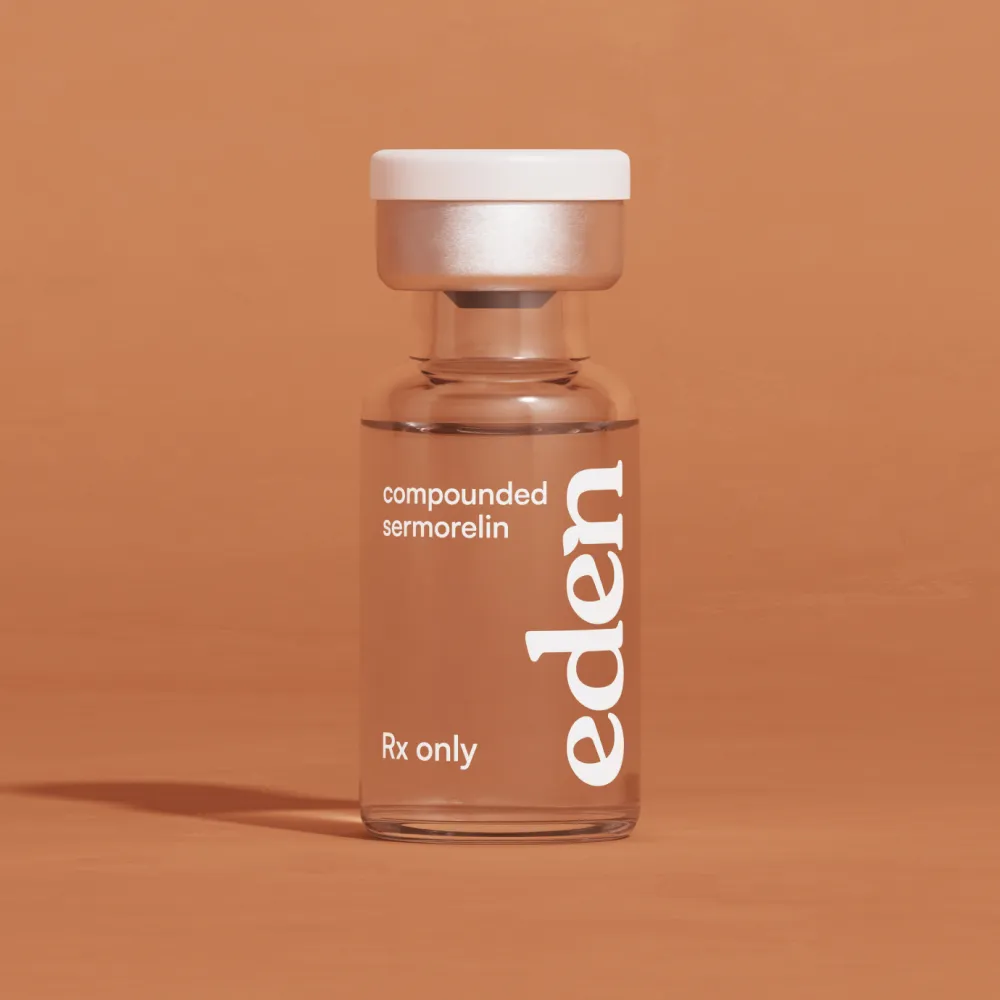
Sermorelin vs HGH: What’s the Difference?




Sermorelin vs HGH: learn how they differ in mechanism, safety, cost, and eligibility, and which may be right for your goals. Consult a provider to get started.
- When it comes to the difference between sermorelin vs HGH, sermorelin stimulates the pituitary gland to produce natural growth hormone; synthetic HGH delivers growth hormone directly into the bloodstream.
- Sermorelin preserves the body’s natural feedback loop, which may help maintain natural hormone signaling; however, risks should be discussed with a licensed provider.
- Synthetic HGH is FDA-approved for specific medical conditions and is typically reserved for documented, severe growth hormone deficiency.
- Sermorelin is generally less expensive than synthetic HGH and is available through licensed telehealth providers.
- Neither therapy should be self-administered; both require evaluation and oversight by a licensed provider.
- For most adults pursuing general health goals or lifestyle support, sermorelin may be considered by a licensed provider if clinically appropriate, but individual suitability must be assessed by a provider.
This article is for informational purposes only and does not constitute medical advice. Consult a licensed healthcare provider before starting any hormone therapy. Compounded sermorelin is not FDA-approved for anti-aging or wellness purposes. Eden connects patients with licensed providers who, after consultation, may prescribe medications if clinically appropriate; a prescription is not guaranteed.
Your body’s production of the growth hormone doesn’t stay constant throughout your life. After age 30, natural growth hormone output from the pituitary gland declines by roughly 14% per decade. This decline has been associated in some individuals with reduced muscle tone, increased body fat, lower energy, slower recovery, and poorer sleep quality.
If you’ve been researching ways to address those changes, you’ve likely come across two options: sermorelin, a peptide that signals the pituitary gland to produce more of its own growth hormone, and synthetic HGH, a lab-manufactured version of growth hormone that’s injected directly into the bloodstream.
Both therapies target declining growth hormone levels, but they work through very different mechanisms. And these differences impact safety, long-term use, cost, and who they’re best suited for. This article breaks down the sermorelin vs HGH comparison across mechanism of action, safety profiles, regulatory status, cost, eligibility, and includes a side-by-side comparison table to help you evaluate your options.
What Is Human Growth Hormone (HGH)?
Human growth hormone, also called somatotropin, is a hormone naturally produced by the pituitary gland, a small gland at the base of the brain. It plays a central role in stimulating cell growth and regeneration, regulating metabolism, supporting muscle and bone development, and influencing body composition throughout your life.
HGH production peaks during adolescence and early adulthood, then declines progressively with age. Synthetic HGH is a lab-manufactured, bioidentical version of somatotropin that’s administered via subcutaneous injection.
The FDA first approved synthetic HGH in 1985 for growth hormone deficiency in children. Since then, additional indications have been approved, including adult growth hormone deficiency, Turner syndrome, chronic renal insufficiency, and HIV-associated muscle wasting. Its use outside these approved indications is considered off-label.
How Synthetic HGH Works in the Body
When synthetic HGH is injected, it enters the bloodstream directly and raises circulating levels of both growth hormone and IGF-1 (insulin-like growth factor-1), a hormone produced primarily by the liver in response to growth hormone that mediates many of HGH’s effects on muscle and tissue growth.
What synthetic HGH doesn’t do is signal the pituitary gland to produce its own growth hormone. Because the body detects elevated hormone levels from the injection, the hypothalamus may reduce its own output of GHRH (growth hormone-releasing hormone)—a process called negative feedback suppression.
Eventually, this may make it harder for the pituitary to resume normal production if treatment is discontinued. In fact, research indicates that long-term synthetic HGH use may interfere with the body’s natural feedback mechanisms, potentially making it harder for the pituitary to resume normal production if treatment is discontinued.
Potential Risks and Side Effects of Synthetic HGH
Synthetic HGH carries a range of potential side effects, particularly when used for wellness or anti-aging purposes as opposed to documented clinical deficiency. These may include:
- Fluid retention and edema (swelling in the hands and feet)
- Joint pain and muscle aches
- Carpal tunnel syndrome
- Increased insulin resistance and associated diabetes risk with prolonged use
- Gynecomastia (enlarged breast tissue in men)
- Potential suppression of natural pituitary function
These effects are more likely to occur because synthetic HGH provides constant, unregulated hormone levels rather than the natural pulsatile (rhythmic) secretion pattern the body is designed to produce. This is why HGH therapy requires close medical supervision, and why it’s typically reserved for hormone deficiencies that have been confirmed through comprehensive lab testing.
What Is Sermorelin?
Sermorelin is a synthetic peptide consisting of the first 29 amino acids of naturally occurring growth hormone-releasing hormone (GHRH). It’s classified as a GHRH analog, meaning it mimics the body’s own signaling molecule, overdelivering growth hormone directly.
The FDA first approved sermorelin (brand name Geref) in 1990 as a diagnostic agent to evaluate pituitary gland function. In 1997, it received a second approval for the treatment of idiopathic growth hormone deficiency in children. The manufacturer then voluntarily discontinued Geref in 2008 for commercial reasons, not due to safety or efficacy concerns.
Today, compounded sermorelin acetate is prescribed by licensed providers as a peptide therapy that may be used to support, as determined by a licensed provider, the body’s natural growth hormone production.
Compounded sermorelin is prepared by state-licensed compounding pharmacies and is available only by prescription. Eden’s program includes compounded sermorelin prescribed by licensed providers and dispensed by U.S.-licensed pharmacies. These pharmacies follow applicable quality and safety standards; however, as with any compounded medication, formulations may vary.
How Sermorelin Works in the Body
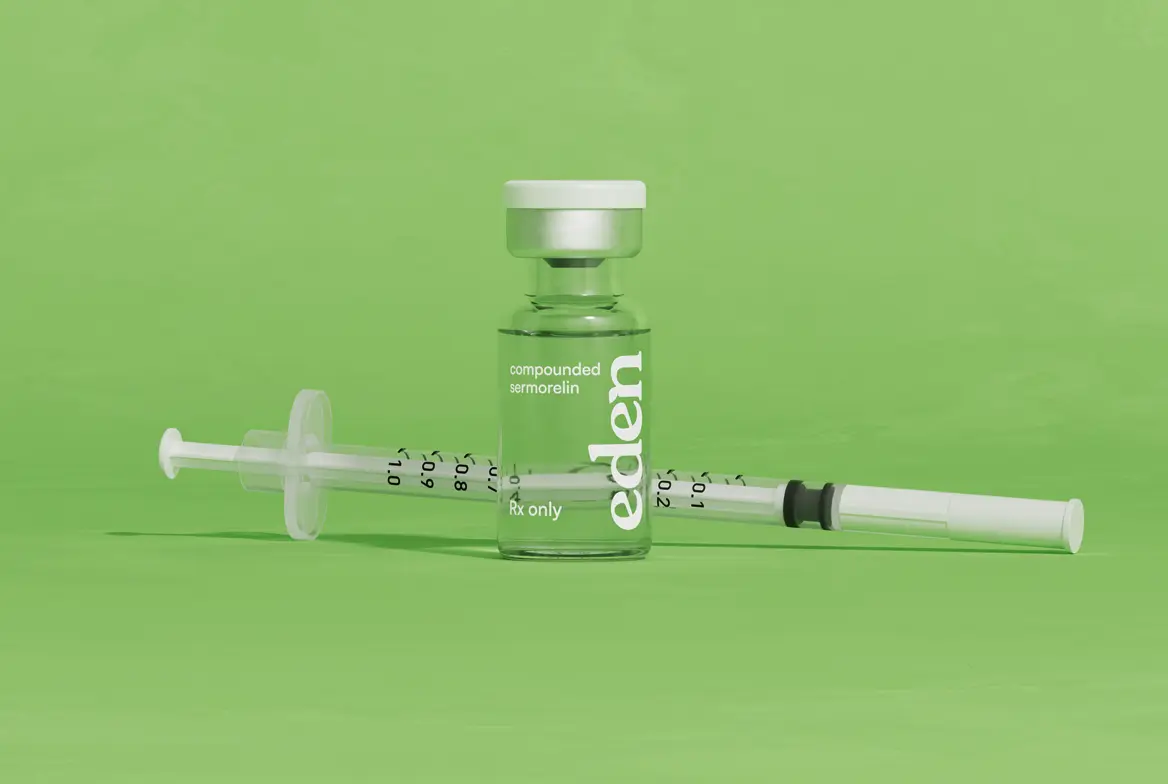
Sermorelin is administered via subcutaneous injection, typically before bedtime. Once injected, it binds to GHRH receptors on the pituitary gland and triggers the release of growth hormone in natural, pulsatile waves (the same rhythmic pattern your body produced during younger years).
The largest natural pulse of growth hormone occurs during the first few hours of deep sleep. As such, administering sermorelin before bedtime aligns with this circadian rhythm, which may align with natural hormone release patterns; yet, clinical outcomes vary and are not guaranteed.
However, since sermorelin stimulates natural production, the hypothalamus can still detect when growth hormone and IGF-1 levels are sufficient and reduce stimulation accordingly. This feedback-preserving mechanism helps prevent overproduction.
What Sermorelin May Support
Based on its mechanism of supporting natural growth hormone production, sermorelin therapy may be considered by a provider under a broader care plan for:
- Lean muscle development and improved body composition (when combined with exercise and a healthy diet)
- Metabolic health and fat metabolism
- Energy levels and post-exercise recovery
- Sleep quality
- Skin elasticity and bone health
- Overall vitality
Results typically take time. Some individuals report changes in sleep and energy across weeks or months; however, timelines vary and are not guaranteed.
However, sermorelin is not appropriate for everyone. A licensed provider should evaluate your health history, symptoms, and hormone levels before recommending any treatment.
Sermorelin vs HGH: Key Differences Explained
Both sermorelin and synthetic HGH aim to address declining growth hormone levels. But they take fundamentally different approaches.
Mechanism of Action
This is where HGH therapy vs sermorelin diverges most clearly.
Sermorelin acts upstream; it signals the pituitary gland to produce growth hormone naturally, keeping the body’s feedback loop intact. In contrast, synthetic HGH acts downstream; it delivers growth hormone directly into the bloodstream, bypassing the pituitary entirely.
Think of it this way: Sermorelin is like adjusting the thermostat so the furnace produces more heat naturally. Synthetic HGH is like pumping heat directly into the room without the thermostat knowing. Because sermorelin works through the body’s own regulatory system, hormone levels are less likely to spike above physiological ranges.
Safety Profile and Long-Term Considerations
When evaluating sermorelin benefits vs HGH from a safety standpoint, the feedback loop either one creates is an important factor to consider.
Since sermorelin preserves natural regulation, the body self-corrects, which may influence hormone regulation; however, it’s worth noting that risks still exist and should be discussed with a provider. Side effects associated with sermorelin are generally mild and may include injection site reactions, temporary flushing, or mild headache.
Synthetic HGH, however, may carry more significant side effects, including fluid retention, joint pain, insulin resistance risk, and potential pituitary suppression with long-term use. The American Association of Clinical Endocrinologists (AACE) and other major endocrine organizations have advised that synthetic HGH should not be prescribed for anti-aging or wellness purposes in the absence of documented deficiency.
At the same time, neither therapy should be self-administered. Both require a licensed provider’s evaluation and ongoing monitoring.
Regulatory Status and Access
Synthetic HGH is FDA-approved for specific medical conditions. Unlike most prescription medications, HGH is subject to additional federal restrictions. Under the Food, Drug, and Cosmetic Act, it is illegal to distribute or prescribe HGH for anti-aging, bodybuilding, or other non-approved purposes.
Sermorelin, on the other hand, is not a controlled substance. Compounded sermorelin acetate is available via prescription from licensed providers and dispensed through state-licensed compounding pharmacies.
At Eden, if a provider prescribed sermorelin, it always comes from compounded U.S.-licensed pharmacies and prescribed only after a licensed provider consultation.
Both therapies require legitimate medical oversight; neither should be obtained or used without a provider’s guidance.
Cost Comparison
Is sermorelin better than HGH when it comes to cost? Costs may ultimately differ depending on treatment, provider, and eligibility.
Branded synthetic HGH therapies can cost $500-$1,500+ per month, depending on dose and brand, and insurance coverage is typically limited to FDA-approved indications.
Sermorelin therapy is often less expensive than synthetic HGH, though costs vary depending on treatment, provider, and eligibility. For instance, Eden’s program for compounded sermorelin starts from $126 for the first month (on a 3-month plan). However, pricing may vary based on plan selection and is subject to change. Eden’s plans are also FSA/HSA eligible and include the online provider consultation, prescription, medication, and free expedited shipping.
Sermorelin vs HGH: Side-by-Side Comparison
This table is a general educational overview. Individual suitability depends on your health history, hormone levels, and goals; a licensed provider should guide any treatment decision.
Who May Be a Candidate for Sermorelin?
Sermorelin may be a good fit for adults who want to complement an active lifestyle.
Good candidates generally include:
- People who are already engaging in regular exercise and healthy habits, and are looking for additional support.
- Adults who prefer a treatment that works with the body’s natural hormone systems rather than replacing them.
- Individuals who are not appropriate candidates for synthetic HGH because they don’t have a documented severe deficiency.
Yet again, sermorelin is not appropriate for everyone. Contraindications may include active malignancy, certain pituitary disorders, or pregnancy. A licensed provider must evaluate your health history and ideally baseline hormone levels (including IGF-1) before prescribing sermorelin or any growth hormone therapy.
Who May Be a Better Candidate for Synthetic HGH?
Synthetic HGH has legitimate, FDA-approved clinical applications. And for certain patients, it is the appropriate and necessary choice. These include:
- Adults with a confirmed, severe growth hormone deficiency diagnosed through comprehensive testing (including stimulation tests).
- Patients with specific conditions for which HGH is FDA-approved (Turner syndrome, Prader-Willi syndrome, chronic renal insufficiency, HIV-associated wasting).
- Individuals whose pituitary gland is no longer capable of producing adequate growth hormone in response to stimulation.
In these scenarios, synthetic HGH is typically managed by an endocrinologist with regular monitoring.
How to Get Started with Sermorelin Through Eden
Eden’s Sermorelin Injections program is a fully online, subscription-based program designed to make provider-guided peptide therapy accessible and straightforward. The program includes:
- An online provider consultation with a licensed healthcare provider
- A provider-determined dosing plan based on your health profile, goals, and needs
- Compounded sermorelin acetate (if prescribed) dispensed by a U.S.-licensed pharmacy
- A home injection kit with everything you need
- Free expedited shipping directly to your door
- 24/7 provider messaging for ongoing support and dose adjustments
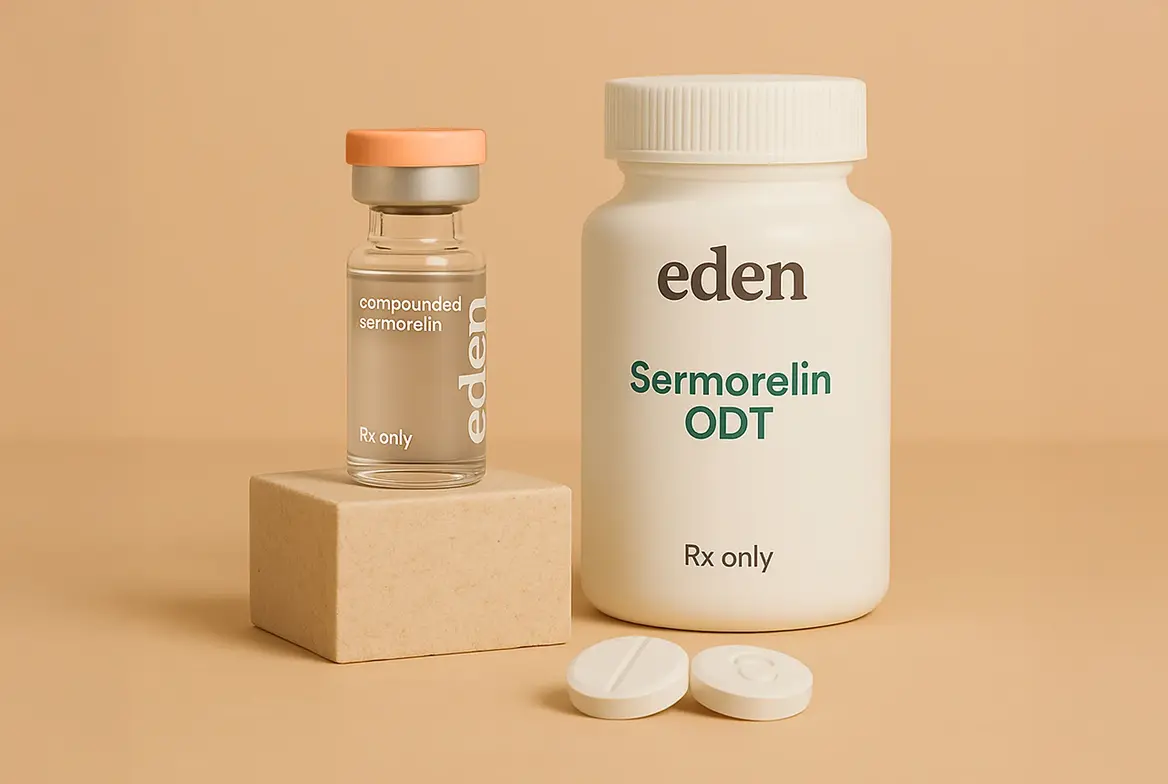
To get started with Eden, complete an online intake. From there, a licensed provider reviews your health profile and determines eligibility, and if prescribed, medication is shipped directly to your home from a licensed pharmacy. Your licensed provider may also offer alternative formulations, including tablet options. With Eden, you’ll have ongoing access to your care team with 24/7 messaging and regular check-ins so you’re never navigating the process alone.









The FDA does not approve compounded medications for safety, quality, or manufacturing. Prescriptions and a medical evaluation are required for certain products. The information provided on this blog is for general informational purposes only. It is not intended as a substitute for professional advice from a qualified healthcare professional and should not be relied upon as personal health advice. The information contained in this blog is not meant to diagnose, treat, cure, or prevent any disease. Readers are advised to consult with a qualified healthcare professional for any medical concerns, including side effects. Use of this blog's information is at your own risk. The blog owner is not responsible for any adverse effects or consequences resulting from the use of any suggestions or information provided in this blog.
Eden is not a medical provider. Eden connects individuals with independent licensed healthcare providers who independently evaluate each patient to determine whether a prescription treatment program is appropriate. All prescriptions are written at the sole discretion of the licensed provider. Medications are filled by state-licensed pharmacies. Please consult a licensed healthcare provider before making any medical decisions.
Frequently asked questions
Is sermorelin better than HGH?

It depends on your individual health profile and goals. Treatment choice depends on individual clinical evaluation by a licensed provider. Synthetic HGH is better suited for specific, FDA-approved medical conditions.
What is the difference between sermorelin peptide vs HGH injections?
Sermorelin is a peptide that stimulates your pituitary gland to produce growth hormone naturally, while HGH injections deliver synthetic growth hormone directly into your bloodstream.
How long does sermorelin take to work?
Some individuals report changes over time, including several weeks or months; however, results vary and are not guaranteed.
Does sermorelin suppress natural growth hormone production?
No. Unlike synthetic HGH, sermorelin works by stimulating the pituitary gland to produce its own growth hormone. But as always, individual responses may vary.
Can I get sermorelin online?
Yes. Licensed telehealth providers like Eden may prescribe compounded sermorelin after an online consultation. Medication ships directly to your home from a U.S.-licensed pharmacy.
Related articles







Brinkman, J. E., Tariq, M. A., Leavitt, L., & Sharma, S. (2023b, May 1). Physiology, growth hormone. StatPearls - NCBI Bookshelf. https://www.ncbi.nlm.nih.gov/books/NBK482141/
Feldt-Rasmussen, U., & Klose, M. (2022, May 23). Adult growth hormone deficiency—Clinical management. In K. R. Feingold, R. A. Adler, S. F. Ahmed, et al. (Eds.), Endotext. MDText.com, Inc. https://www.ncbi.nlm.nih.gov/books/NBK425701/
Rosenthal, S. M., Hulse, J. A., Kaplan, S. L., & Grumbach, M. M. (1986). Exogenous growth hormone inhibits growth hormone-releasing factor-induced growth hormone secretion in normal men. The Journal of clinical investigation, 77(1), 176–180. https://pmc.ncbi.nlm.nih.gov/articles/PMC423324/
Walker R. F. (2006). Sermorelin: a better approach to management of adult-onset growth hormone insufficiency?. Clinical interventions in aging, 1(4), 307–308. https://pmc.ncbi.nlm.nih.gov/articles/PMC2699646/
Yuen, K., Biller, B., Radovick, S., et al. (2019). American Association of Clinical Endocrinologists and American College of Endocrinology guidelines for management of growth hormone deficiency in adults and patients transitioning from pediatric to adult care. Endocrine Practice, 25(11), 1191–1232. https://www.endocrinepractice.org/article/S1530-891X(20)35145-4/fulltext
Thank you!
We'll be in touch.
Thank you!