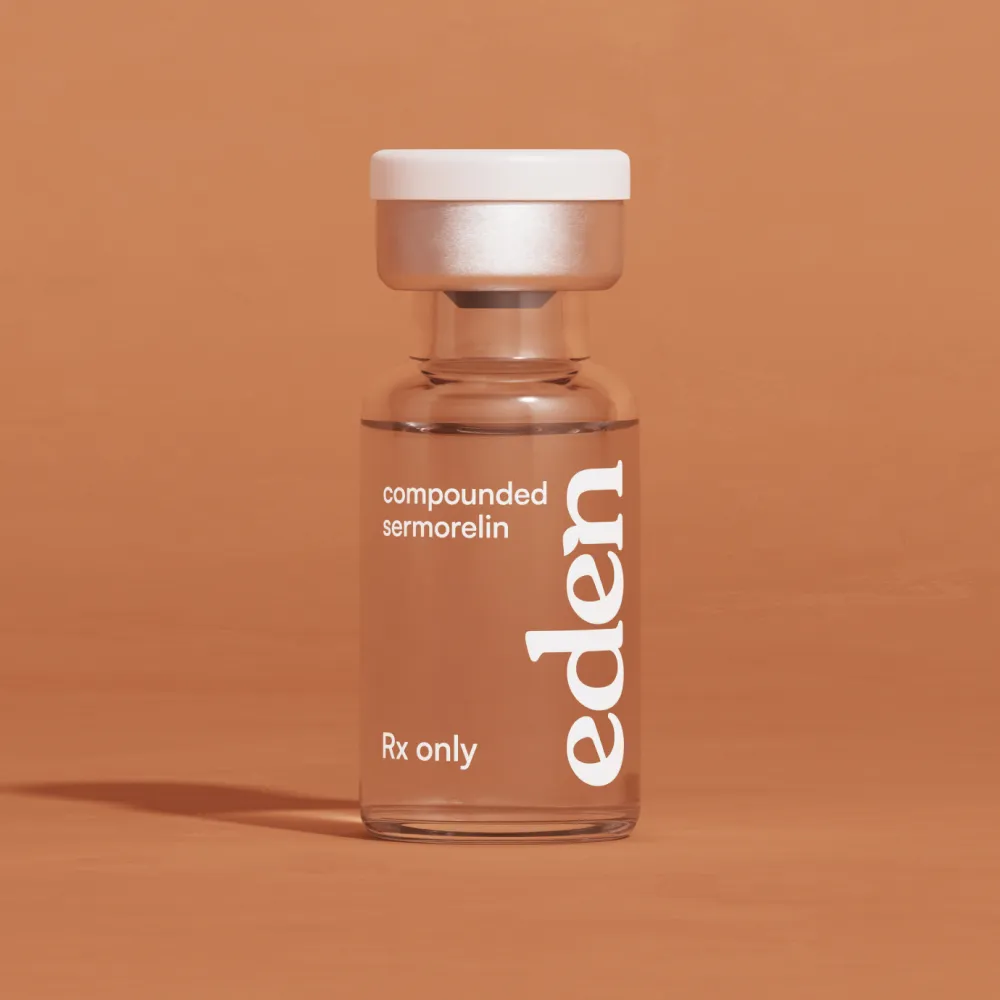
Can You Take Sermorelin and Semaglutide Together?




Can you take sermorelin and semaglutide together? Learn how these two treatments work, the potential benefits of combining them, and what to ask your provider.
- Taking sermorelin and semaglutide together may be discussed by licensed healthcare providers as part of an individualized approach to weight management and body composition.
- Semaglutide is a GLP-1 receptor agonist that may support appetite regulation, blood sugar regulation, and feelings of fullness.
- Sermorelin is a peptide that may support the body’s natural growth hormone production, which plays a role in metabolism, lean tissue maintenance, and recovery.
- Combining these therapies is based on their complementary mechanisms, though large-scale clinical trials on this specific combination are limited.
- Consulting a licensed healthcare provider is the best way to determine if it fits your health history and goals.
This article is for educational purposes only and is not intended as medical advice, diagnosis, or treatment. Always consult a licensed healthcare provider before starting any new medication, peptide therapy, or weight management program. Individual results may vary.
Furthermore, compounded medications are not FDA-approved and may be prescribed only when a licensed healthcare provider determines a clinically significant difference for an identified patient. Compounded medications have not been reviewed by the FDA for safety, efficacy, or quality.
Can I Take Semaglutide and Sermorelin Together?
The short answer is that in some cases, people do use these treatments in combination. But as with any medical protocol, it’s not a one-size-fits-all solution. Whether combining sermorelin and semaglutide makes sense for you depends on your health history, your goals, and guidance from a licensed healthcare provider.
So, why is this combination getting so much attention?
Semaglutide (which may be prescribed as a compounded medication when clinically appropriate) has become one of the most talked-about options for weight management. Sermorelin, on the other hand, is a peptide that may help support your body’s natural production of the growth hormone (GH), which plays a key role in metabolism and muscle maintenance.
When evaluated by a licensed healthcare provider, these therapies may be considered together as part of an individualized, provider-guided care plan focused on weight management and body composition. So, let’s take a closer look at each one individually.
{{primary-cta}}
How Sermorelin May Support Body Composition
Sermorelin is a synthetic peptide that mimics the growth hormone-releasing hormone (GHRH). GHRH signals to the pituitary gland to produce and release its own growth hormone (GH). As a result, sermorelin is intended to support the body’s natural rhythms of growth hormone.
GH plays a role in several processes relevant to body composition, including:
- Metabolism and fat utilization: GH is involved in the breakdown and utilization of stored fat for energy. By supporting the body’s natural production of growth hormone, sermorelin may influence metabolic processes related to fat utilization in some individuals, though responses vary.
- Lean tissue support: GH is also associated with protein synthesis and muscle maintenance. For individuals concerned about preserving lean mass, especially during periods of caloric restriction, sermorelin is not a weight-loss medication; however, providers may discuss it for lean tissue maintenance as part of a broader, provider-guided plan.
- Recovery and energy: Some individuals report changes in sleep, energy levels, and recovery time when using sermorelin, though individual responses may vary.
As with any peptide therapy, individual results depend on a range of factors, including age, lifestyle, and overall health status. As such, sermorelin is a prescription medication and should only be used under the supervision of a licensed healthcare provider.
How Semaglutide May Support Weight Management
Semaglutide belongs to a class of medications known as glucagon-like peptide-1 (GLP-1) receptor agonists. GLP-1 is a hormone naturally produced in the body that is involved in blood sugar regulation and appetite signaling.
When prescribed and monitored by a licensed healthcare provider, semaglutide may influence certain physiological processes, including:
- Appetite signaling: Semaglutide may interact with brain regions involved in hunger and satiety, potentially supporting appetite regulation.
- Gastric emptying: It may slow the rate at which food moves from the stomach to the intestines, which may lead to prolonged feelings of fullness after eating.
- Blood sugar regulation: By influencing insulin and glucose signaling, semaglutide may help stabilize blood sugar levels, which can help some individuals manage energy fluctuations and food cravings.
Together, these mechanisms may support weight management as part of a broader, provider-guided plan that includes nutrition, physical activity, and medical oversight. Individual responses may vary, and weight changes are not guaranteed.
Why Combine Sermorelin and Semaglutide?
For individuals already working with a provider on a weight management plan, the decision to use sermorelin and semaglutide together often comes down to body composition.
Weight loss, while often a positive step toward improved health, doesn’t always happen in a targeted way. When the body is in a caloric deficit, whether through dietary changes, increased activity, or medication support, it may draw on both fat stores and lean tissue for energy. This is a normal physiological response, but some individuals may want to address it proactively.
And this is where some healthcare providers may evaluate whether sermorelin could be considered as an adjunct therapy. Your provider may consider this for:
Maintenance of Lean Muscle Mass
Because sermorelin supports the body’s natural production of growth hormone, it may influence processes related to protein synthesis and muscle maintenance; however, this does not guarantee preservation of lean mass, and individual outcomes vary.
Complementary Goals
Semaglutide and sermorelin work through entirely different pathways. Semaglutide influences appetite and blood sugar signaling. Meanwhile, sermorelin targets GH production. Thus, some providers view this as an opportunity to address multiple aspects of metabolic health simultaneously.
Supporting Long-Term Outcomes
Maintaining lean mass isn’t just about appearance; it’s also associated with metabolic rate, strength, and functional mobility. For individuals focused on sustainable results, preserving muscle may be just as important as reducing fat.
At the same time, it’s important to note that large-scale clinical trials specifically evaluating sermorelin and semaglutide together are limited, and combination use should be assessed individually by a qualified healthcare provider. As with any combination approach, this should only be considered under the guidance of a qualified healthcare provider who can evaluate your specific situation and health.
{{primary-cta}}
Is This Combination Right for You?
Deciding whether to use sermorelin and semaglutide together depends on your individual health history, your goals, and your provider’s recommendations based on a full evaluation.
This combination may be worth discussing with your healthcare provider if you:
- Are already using or considering semaglutide for weight management
- Want to support lean muscle mass during weight-related changes
- Are over 35 and noticing changes in metabolism, energy, or body composition
- Have specific body recomposition goals beyond the number on the scale
- Are looking for a more comprehensive, provider-guided approach
Ultimately, a licensed healthcare provider is the best resource for determining what’s right for you. They can assess your labs, review your history, and help you weigh the potential benefits against any risks.
Final Thoughts
For some individuals, combining these approaches under medical supervision may be considered as part of a broader, individualized care plan focused on body composition.
But there’s also no universal answer. What works well for one person may not be appropriate for another. This is why working with a licensed healthcare provider is so important—they can help you understand your options, monitor your progress, and adjust your plan as needed.









The FDA does not approve compounded medications for safety, quality, or manufacturing. Prescriptions and a medical evaluation are required for certain products. The information provided on this blog is for general informational purposes only. It is not intended as a substitute for professional advice from a qualified healthcare professional and should not be relied upon as personal health advice. The information contained in this blog is not meant to diagnose, treat, cure, or prevent any disease. Readers are advised to consult with a qualified healthcare professional for any medical concerns, including side effects. Use of this blog's information is at your own risk. The blog owner is not responsible for any adverse effects or consequences resulting from the use of any suggestions or information provided in this blog.
Eden is not a medical provider. Eden connects individuals with independent licensed healthcare providers who independently evaluate each patient to determine whether a prescription treatment program is appropriate. All prescriptions are written at the sole discretion of the licensed provider. Medications are filled by state-licensed pharmacies. Please consult a licensed healthcare provider before making any medical decisions.
Frequently asked questions
Can you take sermorelin peptide and GLP-1 together?

In some cases, sermorelin and GLP-1 receptor agonists, including semaglutide, may be used together under the guidance of a healthcare provider. Because they work through different mechanisms, some providers consider them complementary, but this should always be evaluated on an individual basis.
What should you not mix with semaglutide?
Semaglutide may interact with certain medications, particularly those that affect blood sugar or digestion. It’s important to share your full medication list with your provider before starting any new treatment.
Does sermorelin help with weight loss?
Sermorelin is not specifically a weight loss medication, but it may support body composition by encouraging the body’s natural growth hormone production, which is involved in fat metabolism and lean tissue maintenance. However, results vary from individual to individual.
How long does it take to see results from sermorelin?
Some individuals notice changes in energy or sleep quality within a few weeks, while changes in body composition may take several months.
Can sermorelin be taken long-term?
Sermorelin is sometimes used as part of a longer-term protocol, but the duration depends on your individual goals and how your body responds. Your healthcare provider can help determine the appropriate timeline for your situation.
Related articles









Brinkman, J. E., Tariq, M. A., Leavitt, L., & Sharma, S. (2023, May 1). Physiology, growth hormone. StatPearls - NCBI Bookshelf. https://www.ncbi.nlm.nih.gov/books/NBK482141/
Chaves, V. E., Júnior, F. M., & Bertolini, G. L. (2013). The metabolic effects of growth hormone in adipose tissue. Endocrine, 44(2), 293–302. https://doi.org/10.1007/s12020-013-9904-3
Ishida, J., Saitoh, M., Ebner, N., Springer, J., Anker, S. D., & Von Haehling, S. (2020). Growth hormone secretagogues: history, mechanism of action, and clinical development. JCSM Rapid Communications, 3(1), 25–37. https://doi.org/10.1002/rco2.9
Janssen, T. A. H., Van Every, D. W., & Phillips, S. M. (2023). The impact and utility of very low-calorie diets: the role of exercise and protein in preserving skeletal muscle mass. Current opinion in clinical nutrition and metabolic care, 26(6), 521–527. https://doi.org/10.1097/MCO.0000000000000980
Kommu, S., & Whitfield, P. (2024, February 11). Semaglutide. StatPearls - NCBI Bookshelf. https://www.ncbi.nlm.nih.gov/books/NBK603723/
Møller, N., Copeland, K. C., & Nair, K. S. (2007). Growth hormone effects on protein metabolism. Endocrinology and metabolism clinics of North America, 36(1), 89–100. https://doi.org/10.1016/j.ecl.2006.11.001
Thank you!
We'll be in touch.
Thank you!