Is Sermorelin Safe? Benefits, Risks, And What to Know



Is sermorelin safe for long-term use? Learn who’s a good candidate, who should avoid it, and why provider-guided treatment makes all the difference.
- Is sermorelin safe? In short, sermorelin may be appropriate for some adults when prescribed and monitored by a licensed provider.
- Unlike synthetic HGH, sermorelin works with your body’s natural feedback loop, stimulating your pituitary gland to produce its own growth hormone.
- Most side effects are reported as mild, including injection site irritation, flushing, and headache.
- Long-term safety may depend on proper dosing, routine blood work, and consistent provider check-ins.
- If you have certain medical conditions or take specific medications, sermorelin might not be right for you.
- Some clinical research suggests sermorelin is generally well tolerated, though large-scale long-term studies remain limited.
This content is for informational purposes only and is not intended as medical advice. Always consult a qualified healthcare provider before starting any new therapy. Sermorelin is available through compounding pharmacies and is not FDA-approved for anti-aging or performance purposes.
Compounded medications are not FDA-approved and do not undergo FDA review for safety, efficacy, or quality. They may be prescribed only when a licensed provider determines a clinically appropriate need for an individual patient.
If you’ve been looking into sermorelin, chances are you’ve come across a mix of enthusiasm and uncertainty. So, what’s the real story when it comes to sermorelin safety?
When it comes down to it, sermorelin is a growth hormone-releasing hormone (GHRH) analog. It signals to your pituitary gland to ramp up its own natural growth hormone production. But like any therapy, the results and its safety profile depend on your individual health, how it’s prescribed, and who’s monitoring your progress.
Below, we take a closer look at what this means, who sermorelin therapy is best suited for, who should avoid it, and why working with a licensed provider is essential.
Is Sermorelin Safe?
For most healthy adults, sermorelin may be considered appropriate in certain cases, particularly when it’s prescribed and overseen by a licensed healthcare provider. Sermorelin has been studied since the 1990s and was first FDA-approved as a diagnostic agent in 1990 (Geref Diagnostic), then approved again in 1997 for the treatment of growth hormone deficiency in children (Geref). The manufacturer voluntarily discontinued it in 2008 for commercial reasons, and it’s now available off-label through compounding pharmacies.
Most commonly reported side effects include:
- Injection site irritation
- Flushing
- Headaches
- Occasional dizziness.
Serious adverse effects have been reported but are uncommon in supervised settings. And since sermorelin stimulates your body’s own GH production through the pituitary, your natural feedback loop stays intact. In other words, this mechanism works through normal physiological pathways, yet individual responses may vary.
The bigger concern isn’t usually sermorelin itself; it’s what happens when people use it without proper medical guidance. For instance, sourcing from unregulated suppliers, skipping lab work, or self-adjusting doses introduces an entirely different set of risks.
Sermorelin Pros and Cons
On the positive side, sermorelin’s potential advantages include:
- It stimulates your body’s natural growth hormone production instead of replacing it.
- Some reports suggest it may be associated with fewer side effects compared to exogenous growth hormone, though direct comparisons are limited.
- Some individuals report changes in sleep quality, body composition, recovery time, and overall energy.
- It's available through compounding pharmacies with a valid prescription.
On the other hand, potential cons may include:
- Results tend to be gradual.
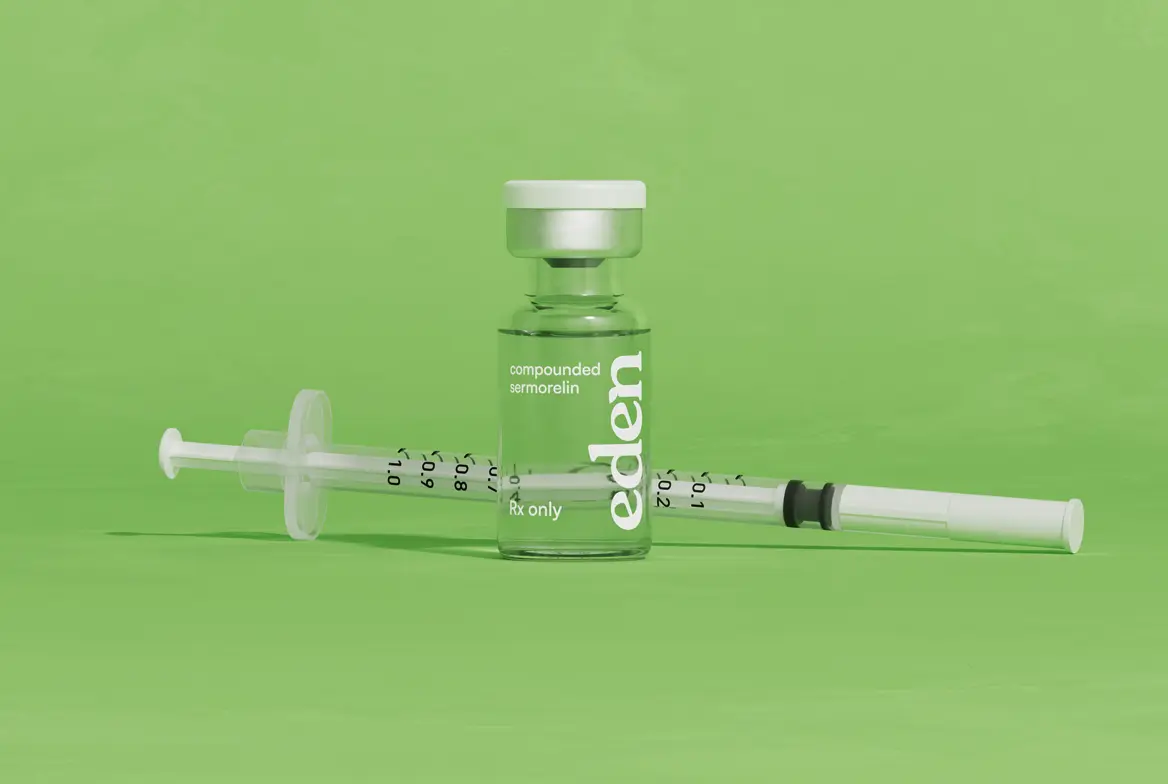
- It requires consistent daily injections, typically subcutaneous and administered before bed.
- The body of clinical research, while promising, isn't as extensive as what exists for more established therapies.
- It may not be appropriate for everyone, and the quality of compounded sermorelin can vary by pharmacy, which makes sourcing from a reputable provider all that much more important.
-
What Does the Research Say?
The clinical data on sermorelin and related GHRH analogs suggest general safety and tolerability. Studies have shown improvements in lean body mass, sleep architecture, and IGF-1 levels—a key marker of growth hormone activity—in some populations.
However, most of the clinical research ties back to the FDA-approved era of sermorelin or closely related GHRH analogs. Compounded versions, while using the same peptide sequence, haven’t been independently studied at the same scale.
At the same time, researchers consistently point to the mechanism itself as a potential differentiating factor. Because sermorelin works through your pituitary rather than flooding your system with external GH, there may be a lower likelihood of excess GH levels compared to exogenous administration, though this is not guaranteed.
Long-Term Use: What to Consider
So, what are the sermorelin long-term effects? Is it safe to use indefinitely? The truth is that the long-term data is limited.
Most providers recommend some form of cycling protocol. This may involve five days on and two days off, or taking periodic breaks from therapy to prevent receptor desensitization. This approach is intended to help maintain responsiveness, though evidence is limited. Your provider may also adjust your schedule based on your blood work and how you’re feeling.
Overall, ongoing monitoring is an important part of managing potential risks when taking sermorelin. This should generally include routine labs to track IGF-1 levels, metabolic panels, and any other markers your provider deems relevant. It also means regular check-ins to assess symptoms, adjust dosing if needed, or pause therapy.
At the end of the day, if anyone claims sermorelin is completely risk-free and requires no monitoring, this is a huge red flag. Finding a licensed healthcare provider who understands the risks and provides regular monitoring is of the utmost importance for your safety and health.
Who’s a Good Candidate for Sermorelin?
Sermorelin therapy may be considered for adults over 30 who are experiencing signs of age-related growth hormone decline. In these cases, some individuals may report fatigue, slower recovery after workouts, changes in body composition despite consistent effort, or sleep that doesn’t feel restorative, no matter how many hours you log.
It may be considered for individuals exploring provider-guided hormone-related care without jumping straight to synthetic HGH.
No matter what, the process of figuring out whether sermorelin is right for you should always begin with an evaluation by a licensed healthcare provider. They should review your health history, understand your goals, and run appropriate lab work before prescribing anything.
With Eden, we help facilitate connections with licensed healthcare providers. It all begins with a quick online intake. Afterward, you’ll consult with a healthcare professional who will consider your history, health status, and more.
Who Should Avoid Sermorelin?
Individuals who should avoid sermorelin include:
- Those with active cancers or a history of certain malignancies.
- Those with untreated or poorly managed endocrine disorders (particularly thyroid or adrenal conditions).
- Anyone who is pregnant or nursing
- Individuals with a known hypersensitivity to sermorelin or its components.
Certain drugs may also interfere with sermorelin’s effectiveness or introduce additional risk, which is another reason why a full provider evaluation is a necessity.
Final Thoughts
The question of whether sermorelin is safe doesn’t have a one-word answer.
But, as always, safety comes down to the entire process surrounding it, including who’s prescribing it, where it’s sourced, how your progress is tracked, and whether your protocol is truly built around you. If you have any concerns about your sermorelin therapy safety, it’s always important to bring these questions up with your provider.









The FDA does not approve compounded medications for safety, quality, or manufacturing. Prescriptions and a medical evaluation are required for certain products. The information provided on this blog is for general informational purposes only. It is not intended as a substitute for professional advice from a qualified healthcare professional and should not be relied upon as personal health advice. The information contained in this blog is not meant to diagnose, treat, cure, or prevent any disease. Readers are advised to consult with a qualified healthcare professional for any medical concerns, including side effects. Use of this blog's information is at your own risk. The blog owner is not responsible for any adverse effects or consequences resulting from the use of any suggestions or information provided in this blog.
Eden is not a medical provider. Eden connects individuals with independent licensed healthcare providers who independently evaluate each patient to determine whether a prescription treatment program is appropriate. All prescriptions are written at the sole discretion of the licensed provider. Medications are filled by state-licensed pharmacies. Please consult a licensed healthcare provider before making any medical decisions.
Frequently asked questions
What are the risks of taking Sermorelin?

The most common sermorelin risks are mild and include injection site reactions, flushing, headache, and dizziness. Serious adverse effects are uncommon when therapy is supervised by a licensed provider.
Is Sermorelin safer than HGH?
Sermorelin and HGH have different mechanisms and risk profiles. A provider can help determine which approach, if any, is appropriate based on individual needs.
Is Sermorelin safer than TRT?
They actually address entirely different things; sermorelin targets growth hormone, and TRT addresses testosterone. Both therapies require provider oversight and carry risks. Some providers use them in combination, depending on the patient’s needs. The “safer” option depends on what your body actually requires, which is why lab work and a thorough provider evaluation always come first.
How long can you take Sermorelin?
There’s no universal cutoff, but most providers recommend cycling protocols and routine blood work to keep therapy effective and safe. Long-term use may be considered appropriate as long as you’re being monitored, responding well, and your provider is adjusting your plan as needed.
Do you need a prescription for Sermorelin?
Yes. Sermorelin requires a prescription from a licensed healthcare provider and should be dispensed only by a licensed compounding pharmacy. Avoid any source offering it without a prescription or a provider evaluation.
Related articles







Determination that GEREF (Sermorelin acetate) injection, 0.5 milligrams Base/Vial and 1.0 milligrams Base/Vial, and GEREF (Sermorelin acetate) injection, 0.05 milligrams Base/AmP, were not withdrawn from sale for reasons of safety or effectiveness. (2013, March 4). Federal Register. https://www.federalregister.gov/documents/2013/03/04/2013-04827/determination-that-geref-sermorelin-acetate-injection-05-milligrams-basevial-and-10-milligrams
Sinha, D. K., Balasubramanian, A., Tatem, A. J., Rivera-Mirabal, J., Yu, J., Kovac, J., Pastuszak, A. W., & Lipshultz, L. I. (2020). Beyond the androgen receptor: the role of growth hormone secretagogues in the modern management of body composition in hypogonadal males. Translational andrology and urology, 9(Suppl 2), S149–S159. https://pmc.ncbi.nlm.nih.gov/articles/PMC7108996/
Walker R. F. (2006). Sermorelin: a better approach to management of adult-onset growth hormone insufficiency?. Clinical interventions in aging, 1(4), 307–308. https://pmc.ncbi.nlm.nih.gov/articles/PMC2699646/
Thank you!
We'll be in touch.
Thank you!