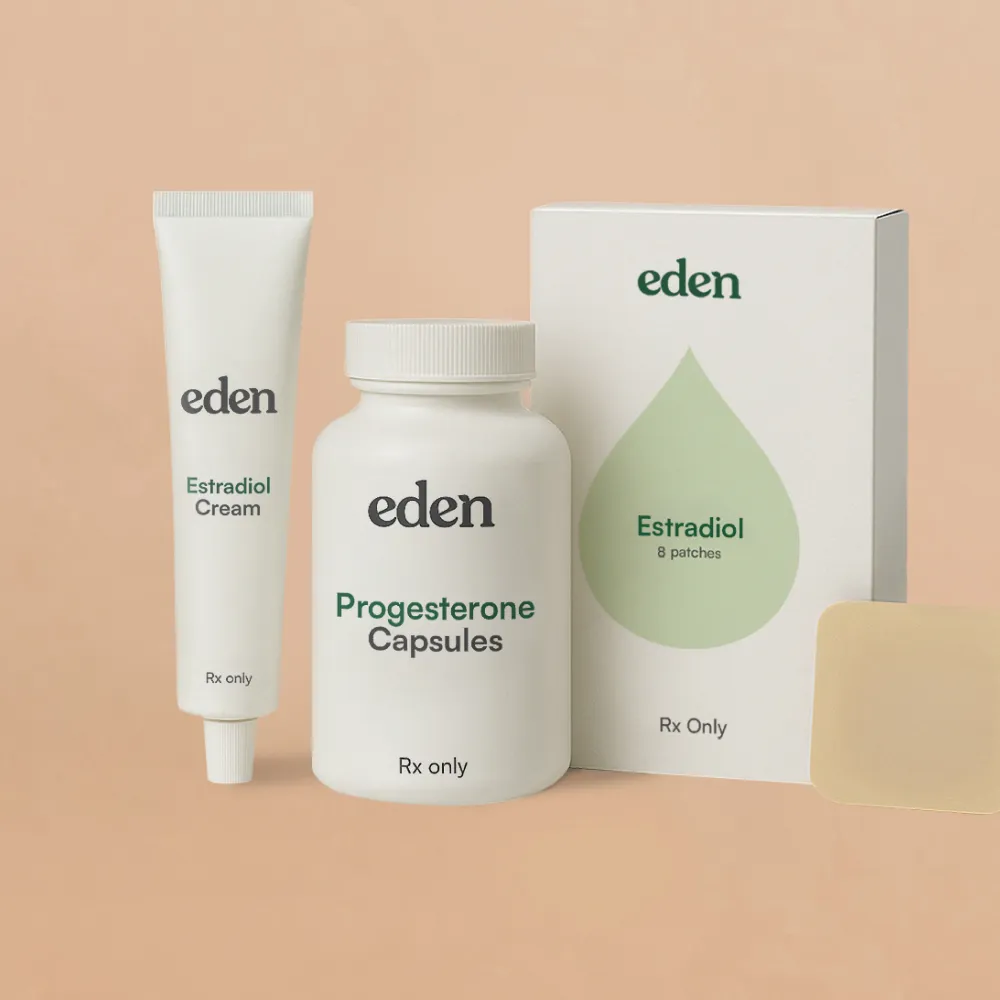
How to Get HRT: Online vs Traditional Care



Wondering how to get HRT? Compare online vs in-person care, learn about lab testing and eligibility, and find the right path with licensed provider support.
- Learning how to get HRT starts with a medical evaluation, hormone lab work, and a conversation with a licensed provider about your symptoms and goals.
- Candidates for hormone replacement therapy typically include people experiencing symptoms of menopause, perimenopause, or clinically low testosterone, though eligibility depends on individual health factors.
- A consultation generally involves a review of symptoms, medical history, and lab results before a provider determines whether HRT may be appropriate.
- Traditional clinics offer in-person visits, while online platforms provide remote access to licensed providers, lab ordering, and prescription delivery.
- Regardless of the path you choose, HRT should be prescribed and monitored by a licensed healthcare provider to help ensure safe and quality care.
This article is for educational purposes only and is not a substitute for medical advice. Always consult a licensed healthcare provider before starting, stopping, or changing any hormone therapy treatment or medications.
Symptoms, such as hot flashes, fatigue, low libido, and brain fog, can affect your day-to-day life. It can feel like your body is out of your control. And if you’ve been exploring treatment options, you may be wondering how to get HRT.
Hormone replacement therapy (HRT) is prescribed to address symptoms caused by hormone imbalances, most often related to menopause, perimenopause, or low testosterone. Getting started involves more than just filling a prescription. It requires a medical evaluation, lab work, and ongoing oversight from a licensed provider.
Today, there are two main paths to access HRT, including traditional in-person clinics or telehealth services. But they differ in convenience, cost, and how you interact with your provider. Below, we take a closer look at what they involve, including eligibility, what to expect, and more.
HRT Eligibility Requirements: Who’s a Candidate?
Not everyone experiencing hormone-related symptoms is a candidate for HRT. Eligibility depends on your symptoms, medical history, current health status, and lab results.
Common HRT eligibility requirements that providers typically review include:
- Symptoms consistent with hormone imbalance, such as hot flashes, night sweats, mood changes, vaginal dryness, low energy, reduced libido, or sleep disturbances
- Age and reproductive status (perimenopausal, menopausal, or postmenopausal for estrogen-based HRT; adult men with confirmed low testosterone for TRT)
- Medical history, including any personal or family history of breast cancer, blood clots, stroke, liver disease, or cardiovascular issues
- Current medications and existing conditions that may interact with hormone therapy
- Lab confirmation of hormone levels outside the reference range
According to The Menopause Society, HRT may be most appropriate for women under 60 or within 10 years of menopause onset who are experiencing moderate to severe symptoms.
This aligns with updated guidance, including FDA labeling changes announced in November 2025, in which the agency initiated the removal of decades-old boxed warnings from some HRT products and noted that systemic hormone therapy is generally considered most appropriate within 10 years of menopause onset or before age 60, depending on individual patient factors.
For men, FDA-approved testosterone replacement therapy is indicated only for those with clinically diagnosed hypogonadism, confirmed by both symptoms and low testosterone levels on morning lab testing (typically on at least two separate days).
A licensed provider will weigh these factors together. Self-diagnosing or sourcing hormones without oversight may carry serious risks, which is why the first real step is a proper clinical evaluation.
What to Expect During a Hormone Therapy Consultation
A hormone therapy consultation is where your provider gets the full picture of what’s going on. Whether it happens in an exam room or over a video call, the main goal is to understand your symptoms, review your medical history, and determine whether HRT may be an appropriate option for you based on your individual health profile.
During the consultation, you can expect your provider to ask about:
- Specific symptoms you’re experiencing and how long they’ve been going on
- Your menstrual cycle (if applicable) and reproductive history
- Personal and family medical history
- Current medications, supplements, and lifestyle factors
- Your goals for treatment
This conversation also helps your provider rule out other conditions that may mimic hormone imbalance, such as thyroid disorders, depression, or nutrient deficiencies.
Lab Testing and Symptom Evaluation
Lab work is also an important part of the process. Bloodwork may help assess whether your hormone levels fall within or outside typical reference ranges and provide your provider with a baseline to compare against later.
Common labs ordered before starting HRT may include:
- Estradiol (E2) and follicle-stimulating hormone (FSH) for women
- Total and free testosterone for men
- Thyroid-stimulating hormone (TSH) and free T4 to rule out thyroid-related symptoms
- Complete blood count (CBC) and comprehensive metabolic panel (CMP)
- Lipid panel to assess cardiovascular risk
- Prolactin, SHBG, or other hormones, depending on your symptoms
Providers often pair lab results with a validated symptom questionnaire, such as the Menopause Rating Scale or the ADAM questionnaire for men, to track baseline severity and measure your response over time.
Traditional Clinics vs. Telehealth Hormone Therapy
Telehealth hormone therapy has opened the door for those who previously had trouble finding a provider, scheduling an appointment, or affording in-person specialty care. However, both in-clinic and telehealth models have their place.
In-Person Clinics
Traditional clinics, including primary care offices, OB-GYN practices, endocrinologists, and men’s health centers, offer face-to-face care. You’ll typically go in for your consultation, get labs drawn on-site or at a nearby lab, and follow up in person.
Potential benefits may include:
- Direct physical examination when clinically relevant
- Established, long-term relationships with local providers
- Easier coordination with other specialists you may already see
On the other end of the spectrum, potential drawbacks may include:
- Longer wait times for appointments, especially with specialists
- Limited provider availability in rural or underserved areas
- Insurance, co-pay, and travel costs
- Less privacy for people who prefer discretion
Online HRT Providers
Online HRT providers offer evaluation, prescribing, and ongoing care through a digital platform. After you complete an online intake form, a licensed provider reviews your information, orders any necessary labs (usually at a nearby lab draw site), and meets with you virtually to discuss your results and treatment options.
If HRT is appropriate, your prescription is often shipped directly to you, and follow-ups occur via video, phone, or secure messaging.
Benefits of this model may include:
- Faster access to a licensed provider
- Ability to consult from home, which supports privacy
- Provider-directed treatment plans based on your labs and symptoms
- Ongoing monitoring through digital check-ins
- Prescriptions shipped discreetly to your door
As with any medical care, quality is important. A legitimate online provider uses licensed, U.S.-based clinicians, orders lab work before prescribing, and builds in follow-up care.
How to Get an HRT Online Prescription: Step-by-Step
If you’re considering the online route, here’s what the process generally looks like:
- Complete an intake questionnaire: Share your symptoms, medical history, medications, and goals.
- Get your labs drawn: Your provider orders the panel needed to evaluate your hormone levels and overall health, typically at a nearby lab.
- Meet with a licensed provider: Via an online consultation, you and your provider will review your labs, symptoms, and whether HRT is appropriate.
- Receive a treatment plan: If you’re a candidate, your provider recommends a specific hormone, dose, and delivery method (oral, patch, cream, injection, etc.).
- Get your HRT online prescription shipped: Your medication is usually sent directly to your home.
- Follow up and adjust (if needed): Regular check-ins and periodic lab rechecks help your provider fine-tune your plan.
At Eden, we coordinate access to care by connecting individuals with licensed providers who evaluate eligibility, order labs, and determine appropriate treatment options. We facilitate this process with ongoing support along the way. It all starts with a quick online intake.
Final Thoughts
Safe HRT prescription involves an actual clinical evaluation, appropriate lab work, and an ongoing relationship with a licensed provider.
To determine if HRT is right for you, talk to a licensed provider who can review your symptoms, order the right labs, and help you decide what makes sense for your health.









The FDA does not approve compounded medications for safety, quality, or manufacturing. Prescriptions and a medical evaluation are required for certain products. The information provided on this blog is for general informational purposes only. It is not intended as a substitute for professional advice from a qualified healthcare professional and should not be relied upon as personal health advice. The information contained in this blog is not meant to diagnose, treat, cure, or prevent any disease. Readers are advised to consult with a qualified healthcare professional for any medical concerns, including side effects. Use of this blog's information is at your own risk. The blog owner is not responsible for any adverse effects or consequences resulting from the use of any suggestions or information provided in this blog.
Eden is not a medical provider. Eden connects individuals with independent licensed healthcare providers who independently evaluate each patient to determine whether a prescription treatment program is appropriate. All prescriptions are written at the sole discretion of the licensed provider. Medications are filled by state-licensed pharmacies. Please consult a licensed healthcare provider before making any medical decisions.
Frequently asked questions
Is it safe to get HRT online?

Getting HRT online may be safe when you work with a legitimate telehealth provider that uses licensed clinicians, orders lab work, and provides ongoing follow-up care. Avoid any service that prescribes hormones without labs or provider oversight.
How long does it take to start HRT through a telehealth provider?
The timeline varies, but many people complete intake, labs, and their first consultation within one to three weeks. Your actual start date depends on lab turnaround and provider availability.
Does insurance cover HRT?
Coverage varies by plan and medication. Some clinic visits and FDA-approved HRT medications may be covered, while many telehealth platforms operate on a direct-pay model that bundles provider care, labs, and medication.
Can I switch from a traditional clinic to an online HRT provider?
Yes, many people transition between care models. Your new provider will typically request recent lab results and your current treatment plan to help ensure continuity of care.
Is my information kept private when I get HRT online?
Your health information should be protected under HIPAA when you use a legitimate telehealth HRT provider, and prescriptions are generally shipped discreetly to your home. However, it’s a good idea to check each provider’s privacy and security practices before submitting any personal or medical details.
Related articles





Kim, Y., Cho, M. K., Chung, Y. J., Hong, S. H., Hwang, K. R., Jeon, G. H., Joo, J. K., Kim, S. K., Lee, D. O., Lee, D. Y., Lee, E. S., Lee, S. R., Seo, S. K., Song, J. Y., Yi, K. W., Yun, B. H., Han, J. Y., Kim, D. H., Kim, S. E., Lee, J., … Publication Committee on Clinical Guidelines of the Korean Society of Menopause (2025). The 2025 Menopausal Hormone Therapy Guidelines - Korean Society of Menopause. Journal of menopausal medicine, 31(2), 53–84. https://pmc.ncbi.nlm.nih.gov/articles/PMC12438153/
TESTIM. (2025). HIGHLIGHTS OF PRESCRIBING INFORMATION. https://www.accessdata.fda.gov/drugsatfda_docs/label/2025/021454s036lbl.pdf
The Menopause Society. (2025, June 5). Menopause Topics: Hormone therapy | The Menopause Society. https://menopause.org/patient-education/menopause-topics/hormone-therapy
Zeeshan, F., & Saqlain, A. (2026). FDA's 2025 removal of black box warnings on menopausal hormone therapy. Annals of medicine and surgery (2012), 88(2), 2222–2223. https://pmc.ncbi.nlm.nih.gov/articles/PMC12889233/
Thank you!
We'll be in touch.
Thank you!