What Is Hormone Replacement Therapy (HRT)? And How Does It Work?




Hormone replacement therapy may help with menopause symptoms and support long-term health. Learn what HRT is, how it works, and which type may be right for you.
- Hormone replacement therapy (HRT) supplements estrogen, progesterone, or both to help relieve symptoms that occur when the body’s natural hormone production declines during menopause.
- The three main types of HRT are estrogen-only therapy, progesterone therapy, and combination therapy, and the right one depends on your health history and current health status.
- HRT is available in several delivery methods, including oral pills, skin patches, topical creams and gels, injections, and vaginal applications.
- Common symptoms HRT may help with include hot flashes, night sweats, sleep disruption, mood changes, vaginal dryness, and bone loss.
- In 2026, the FDA initiated updates to long-standing boxed warnings on certain hormone replacement therapy (HRT) products to reflect evolving evidence. Treatment decisions, however, should be based on an individual assessment of benefits and risks in consultation with a licensed healthcare provider.
The following article is for educational purposes only and does not constitute medical advice. Always consult a licensed healthcare provider before starting, stopping, or changing any treatment. Hormone replacement therapy should be tailored to your individual health needs and monitored by a qualified professional.
Maybe sleep doesn’t come as easily as it once did, and your mood hasn’t been the same. On top of this, hot flashes seem to appear out of nowhere. These changes are real and very common. For many women, they’re associated with natural changes in hormone levels that happen during perimenopause and menopause.
The good news is that there are treatment options available. And one of the most well-studied is hormone replacement therapy (HRT). This article explains how HRT works and what it involves, so you can have a more informed conversation with your provider about what might be right for you.
What Is HRT?
Hormone replacement therapy (HRT) is a treatment that provides the body with hormones it may no longer produce in sufficient amounts. During menopause, which occurs on average at age 51, the ovaries gradually make less estrogen and progesterone. And these two hormones play a significant role in reproductive health, bone density, mood regulation, and even cardiovascular function.
Many women first notice changes during perimenopause, a transitional phase that can begin in the mid-40s. During this time, hormone levels may fluctuate unpredictably, which can lead to a wide range of physical and emotional changes—some of which can drastically impact one’s quality of life.
HRT works by supplementing these declining hormones. It’s FDA-approved for the relief of moderate-to-severe vasomotor symptoms (such as hot flashes and night sweats), vaginal dryness and discomfort, and the prevention of postmenopausal bone loss. Yet, determining whether HRT may be appropriate (and which type) requires a discussion with a licensed healthcare provider. They can review your health history, perform a thorough evaluation, and guide you on the next best step.
How Does Hormone Replacement Therapy (HRT) Work?
Estrogen plays a role in temperature regulation, bone density, cardiovascular function, mood, sleep, and more. And this is why the symptoms of menopause can feel so different from person to person and, at times, hard to pin down.
HRT restores a portion of these hormone levels, which may help relieve symptoms such as:
- Hot flashes and night sweats
- Sleep disturbances
- Mood swings, irritability, or anxiety
- Vaginal dryness and discomfort
- Loss of bone density
However, it’s worth noting that HRT doesn’t fully replicate pre-menopausal hormone levels. The goal is to provide enough hormonal support to reduce symptoms and support long-term health at the lowest effective dose and for the appropriate duration, as determined by your healthcare provider.
Types of Hormone Replacement Therapy (HRT)
There are three main categories of HRT, and which one may be appropriate depends on your individual circumstances. Below, you’ll find all therapies, including estrogen therapy, explained in more detail.
Estrogen Therapy
Estrogen-only therapy is typically prescribed for women who have had a hysterectomy (surgical removal of the uterus). Since there’s no uterine lining to protect, progesterone isn’t needed.
Put simply, estrogen therapy provides the body with the primary hormone it may be missing. In turn, this may help address symptoms such as hot flashes, vaginal dryness, and bone loss.
Progesterone Therapy
When estrogen is used on its own in someone who still has a uterus, it may cause the uterine lining to thicken, which can increase the risk of endometrial hyperplasia and, over time, endometrial cancer. Progesterone therapy is added to help counteract this effect by keeping the uterine lining from building up excessively.
Progesterone may be prescribed in its natural micronized form or as a synthetic version called progestin. Your provider can help determine which form may be most appropriate based on your health history and risk factors.
Combination HRT
Combination therapy, estrogen plus progesterone, is the most common approach for women who still have a uterus. It provides the symptom-relieving benefits of estrogen while offering the protective effects of progesterone on the uterine lining.
Combination HRT can be given on a continuous schedule (both hormones taken daily) or a cyclical schedule (estrogen taken daily with progesterone added for part of the month). The right regimen depends on where you are in your menopausal transition and how your body responds.
Since each type carries different considerations, talking with a licensed provider about which approach makes the most sense for your situation is an important first step.
HRT Delivery Methods
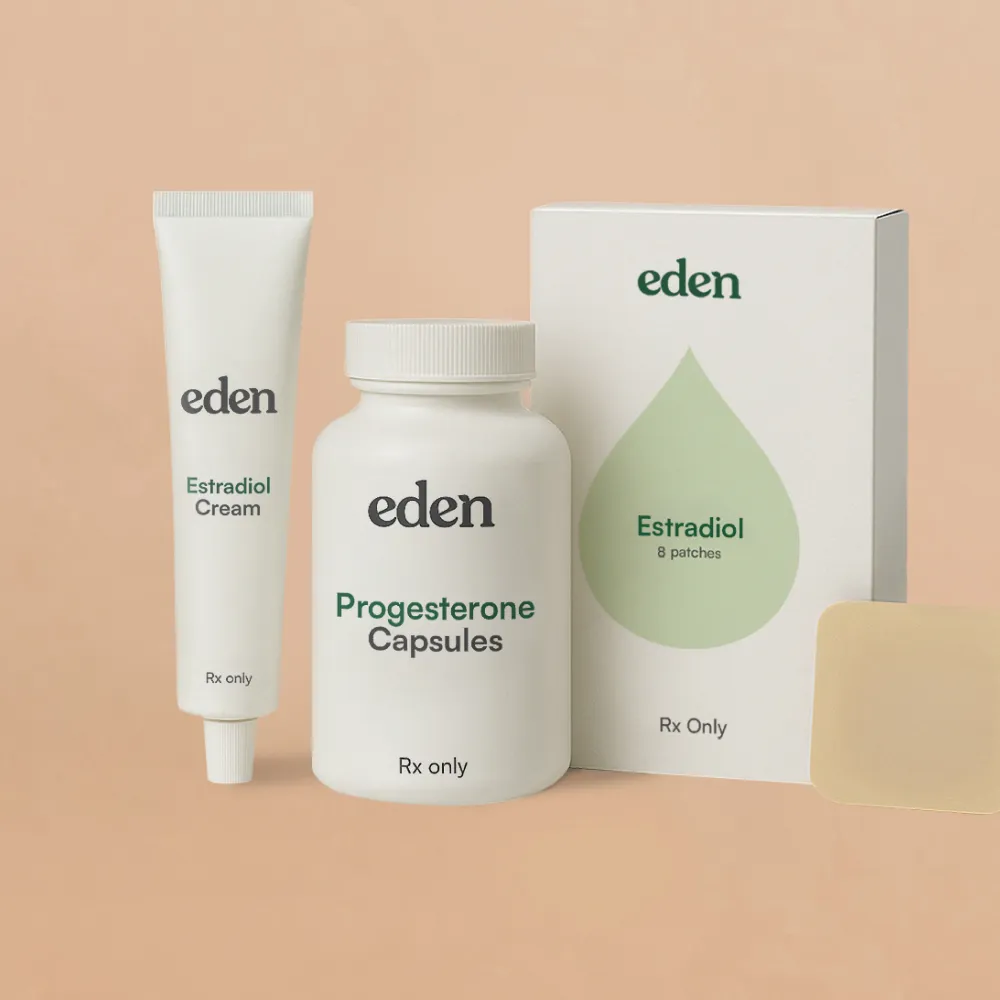
Modern HRT has a range of delivery options available, including:
- Oral tablets are the most traditional form and are taken daily. They’re convenient and widely available, though oral estrogen passes through the liver, which may not be ideal for everyone, particularly women with certain clotting risk factors.
- Transdermal patches deliver hormones through the skin and are typically changed once or twice a week. Since they bypass the liver, patches may carry a lower risk of blood clots compared to oral options.
- Topical gels and creams are applied to the skin daily and absorbed into the bloodstream. Similar to patches, they avoid first-pass liver metabolism.
- Injections deliver hormones directly into the body and may be given on a weekly or biweekly schedule, depending on the formulation.
- Vaginal applications (including creams, rings, and tablets) are low-dose options primarily used to treat local symptoms such as vaginal dryness and urinary discomfort. These deliver estrogen directly to the vaginal tissue with minimal systemic absorption.
Ultimately, the right choice for one person may not be the right choice for another. This is why it’s important to discuss your options with a licensed healthcare professional who knows your health history and can conduct a thorough evaluation.
Is HRT Right for You?
The decision to start HRT involves a careful review of your symptoms, medical history, age, and individual risk factors, and should be made in conjunction with a licensed healthcare provider’s recommendations. Every woman’s experience with menopause is different, and your treatment plan should reflect that.
Current guidelines suggest that HRT may be most beneficial when started within 10 years of menopause onset or before age 60.
In February 2026, the FDA approved updated labeling for certain menopausal hormone therapy products, modifying prior boxed warning language to reflect more current evidence. The updated labeling includes age- and timing-related considerations and indicates that, for some women, benefits such as symptom relief and support for bone health may be considered alongside known risks. Individual outcomes vary, and treatment should be guided by a licensed healthcare provider.
With that said, women with a history of certain cancers, blood clots, active liver disease, or unexplained vaginal bleeding should discuss alternative options with their provider.
If you're experiencing symptoms and wondering whether HRT could help, the most important step is connecting with a licensed provider who can evaluate your health history, listen to what you’re going through, and help you explore your options.
Eden’s My Custom Hormone Kit™ makes this process easier; start with a quick online intake, connect with a licensed healthcare provider, and, if treatment is appropriate, your provider will help guide you on the next steps. Eden can help coordinate your care, while licensed providers evaluate and prescribe any medications deemed necessary.
At the end of the day, you don’t have to simply tolerate these symptoms, nor do you have to navigate them alone.









The FDA does not approve compounded medications for safety, quality, or manufacturing. Prescriptions and a medical evaluation are required for certain products. The information provided on this blog is for general informational purposes only. It is not intended as a substitute for professional advice from a qualified healthcare professional and should not be relied upon as personal health advice. The information contained in this blog is not meant to diagnose, treat, cure, or prevent any disease. Readers are advised to consult with a qualified healthcare professional for any medical concerns, including side effects. Use of this blog's information is at your own risk. The blog owner is not responsible for any adverse effects or consequences resulting from the use of any suggestions or information provided in this blog.
Eden is not a medical provider. Eden connects individuals with independent licensed healthcare providers who independently evaluate each patient to determine whether a prescription treatment program is appropriate. All prescriptions are written at the sole discretion of the licensed provider. Medications are filled by state-licensed pharmacies. Please consult a licensed healthcare provider before making any medical decisions.
Frequently asked questions
What are the signs that you may need hormone replacement?

Common signs may include frequent hot flashes, night sweats that disrupt sleep, persistent mood changes, vaginal dryness, and declining bone density.
What are the risks of HRT for women?
Depending on the type, dose, and timing, HRT may be associated with an increased risk of blood clots and, in some cases, breast cancer with long-term combined therapy use. However, current evidence suggests these risks may be lower when HRT is started within 10 years of the onset of menopause and are influenced by the specific formulation and delivery method.
At what age is HRT most effective?
Research suggests that HRT may be most beneficial when initiated before age 60 or within 10 years of menopause. Starting during this window is associated with the greatest symptom relief and the most favorable risk-to-benefit profile.
How long do most people stay on HRT?
Some women use HRT for a few years to manage acute symptoms, but others may benefit from longer-term use. Your provider should reassess your treatment plan regularly to ensure the benefits continue to outweigh any risks.
Can you stop HRT at any time?
Yes, but it’s generally recommended to taper off gradually instead of stopping abruptly, as sudden discontinuation may cause symptoms to return. If you decide to stop, your provider can help you create a plan to gradually reduce your dose.
Related articles



FDA NEWS. (2026, February 12). FDA approves labeling changes to menopausal hormone therapy products. U.S. Food And Drug Administration. https://www.fda.gov/news-events/press-announcements/fda-approves-labeling-changes-menopausal-hormone-therapy-products
Harper-Harrison, G., Carlson, K., & Shanahan, M. M. (2024, October 6). Hormone replacement therapy. StatPearls - NCBI Bookshelf. https://www.ncbi.nlm.nih.gov/books/NBK493191/
Zeeshan, F., & Saqlain, A. (2026). FDA's 2025 removal of black box warnings on menopausal hormone therapy. Annals of medicine and surgery (2012), 88(2), 2222–2223. https://pmc.ncbi.nlm.nih.gov/articles/PMC12889233/
Thank you!
We'll be in touch.
Thank you!