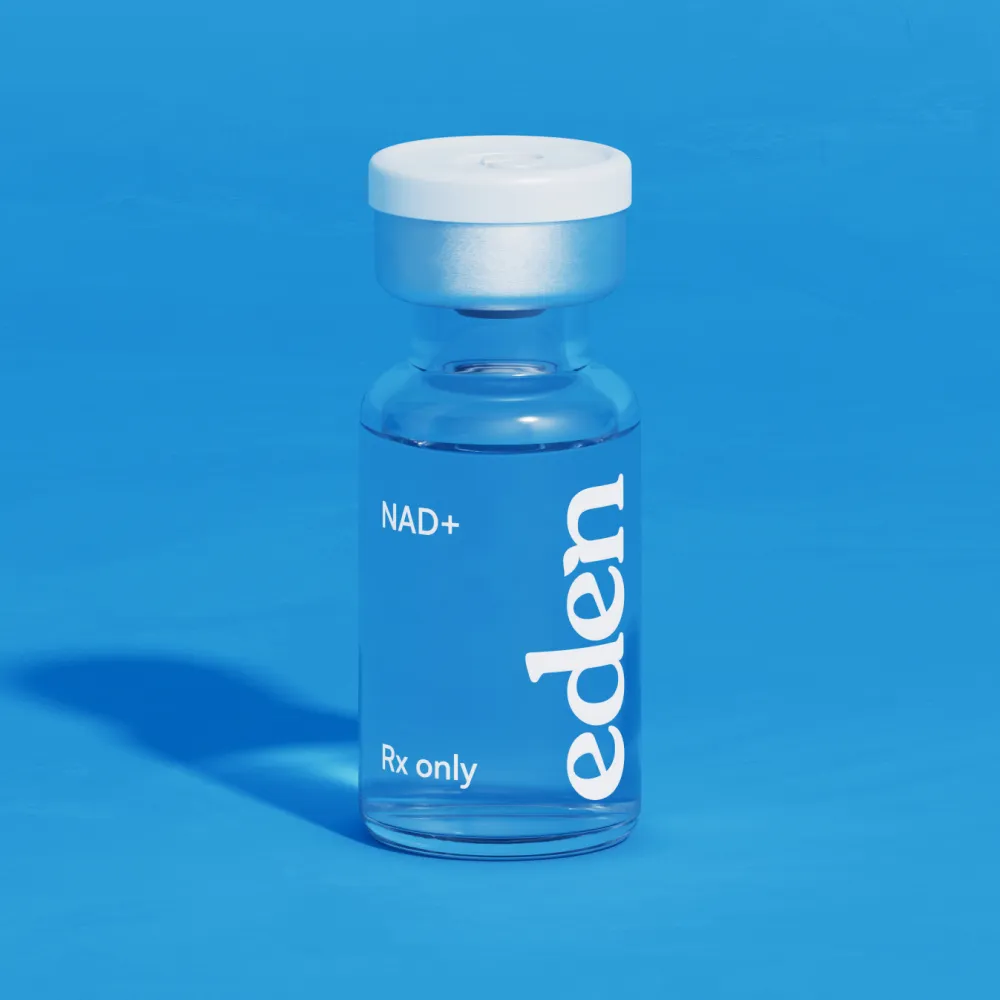
6 Daily Habits for NAD Support


.webp)

Explore daily habits for NAD support backed by science. Learn how to increase NAD+ levels naturally through diet, exercise, and supplementation.
- NAD support starts with everyday habits. Sleep, exercise, nutrition, and stress management all play a role in how well your body produces and maintains NAD+.
- NAD+ levels naturally decline with age, and lifestyle factors, such as poor sleep, chronic stress, and alcohol consumption, may accelerate that process.
- Foods rich in vitamin B3, such as fish, poultry, legumes, mushrooms, and green vegetables, provide building blocks for NAD+ production.
- NAD+ precursors, including NMN and NR, have been studied for their potential to support NAD+ levels, though research is ongoing.
- A healthcare provider on Eden’s platform can help you find the right approach. Whether you’re exploring lifestyle changes, supplements, or both, personalized guidance can help you determine what’s best for you.
This article is for informational purposes only and is not intended as medical advice, diagnosis, or treatment. Always consult a qualified healthcare provider before starting any new supplement or making changes to your wellness routine. Individual results may vary.
Do NAD+ Levels Decline With Age?
In short, yes. NAD+ (nicotinamide adenine dinucleotide) plays a role in hundreds of biological processes, including converting food into energy and supporting DNA repair and healthy cellular function. Your cells depend on it to perform at their best, but your body’s supply doesn’t stay constant over time.
NAD+ levels naturally decline as you age, and everyday factors, including chronic stress, poor sleep, a high-calorie diet, and alcohol consumption, may speed this up.
The good news is that your daily habits may affect how well your body maintains its NAD+ supply. Small, consistent changes can go a long way in supporting your levels from the inside out. So, what should you know? What can you do to support NAD+ levels?
{{primary-cta}}
How to Increase NAD+ Levels Naturally
Several everyday habits have been associated with supporting healthy NAD+ metabolism. These include:
- Prioritizing quality sleep: NAD+ is closely tied to your circadian rhythm, and your body relies on it during rest for DNA repair and cellular recovery. Poor or inconsistent sleep may disrupt NAD+ cycling, while getting seven to nine hours of quality rest each night may help support these processes.
- Staying physically active: Whether it’s strength training, walking, or moderate cardio, regular exercise may stimulate pathways involved in NAD+ production. Even gentle daily movement may help support your overall health and metabolic processes.
- Eating foods rich in vitamin B3: Niacin and its related forms serve as building blocks your body uses to produce NAD+. This includes fish, poultry, legumes, mushrooms, and green vegetables.
- Managing chronic stress: Stress triggers cortisol release, which may affect how your body uses and maintains NAD+. Practices such as deep breathing, meditation, or simply building more downtime into your routine can help reduce the burden on your cells.
- Limiting your alcohol intake: Excessive alcohol intake is associated with a range of health risks. Your body also uses NAD+ to metabolize alcohol, so frequent or heavy drinking can drain your reserves faster than your body can replenish them.
- Trying intermittent fasting: When your body shifts from using glucose to burning fat for fuel, it may activate cellular pathways, including sirtuins, involved in NAD+ maintenance. This doesn't mean fasting is right for everyone, but it's a strategy worth discussing with a healthcare provider if you're curious.
Should You Try Supplementation for NAD Support?
Lifestyle habits are a strong foundation, but they may not be enough on their own, especially as you get older or if your levels have already declined significantly. This is where NAD+ supplementation may be considered in consultation with a healthcare provider.
Most NAD+ supplements use precursors, compounds your body converts into NAD+. The two most common are NMN (nicotinamide mononucleotide) and NR (nicotinamide riboside). Both have been studied for their ability to support NAD+ levels, though they work through slightly different pathways.
Ultimately, a licensed healthcare provider can help determine which option may be the best fit for you. The right option may depend on various factors, such as your goals, budget, current health situation, and preferences.
{{primary-cta}}
Where Can You Buy NAD+ Supplements?
NAD supplements are widely available. They can be purchased online or in person. However, before purchasing any supplement, it’s important to do your research and ensure you buy from a reputable brand. It may also be beneficial to consult with a healthcare provider first, especially if you have any pre-existing health conditions.
Buying Online with Eden
Buying NAD+ online with Eden offers a guided experience. You can start with a quick intake and connect with a licensed healthcare provider to discuss your goals and whether supplements or other wellness strategies may be appropriate for you. If you choose to move forward, you’ll have access to clear ingredient information and support resources to help you make informed decisions. You can also access ongoing support from licensed clinicians and community resources to help you stay on track over time.
Buying In Person
If you prefer to shop in person, many health food stores, supplement shops, and specialty wellness retailers carry NAD+ products. When browsing the shelf, check for third-party certifications, clear labeling, and recognizable ingredients. Avoid products that rely on vague proprietary blends or make exaggerated claims.
For prescription-grade NAD+ options, such as NAD injections, you must work directly with a licensed healthcare provider.
Final Thoughts
NAD+ may not be something you think about day-to-day, but the habits that support it are worth building into your routine. Better sleep, regular movement, a nutrient-rich diet, and less stress are also good for your overall health.
If you’re considering adding supplementation to the mix, start by having a conversation with a healthcare provider who can help you figure out what makes sense for you and your current situation.









The FDA does not approve compounded medications for safety, quality, or manufacturing. Prescriptions and a medical evaluation are required for certain products. The information provided on this blog is for general informational purposes only. It is not intended as a substitute for professional advice from a qualified healthcare professional and should not be relied upon as personal health advice. The information contained in this blog is not meant to diagnose, treat, cure, or prevent any disease. Readers are advised to consult with a qualified healthcare professional for any medical concerns, including side effects. Use of this blog's information is at your own risk. The blog owner is not responsible for any adverse effects or consequences resulting from the use of any suggestions or information provided in this blog.
Eden is not a medical provider. Eden connects individuals with independent licensed healthcare providers who independently evaluate each patient to determine whether a prescription treatment program is appropriate. All prescriptions are written at the sole discretion of the licensed provider. Medications are filled by state-licensed pharmacies. Please consult a licensed healthcare provider before making any medical decisions.
Frequently asked questions
Can you boost NAD+ levels naturally?

Yes, regular exercise, quality sleep, a diet rich in vitamin B3, and managing stress may all support NAD+ levels.
What foods are high in NAD+ precursors?
Foods rich in niacin (vitamin B3) include fish, poultry, legumes, mushrooms, and green vegetables. These provide building blocks your body uses to produce NAD+.
How long does it take to see results from NAD+ support?
It varies from person to person. Responses to lifestyle changes and supplementation can vary, and research on timelines is still evolving.
Do I need supplements if I have healthy habits?
Not necessarily, but they can complement a healthy lifestyle, especially as NAD+ levels naturally decline with age. A healthcare provider can help you decide if supplementation makes sense for you.
Related articles









Alegre, G. F. S., & Pastore, G. M. (2023). NAD+ Precursors Nicotinamide Mononucleotide (NMN) and Nicotinamide Riboside (NR): Potential Dietary Contribution to Health. Current nutrition reports, 12(3), 445–464. https://doi.org/10.1007/s13668-023-00475-y
Lilja, S., Stoll, C., Krammer, U., Hippe, B., Duszka, K., Debebe, T., Höfinger, I., König, J., Pointner, A., & Haslberger, A. (2021). Five Days Periodic Fasting Elevates Levels of Longevity Related Christensenella and Sirtuin Expression in Humans. International journal of molecular sciences, 22(5), 2331. https://doi.org/10.3390/ijms22052331
Liu, Y., Cheng, C., Gao, H., Zhu, X. J., He, X., Zhou, M. X., Gao, Y., Lu, Y. W., Song, X. H., Xiao, X. H., Wang, J. B., Xu, C. J., & Ma, Z. T. (2024). Restoring energy metabolism by NAD+ supplement prevents alcohol-induced liver injury and boosts liver regeneration. Food science & nutrition, 12(7), 5100–5110. https://doi.org/10.1002/fsn3.4159
Nakahata, Y., Sahar, S., Astarita, G., Kaluzova, M., & Sassone-Corsi, P. (2009). Circadian control of the NAD+ salvage pathway by CLOCK-SIRT1. Science (New York, N.Y.), 324(5927), 654–657. https://doi.org/10.1126/science.1170803
Walzik, D., Joisten, N., Schenk, A., Trebing, S., Schaaf, K., Metcalfe, A. J., Spiliopoulou, P., Hiefner, J., McCann, A., Watzl, C., Ueland, P. M., Gehlert, S., Worthmann, A., Brenner, C., & Zimmer, P. (2025). Acute exercise boosts NAD+ metabolism of human peripheral blood mononuclear cells. Brain, behavior, and immunity, 123, 1011–1023. https://doi.org/10.1016/j.bbi.2024.11.004
Thank you!
We'll be in touch.
Thank you!