Minoxidil for Women: Does It Work, What to Expect, and How to Use It Safely



Minoxidil for women can slow hair loss & support regrowth, depending on the cause & other factors. Learn what to expect, & when to see a provider.
- Minoxidil for women is one of the only FDA-approved topical hair loss treatments, and some women may see regrowth with consistent use over several months.
- It works by extending the hair’s growth phase and supporting follicle activity, but it doesn’t address the root cause of hair thinning.
- The FDA-approved concentrations for women include 2% solution and 5% foam; other uses may be prescribed off-label by a licensed provider.
- Many women experience a temporary shedding phase in the first 1-2 months. This is a known, temporary effect and not necessarily a sign that treatment is failing.
- Visible results typically appear within several months (usually 4-6 months) of consistent use, and benefits may diminish after stopping treatment.
- Different types of hair loss respond differently; androgenetic alopecia has the strongest evidence base.
- A licensed provider can help determine whether minoxidil, alone or alongside other approaches, is right for your specific situation.
This article is for informational purposes only and is not intended as medical advice. Always consult with a licensed healthcare provider before starting or stopping any treatment.
Hair thinning can feel personal. And for many women, it shows up during some of the most challenging seasons of life, such as post-pregnancy, during perimenopause, or in the midst of excess stress or illness.
For women, hair loss is often influenced by hormonal shifts, including postpartum changes, perimenopause, and chronic stress, which can affect how hair follicles respond to treatments like minoxidil. This is why understanding the underlying cause is especially important before starting therapy.
Female pattern hair loss is estimated to affect roughly 40% of women by age 50, and it’s just one of several possible causes. However, minoxidil for women is the most-studied topical option available. But is it right for you?
Minoxidil for women is the most-studied topical female hair loss treatment available, but how well it works depends heavily on what's driving your hair loss, the formulation you use, and how consistently you apply it. In this article, you’ll learn how it works, what results may look like, the side effects to watch for, and how a provider can help you figure out if it’s best for you and your situation.
What Is Minoxidil and How Does It Work?
Minoxidil was originally developed as a blood pressure medication, where increased hair growth was observed as a side effect. This led to the development of topical formulations for hair loss. Since then, minoxidil has become one of the most extensively studied treatments for hair loss in both men and women.
So, how does it work?
When applied to the scalp, minoxidil is thought to widen blood vessels and prolong the hair’s growth (anagen) phase, which may support thicker, longer hair over time. The exact mechanism isn’t fully understood.
The hair cycle consists of three stages: anagen (growth), catagen (transition), and telogen (resting/shedding). In women, disruptions to this cycle are often triggered by hormonal fluctuations or physiological stress, which can push a larger number of follicles into the shedding phase at once. Minoxidil appears to shift more follicles into the growth phase, which is why results take time to become visible.
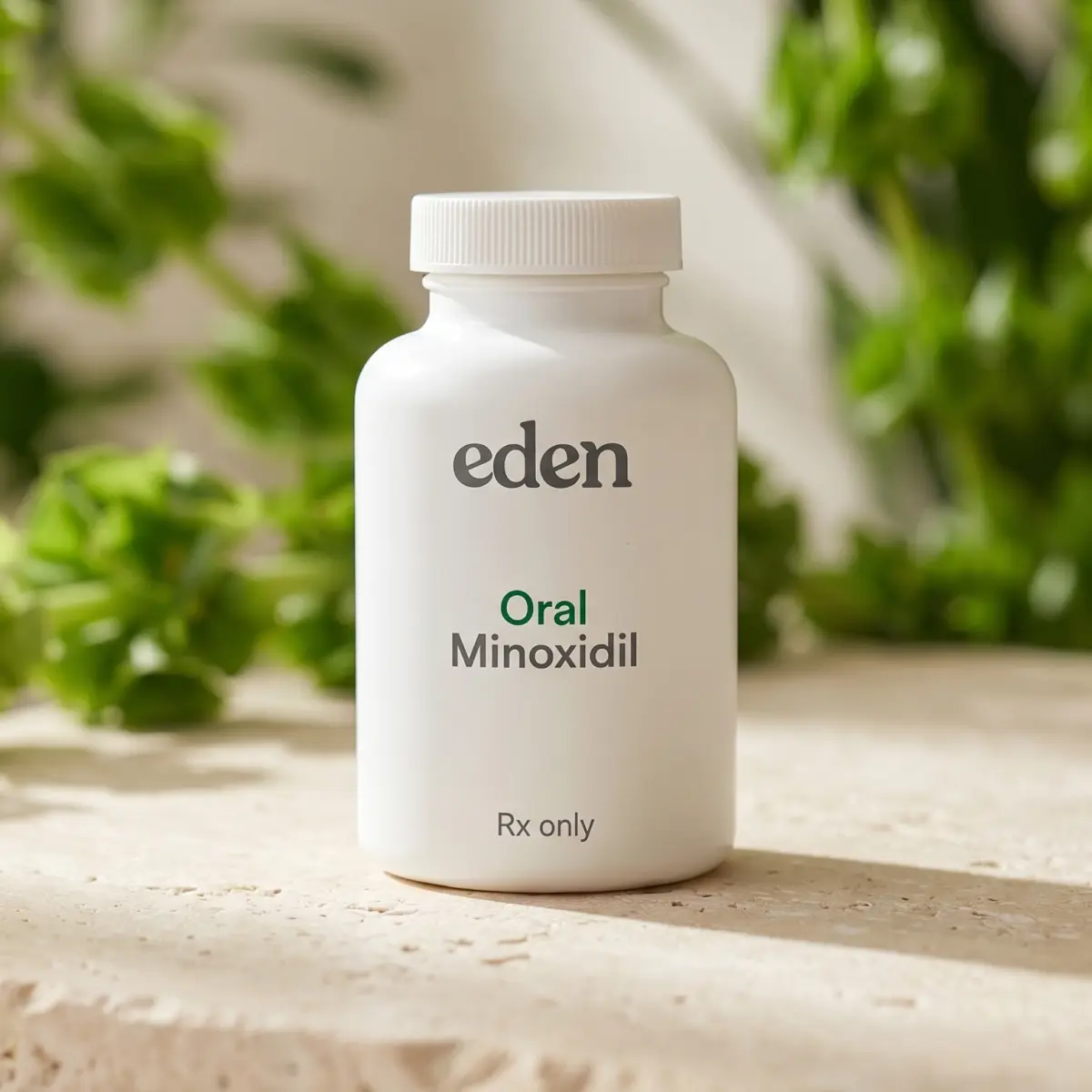
The two main forms of topical minoxidil are a liquid solution and a foam. However, increasingly, low-dose oral minoxidil is also being prescribed off-label for hair loss (more on this below).
Both the foam and liquid are available in 2% and 5% concentrations. The liquid contains propylene glycol, which helps the medication absorb but may cause scalp irritation in some users.
In contrast, the foam was developed without propylene glycol, which is why many women find it gentler on the scalp. Foam also tends to dry quickly and stay where you apply it, which can make it easier to use daily.
Is Minoxidil FDA-Approved for Women?
The FDA has approved 2% topical solution and 5% foam for women, while higher-strength formulations and oral minoxidil may be used off-label under provider guidance.
Oral minoxidil isn’t FDA-approved for hair loss in either sex, but dermatologists and licensed providers do prescribe it off-label, particularly at low doses. A licensed provider can ultimately help determine whether a higher concentration or oral formulation is appropriate for you.
What Types of Hair Loss in Women May Respond to Minoxidil?
Before starting any female hair loss treatment, it helps to understand what’s actually driving hair thinning. Additionally, minoxidil’s effectiveness depends largely on the underlying cause. So, here are the most common types of hair loss in women that may respond to minoxidil.
Female Pattern Hair Loss (Androgenetic Alopecia)
Female pattern hair loss (or androgenetic alopecia) typically presents as diffuse thinning along the part line or crown and is driven by genetic sensitivity to androgens.
Clinical trials found that some women experienced visible regrowth with consistent use. Results, however, are maintenance-dependent; hair loss tends to resume when treatment stops.
Postpartum Hair Loss (Telogen Effluvium)
Many women notice shedding a few months after giving birth. This pushes a large group of follicles into the telogen (resting) phase all at once, leading to visible shedding.
Minoxidil may help accelerate regrowth in some prolonged or significant cases, but it isn’t typically the first-line option since the underlying cause is self-resolving. If you’re breastfeeding or recently postpartum, it’s also important to talk to a licensed provider before starting this treatment.
Stress- and Nutrition-Related Shedding
Major stressors, such as illness, surgery, rapid weight changes, nutritional deficiencies, or significant emotional strain, may also push hair into the resting phase of the growth cycle all at once. As a result, the hair sheds. This can be confusing since it may happen months after the original stressor.
Thyroid dysfunction is another common, often-overlooked driver. And minoxidil may offer some supportive benefit, but if the underlying trigger isn’t identified and addressed, results will likely be limited. This is why a provider evaluation is important. They can help rule out nutritional deficiencies or thyroid issues and determine the best treatment path for you.
Minoxidil 2% vs. 5% for Women: What’s the Difference?
Women have two FDA-approved choices: the 2% topical liquid solution (applied twice daily) and the 5% foam (once daily). Meanwhile, the 5% topical liquid solution is FDA-approved for men and sometimes used off-label in women.
Research suggests that 5% topical minoxidil may produce greater hair regrowth than 2% in women with androgenetic alopecia, but it’s also associated with a higher rate of facial hypertrichosis (unwanted facial hair growth). The 5% foam, however, may carry a lower risk of hypertrichosis than the 5% solution.
The right concentration depends on individual factors and is best determined with a licensed provider.
What to Realistically Expect: A Month-by-Month Timeline
Knowing what to expect can make the difference between sticking with treatment long enough to see results and giving up too soon.
Weeks 1-8: The Shedding Phase
Many women experience increased shedding in the first 4 to 8 weeks of use. Known as minoxidil-induced telogen effluvium, this reflects a shift in the hair growth cycle.
It can be unsettling, but it isn’t necessarily a sign that the treatment is failing. Understanding what to expect in the first 8 weeks is essential to staying consistent long enough to see results.
Months 2-4: Early Regrowth Signs
You may start to see new, fine hairs (often called vellus hairs) coming in. Changes at this stage are usually subtle.
Consistency with treatment is really important during this window. Most clinicians recommend not judging effectiveness before at least the four-month mark.
Months 4-6 and Beyond: Visible Results
For women who respond to minoxidil, this is typically when meaningful regrowth and reduced shedding become visible.
Yet, keep in mind that minoxidil is a maintenance treatment; results are sustained only with continued use. If you’ve used it consistently for 6 months without improvement, however, check in with your provider; they can reassess your diagnosis and treatment plan accordingly.
How to Use Minoxidil Safely: Application Instructions for Women
Apply minoxidil only to a clean, dry scalp. Use the recommended amount; applying more won’t speed up results and may increase side effects.
For the liquid solution, the standard dose is 1 mL (using the dropper) applied directly to the center of the thinning areas. For foam, part hair into rows, hold the can upside down, dispense about half a capful onto your fingertips, and gently massage it into the scalp.
A few additional tips to keep in mind include:
- Wash your hands immediately after application.
- Allow the product to dry fully (about 2-4 hours) before bed to avoid transferring it to your pillowcase or face.
- Don’t shampoo for at least 4 hours after applying.
- Avoid using a hairdryer right after application; heat can reduce minoxidil’s effectiveness.
- Don’t apply to sunburned, irritated, or broken skin.
- Most protocols call for twice-daily application, though some providers may recommend once-daily, depending on the formulation.
You can color, perm, or relax your hair while using minoxidil, but wash your scalp just before chemical treatments and pause minoxidil for 24 hours before and after each treatment.
Minoxidil Side Effects Women Should Know About
Here’s what’s common, what’s not, and when you should check in with your provider.
Common Side Effects
Scalp irritation, including itching, flaking, redness, or mild burning, is the most commonly reported side effect. It’s frequently linked to the propylene glycol in liquid formulations, and switching to foam may help.
The temporary shedding phase described earlier is also expected. Some women may notice unwanted facial hair (hypertrichosis), more often with 5% formulations; this typically resolves within months of stopping treatment and can be managed with shaving, waxing, bleaching, or electrolysis.
Less Common but Important Side Effects
Allergic contact dermatitis, characterized by redness, itching, or swelling beyond typical dryness, is rare but possible.
Using more than directed or applying to broken skin may increase absorption and lead to systemic effects.
If your scalp becomes significantly inflamed, pause use and consult a licensed provider before continuing.
Who Should Not Use Minoxidil Without Provider Guidance
Talk to a licensed provider before starting if you:
- Are pregnant or planning to become pregnant (topical minoxidil is generally avoided during pregnancy)
- Are breastfeeding
- Have heart disease or uncontrolled high blood pressure
- Have a scalp condition that may increase absorption (psoriasis, eczema, open wounds)
- Have a known allergy to minoxidil or any of its formulation ingredients
Oral Minoxidil for Women: What Should You Know?
Low-dose oral minoxidil (LDOM) is increasingly prescribed off-label by dermatologists and other licensed providers for women who find topical application inconvenient or experience significant scalp irritation. Typical doses for women range from 0.25 to 2.5 mg per day.
A 2021 multicenter study reported that low-dose oral minoxidil was generally well-tolerated in the study population. Possible side effects at low doses include mild fluid retention, increased body hair, and (rarely) heart palpitations or lightheadedness.
Because oral minoxidil works systemically, it requires a prescription and appropriate health screening. It should only be initiated under provider supervision.
When OTC Minoxidil Isn’t Enough: Considering an Individualized Treatment Plan
OTC minoxidil can be a reasonable starting point for some women with androgenetic alopecia. But it has some limitations; it addresses only one piece of the hair loss puzzle, and doesn’t account for hormonal drivers, nutritional deficiencies, or scalp health.
But a licensed clinician can assess what’s actually driving your hair thinning, recommend the most appropriate formulation and concentration, combine treatments where the evidence supports it, and monitor your progress over time.
Eden’s Custom Hair Growth Kit is a structured, clinically guided option. The process starts with a quick online intake and connects you with a licensed healthcare provider who reviews your health history, hair loss pattern, and goals to determine which approach (if any) is the right fit.
At the end of the day, hair loss is rarely just a cosmetic concern, and you deserve a plan that is appropriate for your individual needs.









The FDA does not approve compounded medications for safety, quality, or manufacturing. Prescriptions and a medical evaluation are required for certain products. The information provided on this blog is for general informational purposes only. It is not intended as a substitute for professional advice from a qualified healthcare professional and should not be relied upon as personal health advice. The information contained in this blog is not meant to diagnose, treat, cure, or prevent any disease. Readers are advised to consult with a qualified healthcare professional for any medical concerns, including side effects. Use of this blog's information is at your own risk. The blog owner is not responsible for any adverse effects or consequences resulting from the use of any suggestions or information provided in this blog.
Eden is not a medical provider. Eden connects individuals with independent licensed healthcare providers who independently evaluate each patient to determine whether a prescription treatment program is appropriate. All prescriptions are written at the sole discretion of the licensed provider. Medications are filled by state-licensed pharmacies. Please consult a licensed healthcare provider before making any medical decisions.
Frequently asked questions
Is minoxidil safe for females?

Topical minoxidil is FDA-approved for women and generally well-tolerated when used as directed. It’s not recommended during pregnancy, and women should consult a licensed provider before starting.
What are the side effects of minoxidil on women?
Common side effects include scalp irritation, dryness, and temporary shedding early in treatment. Some women may also experience unwanted facial hair, which is usually reversible.
How long does it take for minoxidil to work in women?
Some women may notice early changes within a couple of months, with more noticeable results across several months of consistent use.
Is 2% or 5% minoxidil better for women?
The 5% formulation may be more effective in some women, while 2% may cause less irritation. A licensed provider can help determine the right option.
Does minoxidil work for postpartum hair loss?
Postpartum shedding often resolves on its own within 6–12 months. Minoxidil may be considered in some cases, but provider guidance is recommended.
Related articles


Dawber, R., & Rundegren, J. (2003). Hypertrichosis in females applying minoxidil topical solution and in normal controls. Journal of the European Academy of Dermatology and Venereology, 17(4), 271–275. https://onlinelibrary.wiley.com/doi/abs/10.1046/j.1468-3083.2003.00621.x
DeVillez, R. L., Jacobs, J. P., Szpunar, C. A., & Warner, M. L. (1994). Androgenetic alopecia in the female. Treatment with 2% topical minoxidil solution. Archives of dermatology, 130(3), 303–307. https://pubmed.ncbi.nlm.nih.gov/8129407/
Famenini, S., Slaught, C., Duan, L., & Goh, C. (2015). Demographics of women with female pattern hair loss and the effectiveness of spironolactone therapy. Journal of the American Academy of Dermatology, 73(4), 705–706. https://pmc.ncbi.nlm.nih.gov/articles/PMC4573453/
Gogtay, J. A., & Panda, M. (2009). Minoxidil topical foam: a new kid on the block. International journal of trichology, 1(2), 142. https://pmc.ncbi.nlm.nih.gov/articles/PMC2938579/
How minoxidil was transformed from an antihypertensive to hair-loss drug - The Pharmaceutical Journal. (2021, March 18). The Pharmaceutical Journal. https://pharmaceutical-journal.com/article/news/how-minoxidil-was-transformed-from-an-antihypertensive-to-hair-loss-drug
Lucky, A. W., Piacquadio, D. J., Ditre, C. M., Dunlap, F., Kantor, I., Pandya, A. G., Savin, R. C., & Tharp, M. D. (2004). A randomized, placebo-controlled trial of 5% and 2% topical minoxidil solutions in the treatment of female pattern hair loss. Journal of the American Academy of Dermatology, 50(4), 541–553. https://pubmed.ncbi.nlm.nih.gov/15034503/
Purnak, T., Senel, E., & Sahin, C. (2011). Liquid formulation of minoxidil versus its foam formulation. Indian journal of dermatology, 56(4), 462. https://pmc.ncbi.nlm.nih.gov/articles/PMC3179030/
Suchonwanit, P., Thammarucha, S., & Leerunyakul, K. (2019). Minoxidil and its use in hair disorders: a review. Drug design, development and therapy, 13, 2777–2786. https://pmc.ncbi.nlm.nih.gov/articles/PMC6691938/
Vañó-Galván, S., Pirmez, R., Hermosa-Gelbard, A., Moreno-Arrones, Ó. M., Saceda-Corralo, D., Rodrigues-Barata, R., Jimenez-Cauhe, J., Koh, W. L., Poa, J. E., Jerjen, R., Trindade de Carvalho, L., John, J. M., Salas-Callo, C. I., Vincenzi, C., Yin, L., Lo-Sicco, K., Waskiel-Burnat, A., Starace, M., Zamorano, J. L., Jaén-Olasolo, P., … Bhoyrul, B. (2021). Safety of low-dose oral minoxidil for hair loss: A multicenter study of 1404 patients. Journal of the American Academy of Dermatology, 84(6), 1644–1651. https://pubmed.ncbi.nlm.nih.gov/33639244/
Thank you!
We'll be in touch.
Thank you!