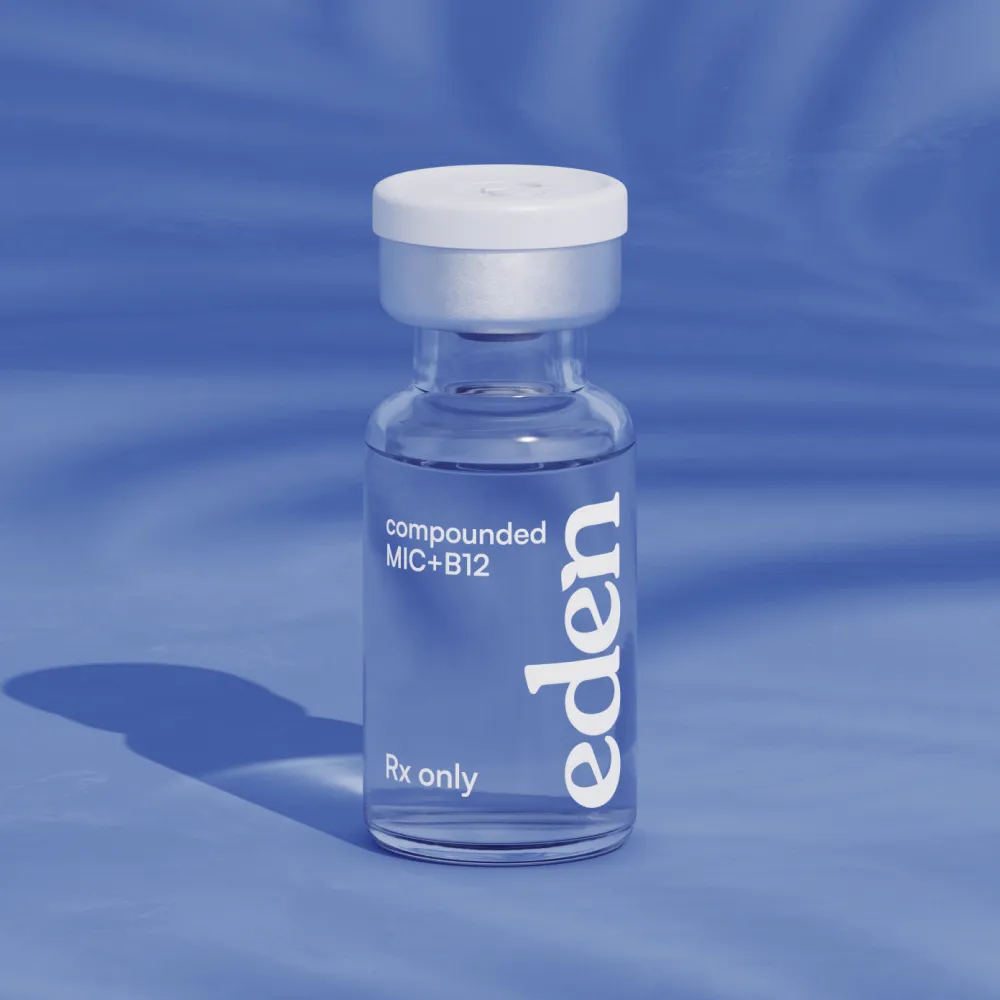
MIC Injections: Benefits, Ingredients, and What to Expect



MIC injections combine three lipotropic compounds to support normal metabolic function and health. Here’s what to know about benefits, risks, and results.
- MIC injections combine three lipotropic compounds: methionine (supports normal liver function and fat metabolism), inositol (is involved in insulin signaling and neurotransmitter pathways), and choline (is involved in normal fat transport from the liver).
- These injections are typically administered weekly by a licensed healthcare provider and may be paired with vitamin B12 for added energy support.
- MIC injections are not FDA-approved for weight loss, but some individuals report subjective changes such as increased energy when combined with a balanced diet and regular exercise.
- Side effects are usually mild (injection site soreness or mild digestive issues); however, those with liver or kidney disease, active cancer, or allergies to any ingredients should avoid MIC injections.
The information in this article is for educational purposes only and is not intended as medical advice, diagnosis, or treatment. MIC injections are not FDA-approved for weight loss. Always consult a licensed healthcare provider before starting any new treatment or supplement to determine what’s best for your individual health needs.
What Are MIC Injections?
MIC (Methionine Inositol Choline) injections are lipotropic injections commonly used in wellness and weight-management programs. “MIC” refers to three compounds included in the formula: methionine, inositol, and choline.
These nutrients are involved in normal liver function and fat metabolism, particularly in how the body processes and transports fats. The term lipotropic means “fat-loving,” and in this context, it refers to compounds that may support the liver’s role in fat metabolism.
MIC injections are sometimes used alongside healthy eating and regular physical activity as part of a broader wellness plan. However, they’re not FDA-approved for weight loss, and evidence supporting their effectiveness for fat loss is limited.
These injections are typically administered into muscle tissue, such as the upper arm, thigh, or buttocks, by a licensed healthcare provider. Dosing schedules vary, but are often weekly, based on individual needs and clinical guidance.
{{primary-cta}}
What Are the Ingredients in MIC Injections?
The three main components of MIC injections include the following:
L-Methionine
L-methionine is an essential amino acid, meaning the body must obtain it from food or supplements. It plays a role in normal liver function and fat metabolism, including processes involved in how fats are handled in the liver.
Methionine is also a precursor to compounds involved in the body’s natural detoxification pathways, such as glutathione, which helps the body process and eliminate metabolic byproducts.
Inositol
Inositol is a carbohydrate-like compound that is sometimes grouped with B vitamins due to its role in cellular signaling. It’s involved in insulin signaling and metabolic pathways, which may influence blood sugar regulation in some individuals.
Additionally, this compound plays a role in neurotransmitter signaling, including pathways related to serotonin, and has been studied for potential effects on mood and metabolic health.
Choline
Choline is an essential nutrient that supports liver health and normal fat transport. It’s important for moving fats and cholesterol out of the liver as part of lipid metabolism and for cell membrane structure and neurotransmitter synthesis.
While the body can produce small amounts of choline, many people don’t meet recommended intake levels through diet alone.
Vitamin B12
Some MIC formulations include vitamin B12, which is essential for red blood cell formation, nerve function, and DNA synthesis. In individuals with a deficiency, B12 supplementation may help improve fatigue. However, in people with normal B12 levels, it doesn’t reliably increase energy or cause weight loss.
How Do MIC Injections Support Weight Loss?
As explored above, MIC injections typically contain methionine, inositol, and choline, which are involved in normal liver and metabolic pathways, including lipid (fat) transport and processing.
While these ingredients have roles in metabolism, and “lipotropic” nutrients are discussed in scientific literature in relation to liver fat handling, there is limited clinical evidence that MIC injections themselves produce meaningful weight loss.
Some clinics use MIC injections as an adjunct to a broader plan that includes nutrition, activity, sleep, and medical supervision. However, MIC injections are not FDA-approved for weight loss, and results (if any) can vary by individual and overall program.
{{primary-cta}}
Other Potential Benefits of MIC Injections
Beyond weight loss support, MIC injections may offer other benefits, including:
Energy Support
Some users report subjective changes in energy levels after beginning MIC injections. And this may support adherence to activity routines, especially during calorie-restricted diets when fatigue is common.
Liver Aid
The lipotropic compounds in MIC injections are involved in normal liver fat transport and metabolic processes.
Mood and Appetite Effects
Inositol is involved in neurotransmitter signaling, including serotonin. It also plays a role in insulin signaling, which may influence appetite regulation in some individuals.
These benefits can further create a positive cycle; more energy may lead to more activity, and a better mood may support consistency.
MIC Injection Side Effects and Risks
MIC injections are commonly reported to be well-tolerated, and most people experience only mild side effects, if any.
Common side effects may include:
- Redness or soreness at the injection site
- Mild digestive issues (constipation or diarrhea)
- Dry mouth
- Occasional fatigue or light-headedness
Serious reactions are rare but can include shortness of breath, hives, or itching away from the injection site. If you experience any of these, contact your healthcare provider right away.
You should avoid MIC injections if you:
- Have significant liver disease or kidney impairment
- Have active cancer
- Experience allergies to methionine, inositol, choline, or B12
- Are pregnant or breastfeeding
If you have a heart condition, metabolic disorder, or other chronic health concerns, talk to your doctor before starting MIC injections. They know you and your health situation the best and can determine what makes the most sense for you.
Final Thoughts
The nutrients in MIC injections, including methionine, inositol, and choline, are involved in normal liver and cellular processes, which is why some providers include them as part of a broader wellness or weight-management plan.
On their own, they don’t replace the foundations, including balanced nutrition or regular physical activity. If you’re considering MIC injections, a licensed healthcare provider can help you decide whether they make sense for you, as well as factor in your goals and health history.









The FDA does not approve compounded medications for safety, quality, or manufacturing. Prescriptions and a medical evaluation are required for certain products. The information provided on this blog is for general informational purposes only. It is not intended as a substitute for professional advice from a qualified healthcare professional and should not be relied upon as personal health advice. The information contained in this blog is not meant to diagnose, treat, cure, or prevent any disease. Readers are advised to consult with a qualified healthcare professional for any medical concerns, including side effects. Use of this blog's information is at your own risk. The blog owner is not responsible for any adverse effects or consequences resulting from the use of any suggestions or information provided in this blog.
Eden is not a medical provider. Eden connects individuals with independent licensed healthcare providers who independently evaluate each patient to determine whether a prescription treatment program is appropriate. All prescriptions are written at the sole discretion of the licensed provider. Medications are filled by state-licensed pharmacies. Please consult a licensed healthcare provider before making any medical decisions.
Frequently asked questions
How often do you get MIC injections?

Most people receive MIC injections at least once a week, though your provider may recommend a different schedule based on your needs and goals.
How fast do MIC injections work?
Individual experiences vary, and any perceived changes can take several weeks.
Are MIC injections safe?
MIC injections are commonly used by many people without serious adverse effects. However, they may not be suitable for individuals with severe liver or kidney disease, active cancer, or allergies to any of the injection components.
What are the side effects of MIC injections?
Common side effects are mild and may include soreness at the injection site, minor digestive issues, or dry mouth. Serious reactions are rare but should be reported to your healthcare provider immediately.
Can MIC injections support liver health?
Methionine and choline are involved in normal liver fat transport and metabolic pathways, which is why they are sometimes described as lipotropic nutrients.
Related articles







Ankar, A., & Kumar, A. (2024, September 10). Vitamin B12 deficiency. StatPearls - NCBI Bookshelf. https://www.ncbi.nlm.nih.gov/books/NBK441923/
Inositol. (n.d.). ScienceDirect. https://www.sciencedirect.com/topics/agricultural-and-biological-sciences/inositol
Levine J. (1997). Controlled trials of inositol in psychiatry. European neuropsychopharmacology : the journal of the European College of Neuropsychopharmacology, 7(2), 147–155. https://doi.org/10.1016/s0924-977x(97)00409-4
Martínez, Y., Li, X., Liu, G., Bin, P., Yan, W., Más, D., Valdivié, M., Hu, C. A., Ren, W., & Yin, Y. (2017). The role of methionine on metabolism, oxidative stress, and diseases. Amino acids, 49(12), 2091–2098. https://doi.org/10.1007/s00726-017-2494-2
Office of Dietary Supplements - Choline. (n.d.). https://ods.od.nih.gov/factsheets/Choline-HealthProfessional/
Zeitz, J. O., Ehbrecht, T., Fleischmann, A., Most, E., Gessner, D. K., Friedrichs, S., Sparenberg, M., Failing, K., Whelan, R., Lütjohann, D., & Eder, K. (2020). Effect of DL-Methionine Supplementation on Tissue and Plasma Antioxidant Status and Concentrations of Oxidation Products of Cholesterol and Phytosterols in Heat-Processed Thigh Muscle of Broilers. Animals : an open access journal from MDPI, 10(11), 2050. https://doi.org/10.3390/ani10112050
Thank you!
We'll be in touch.
Thank you!